Software
Houzz Logo Print
friedajune

Care Instructions Say No-Enzyme Detergent - Recs?

9 years ago
last modified: 9 years ago

I just splurged on expensive Egyptian cotton sheets from a shop in Toronto. They seem to be as close as I can get to the cotton Wamsuttas of my youth. Cool, crisp, smooth, and a low thread count (some of us prefer a low thread count, but that's for another thread). Not quite the Wamsuttas, but I am happy. The care instructions say wash in hot (they are white) and avoid detergents with enzymes. In addition, I do not like scented detergents. Cannot bear them actually. I have been reading threads here about detergents without enzymes, but the threads were a few years old, and they didn't mention unscented. I would so appreciate any recommendations for your favorite unscented non-enzyme detergent. TIA.

Comments (27)

  • 9 years ago

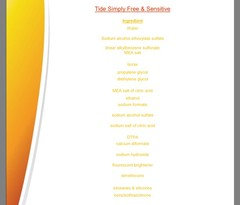
    I had to wash some vintage wool that had been stored a long time. I usually use regular shampoo for woolens but thought maybe I would try a regular detergent without enzymes. I had picked up some Tide Simply free and sensitive a few months before and it worked great. No enzymes, no fragrance.

    http://www.pgproductsafety.com/productsafety/ingredients/Tide_Simply_Free_Sensitive.pdf

    You might as Paulo says have to spot a stain or generally wash with something stronger. You might avoid something with cellulase at that point. Also agree with not putting a full strength detergent on a spot if you can help it, although sometimes desperate times call for desperate measures.

    friedajune thanked wekick
  • 9 years ago

    My question is if these sheets are 100% quality cotton why no enzymes?

    ALL free and clear liquid not the one that says with oxi is enzyme free, but as Paulo says read the jug..manufactures must list enzymes on the package.

    Perhaps these sheets have some other in with them.

    friedajune thanked mamapinky0
  • 9 years ago

    Cellulase can be damaging to cotton over time.

    friedajune thanked wekick
  • 9 years ago
    last modified: 9 years ago

    wekick:

    True, but it can take over 10 years for the average person washing the sheets in hot water once a week for that to happen. The cellulase in detergents is basically in a very low quantity just enough to avoid pills. Maybe if one washes the sheets every time they are used and also uses nearly boiling washes, it might do damage. At the current market conditions I would not worry about it.

    Oh, also, thanks for the info on Tide Simply Free & Sensitive -- I have avoided even touching the bottle under the principle that I do *not* need to add anything to my stash until it's significantly smaller. No, I'm not addicted, I can quit anytime I want. ;-)

    friedajune thanked pcpr_gw
  • 9 years ago

    Paulo,

    I just got a sample pack in the mail from Stoneworks detergent and found European Woolite, relabeled for sale in the US, in 4 types at a local close out place. I actually got my Tide Simply there for $1. :-0 This forum is filling up my closet.

    I don't think we disagree. I would think it would be reasonable for manufacturers to plan to allow the use of their product, that has a potential benefit, for a certain number of washes before damage becomes evident. The action of cellulase on cellulose varies according to how it was processed previously and how much is used. Some dyes can prevent some damage so white sheets might be more susceptible. Some people use more detergent than recommended or as you said wash frequently. I am thinking that the sheet manufacturer is just hoping to avoid one source of specific degradation of their sheets. Assuming it would take ten years for damage, which is cumulative, to show up, I can see if you have a lot invested in sheets or even if you have vintage sheets you want to protect, you might want to avoid cellulase. It might be better if the sheet manufacturer explained risk vs benefit but easier for them just to paint with a broad brush and say "Don't use enzymes"


    friedajune thanked wekick
  • 9 years ago

    Arm & Hammer Free/Sensitive (something) liquid. Hands down! Hot water.

    friedajune thanked Pat Z5or6 SEMich
  • 9 years ago
    last modified: 9 years ago

    OP here. I took Paulo's advice and phoned the shop in Toronto. They recommended Le Blanc Linen Wash over the larger manufacturers like Tide, All, and Arm & Hammer.

    I never heard of Le Blanc, so I promptly did a search on this forum, and it looks like there are several Le Blanc enthusiasts here, like Rococogurl, Larsi-gw, and Alex Chicago.

    When I go on the websites for Tide, All, and Arm & Hammer, I see that they don't provide the labels to look at for their different formulations, so I would need to examine the bottles in the store to see if they have enzymes. Surfing on the net, some say that Tide Simply Free does not have enzymes, while some say it does. There is also Tide PurClean which has "bio-derived enzymes". I looked up "Bio derived enzymes" - they are "enzymes obtained by the fermentation of genetically modified micro-organisms such as bacteria, fungi etc. These enzymes are designed in such a manner that it helps in breaking down of protein, starches, and fat present in the stains." So, they are still enzymes.

    I saw several internet posts that advise checking labels before you purchase each bottle, as Paulo and Mamapinky mentioned. Apparently, the manufacturers change the formulations frequently, and sometimes it depends on what their procurement departments can source on the market at the best price to supply their factories at a particular time. Who knew.

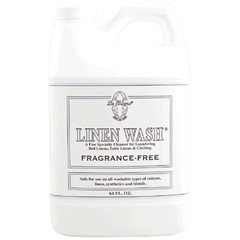
    When I looked at older threads on the Laundry Forum about Le Blanc, there was a lot of discussion of the various scents. It looks like now there is Le Blanc Linen Wash in a fragrance-free version. Expensive, yes, but I am going to use it just for sheets, so I think the bottle will last a very long time.

  • 9 years ago
    last modified: 9 years ago

    Voilà, le unscented Le Blanc:

  • 9 years ago

    I like LeBlanc, there's no enzymes, surfactants only. It does a fine job as long as one is using hot water and the sheets are washed weekly. I would not depend on it to clean sheets that arnt washed regularly, or for those that eat in bed and have food stains. But my sheets washed regularly come out lovely with LeBlanc and so smooth, probably from the lack of heavy chemicals. I'm not generally a fan of boutique detergents but I like LeBlanc and Forever New.

    I've heard some of the Tide Simply has enzymes now, but I don't buy it so I'm not sure. Any laundry product that has enzymes will be posted on the container as that's a federal law.

    friedajune thanked mamapinky0
  • 9 years ago

    Agree with those who said look at every bottle. They can slip it in and out.

    friedajune thanked wekick
  • 9 years ago

    I think your choice of LeBlanc is a good one. You don't need enzymes if you don't have awful stains. Surfactants clean, not enzymes.

    friedajune thanked Pat Z5or6 SEMich
  • 9 years ago

    Also try Vaska and hot water. Heaven.

    friedajune thanked Pat Z5or6 SEMich
  • 9 years ago

    Well, let's be fair here.

    Surfactants clean, that's true. But surfactants can only do so much without any help.

    From my point of view, the result of applying science, particularly in the last 25 years, has made detergents not only more effective, but less damaging to fabrics, and also our hands.

    Early soaps used to be very caustic. Even some early detergents until enzymes showed up used to make people's hands very rough from the alkalinity they had.

    Think of enzymes as your front door keys. Enzymes participate in a catalytic reaction that unlocks the stains by attaching themselves to specific molecules (thus the need for protease, lipase, amylase etc), and dismantling some specific bonds that make the stain hard to remove; then, a relatively mild detergent in a mostly neutral pH solution can get rid of the soil/stain and keep it suspended in solution until the rinse cycle gets rid of it.

    Previous methods were more like the SWAT team show up at your front door and bust it open. Sure, the stain is gone, but the fibers were more worn out than they had to be, because you needed much higher temperature washes and much stronger agitation, and many times you also needed chlorine bleach to finish the job.

    If you want to see this in action, there are now two major kinds of dishwashing detergents for hand washing, the classic detergent-only products and the products with enzymes. It's *much* easier to clean stuck-on food, for example, the classic lasagna pan, after a brief 5-10 minute soak in an enzyme detergent than it is to wash the pan after a similar soak with detergent only.


    friedajune thanked pcpr_gw
  • 9 years ago

    To tag onto this thread, is there a place you can walk in and buy Le Blanc? It seems very expensive to order from Amazon. Thanks.

  • 9 years ago

    Pcpr....I think when some here talk about using a enzyme free detergent they are using it on stain free lightly soiled clothing, or fine washables. I'm fairly certain no one is using tons of sodium carbonate and boiling water along with a wire brush...

    But yes the old method, before synthetic detergent, textiles were subjected to extremely harsh washing practices.

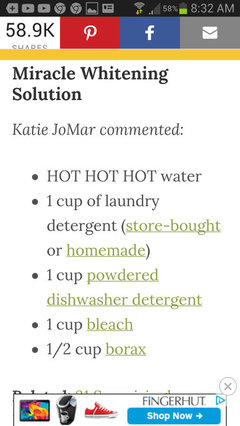
    Talk about harsh. .I found a recipe on line for a Miricle whitener..LOL.. I wonder how many people have used this.

    your supposed to only use as much water as needed to cover the textiles than soak for 2 hours, or overnight being better. Who dreams this stuff up.

  • 9 years ago

    Lizzie I have never seen LeBlanc on a shelf,but Roc would know.

  • 9 years ago

    In NYC you can buy it at Gracious Homes, a very high end home goods store. I have seen it once or twice at Home Goods, but not on a regular basis. I am sure some small specialty stores carry it.

  • 9 years ago
    last modified: 9 years ago

    In response to comments about the cleaning power (or lack thereof) of Le Blanc, I would use it just for sheets. I do not expect the sheets to get stains, and I never ever eat in bed. I have an older Miele which has the 240v and the water can go to extremely high temperatures.

    Vaska scent-free detergent looks interesting, but I couldn't find anything on the website about whether it has enzymes or not. It does say it has "potent botanical cleaning agents to clean your clothing and linens effectively" which sounds like the bio-enzymes I posted about above, but I am not sure.

    As to the cost of Le Blanc, there was a thread somewhere where Rococogurl said the bottle lasted her several years. The best price I've seen is on Amazon, and I have Amazon Prime so the shipping would be free. On the Le Blanc website, the price was higher. I think in a brick-and-mortar store, the price is going to be at least as high as the Le Blanc website. The website has a store locator if you are interested. My sheets splurge was so expensive that it doesn't make much sense for me to worry that the detergent will be $25 more than Tide or All would be.

  • 9 years ago

    Vaska also has no enzymes. ..lavender Vaska Tabs are lovely.

    friedajune thanked mamapinky0
  • 9 years ago

    Vaska has no enzymes and works very well. Keep in mind that some people have a problem with excessive sudsing with Vaska - it depends on your water. I use Vaska on my woolen clothing, as enzymes can damage wool. I've never heard of cotton being prone to damage from enzymes.

    friedajune thanked izeve
  • 9 years ago

    Did you buy them at Au Lit? I have several sets from there. Love Leblanc linen wash for sheets. Kind of ironic because I recall the owner of Au Lit saying she used plain Sunlight detergent on her sheets.

  • 9 years ago

    LeBlanc suds like crazy at higher temps for me. I use cool (which on a Miele is really warm) and warm but if I use a hit wash then I use a different detergent.

  • 5 years ago

    I realize I'm reviving an old thread here, but just came across this in my own search for an enzyme free detergent. I placed an order from Au Lit Fine Linens in Toronto last week, and was just looking at the care instructions on their site so I know how to wash them when they arrive. I saw they recommend Ivory, Sunlight, or Le Blanc, and don't recommend "caustic detergents" such as Persil and Woolite. It doesn't look like Sunlight is available in the US, but I could buy Ivory or Le Blanc. But I'm curious, I already have a bottle of Woolite for Delicates, you know, the small skinny bottle, not the "all clothes" one. This is what I've always used for my silk pillow cases and assumed it was a good choice. Is there a reason I shouldn't use it on the cotton/linen blend duvet cover I ordered?

  • 5 years ago

    @atlpdl zone7b, I would purchase a bottle of Purex laundry detergent (regular) or some Arm & Hammer regular laundry detergent. You may be also able to use Tide “Simply Clean” — depending on your area, but will need to read the bottle.


    Both are enzyme free, clean great and are cheap. Just be aware, if anything is stained, it will need to be pretreated with some sort of stain remover — which is a caveat of enzyme-free detergent.


    I can also tell you, Sunlight & Ivory are mainly brands sold in Canada, and are not readily available in the US.


    Lastly, many bottles of Woolite contain enzymes. Before attempting to use it, I would call the number on the back of the bottle and ask.


  • 5 years ago

    @atlpdl zone7b let me know how you like the Au Lit linens. I just purchased some basic sheets on their last sale and two bottles of Leblanc. I really like Leblanc for the linens/towels.

  • 5 years ago

    @Laundry Mich thanks for this info!

    @livebetter I'll be sure to let you know! I'm expecting my order later this week. I got their duvet cover in "a 50/50 blend of long-staple cotton and Italian linen." I found them because with my deep mattress, regular king duvet covers are not long enough to reach the bottom of the mattress, and Au Lit was one of the few I found that offered a "Jumbo King"