Software
Houzz Logo Print
natureinspiredm_6b

New leaves rotting. Please advise

I have a store bought red Amaryllis that had been with be for more than three years now.

i generally keep it outside in summer so that it gets full sun.

Plant was healthy and was setting out new sets of leaves even though old ones were getting yellow and dying.

i suspect the incessant rains of past few weeks caused dress to the plant and the new leaves started rotting from base.

i brought the plant indoors to give it some respite from weather. But I'm really worried now.

How do I stop the rot?

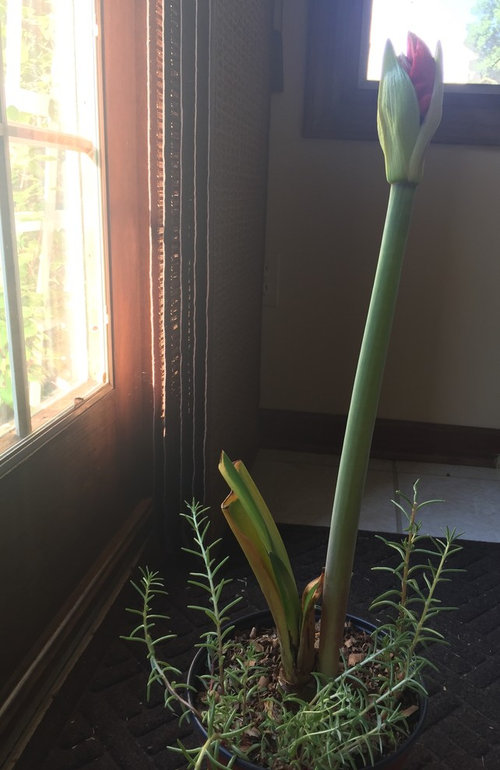
My instinct tells me to cut off all the leaves and let it dry out. But I'm not confident, I surely don't want to kill it. Coincidentally the plant is setting out flowers.

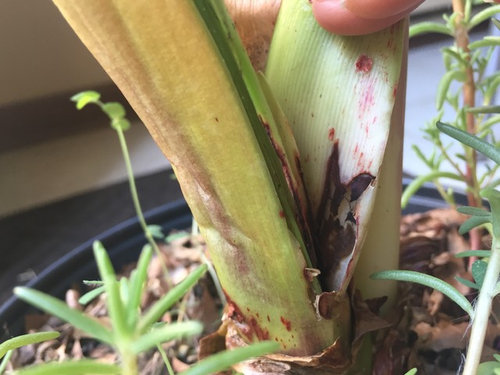
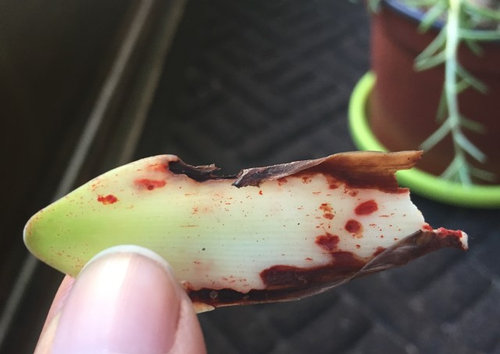
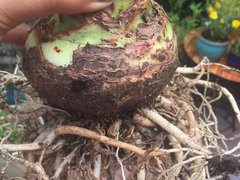
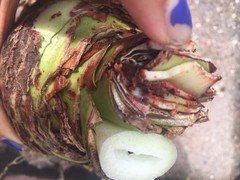
Here are some pictures:

The rot seems to start at the base of the leaves

I had to cut the old leaves as those were broken off and got very yellow/limply.

Comments (10)

  • 9 years ago

    If this were mine, I would cut the scape when the buds start to open ( which might be just around the corner ) and enjoy the flowers in a vase in the house. Then I would pull the bulb from the pot and inspect it for rot pulling off any rotted roots and peeling if possible down to fresh flesh. If the bulb looks salvageable, I would (after letting it sit and dry for a few days) repot it in a clay pot (looks like it might be in plastic now) and sit it high on the soil. My pots that are outside are in clay which drains well and do require more watering as we've been blessed with ample amounts of rain so far too this year!!

    If you're unsure about the condition of the bulb, post a picture; from the looks of your leaves, it may be a lost cause but we'll never know until we see what is under the soil. Good Luck,

    Donna

  • 9 years ago

    Rip all the infected leaves out from down into the bulb. After flowering, repot in fresh mix with the bulb halfway above the soil. Get rid of those other plants and the mulch in the pot which hold moisture and disease.

  • 9 years ago

    Thanks Donna and Susan. You are my rescuers.

    i have removed the leaves. Checked soil for wetness and soil is not soggy at all, infact now on drier side as I brought the plant indoors yesterday morning.

    goong to rush to the store to get a clay pot. Will keep you guys updated.

    thanks a ton for quick response.


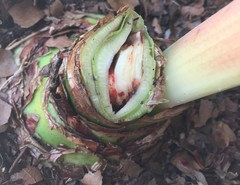
    Here is how it looks now, I don't see any sign of rotting in the base. What do you guys think?


  • 9 years ago

    Bonjour, j'ai plusieurs amarilis seulement elles ne fleurissent pas. J'ai des feuilles mais pas de fleurs. Que dois-je faire pour qu'elles fleurissent?

  • 9 years ago

    The bulb looks healthy with robust root system:

    Only the new leaves look sick and speckled with red spots.

    Now that I have unearthed it, how long shall I let it dry? will it get dormant if I keep the bulb in a cool dry place?

    I have got a 6" clay pot that I was intending to use, but looking at the roots, I feel I should use at least an 8" pot.

    Can I prun the roots a little?

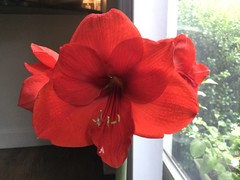
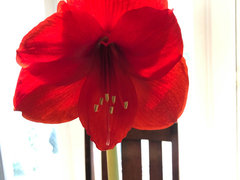
    thanks for all your support and advice.Here are the gorgeous blooms she produces few days back:


  • 9 years ago

    Salut Françoise, je ne sais pas très bien, alors j'ai pris peu d'aide du traducteur Google. Les fleurs jaunes s'écoulent lorsque le pot est lié, essayez de repousser les ampoules dans un récipient plus petit d'au plus 6-8 "de diamètre. Assurez-vous de garder le premier 1/3 de l'ampoule au-dessus du niveau du sol. Prenez soin de faire maintenant et devrait fleurir Dans les 6-8 mois.

  • 9 years ago
    last modified: 9 years ago

    IF I had a bulb with this condition, THEN what I would do, it would depend on the availability of the same cultivar. IF I could replace it, THEN I would discard it immediately, but if not, then I would cut it back (as you did) un-earth the bulb (as you did) but I would no let it dry out, I would replant it in porous (airy) Substrate as soon as possible,, keep it slightly moist and, this is important, at a bright place and a substrate temperature of 24 to 26 degree Celsius. Important is, that the neck of the bulb is kept totally dry.

    The technique of replanting will contribute to a success. Take a pot which is slightly bigger than the original pot. Take the bulb in one hand and let its roots hang down, loosely, into the EMPTY pot. Then use your other hand to fill the pot with Substrate, up to the rim of the pot, and loosely, do not squeeze the substrate. The idea is, to distribute the roots as evenly as possible throughout the substrate volume, and that air will penetrate and circulate, as much as is possible, from above and from below, throughout the substrate volume, which will further the growth of new roots. Finally, one third of the bulb should be above the Substrate, as indicated in the posting by Nature-Inspired above.

  • 9 years ago

    I had this exact problem in a small bulb of H. guarapauvicum I have. I think it happened to me because I was using this leaky watering can (that I have since replaced) and some water dripped inside of it. So I think the rain has caused it for you. I made sure to water only the potting medium with a small watering can and not let water get near where the leaves come out. I keep my bulbs inside a screened balcony, so they don't get exposed to rain. I would recommend keeping yours sheltered, but with ample sunlight, if possible while it recovers. Mine is tiny, maybe 1/2 inch diameter, and grew a new leaf after 4 - 6 months, can't remember exactly. So I think yours will recover if you keep it on the dry side. What Hans has recommended for replanting is standard treatment for my bulbs and they grow very healthy roots with no rotting.

  • 5 years ago

    I have not posted anything in three years. But had to come back to give you all an update. To continue from where I left off, I ended up planting the original bulb in a bigger clay pot and set it out side. It managed to create two bulblets (May be it knew the days were numbere) But the leaves never fully recovered. The new leaves would always have rust spots. end of the season I ditached the bulblets and created three different pots to bring insid.

    next season the mother plant eventually succumbed. But the two babies kept growing. One I lost to crown rot for some reason but the other one made it through ok. I was not expecting much from it, just made sure it is not stressed and have enough sunshine. The bulb never plumped up and the leaves wouof not grow much so I thought even this one is going to depart soon. it barely survived the last season and looked pretty much dead when I brought it indoors in October. the leaves wilted and died soon after. I let it sot in the conta and barely watered. though I had little hope left, decided to give it atleast this season as one last shot.

    To my surprise I noticed bud development back in March - could not beleive my eyes when I saw the unmistakable swelling and tip of a bud on the side. I brought it to a better lit area and made sure it has enough indirect light And moisture.

    it grew to its heart content for last two months .

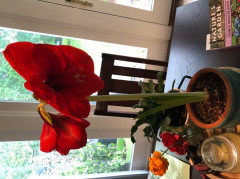
    And the new plant finally bloomed yesterday - right on mother day it decided to open up. It could only make two flowers. with such sickly struggli plant with no feeding and little care in past winter, even two flowers seems magical. Happily new and healthy leaves are coming out as well.

    this plant reminds me yet again why I love plants so much. They don’t know how to give up and they give back so much more in return for the littlecare we provide. It’s a spiritual experienc.


    Best Mother’s Day gift my 2012 store bought amaryllis could give me.

    including coup of pictures for all you garden lovers to enjoy.


Sponsored
Custom Home Works
Average rating: 4.6 out of 5 stars10 Reviews
Franklin County's Award-Winning Design, Build and Remodeling Expert