Software
Houzz Logo Print
mariec_6a

Offset rotting in gritty mix??

9 years ago

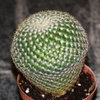
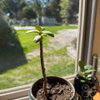
Hello guys, I'm just noticing that one of my echeveria's offset seems to have started rotting?? It has been in my gritty mix version (gravel, turface, perlite) for over 2 months, sitting among my other 'very happy' succulents in my sunniest west facing window. The echeveria has 3 heads in total, the 2 other ones look fine. Does this mean I watered it too much? Could the cause be the container being plastic? Is there anything I can do to save that little baby??

thank you very much in advance for your help!


And here is a 'before' photo from 1-2 weeks ago:

Comments (21)

  • 9 years ago

    What's wrong with plastic pots?

  • 9 years ago

    I have no problem with plastic either...use many more of plastic pots because of weight! If I had only few plants, terracotta looks better.

    How much turface did you use in your mix? Were your ingredients sifted? Turface holds quite a bit water, and it is possible plant was overwatered.

    Is it warm - humid and maybe no-so-breezy indoors? (It could be in my house - cross ventilation is not so good :(

    As Alain said above, outdoors is the best...

  • 9 years ago

    Using plenty of plastic pots too. It's just that water sits in plastic pots for longer. More so when air circulation is low. So a combination of the above increase the risk of rot for succulent . Overwatering a succulent in a plastic pot indoors has greater chance to lead to rotting even in fast draining media

  • 9 years ago

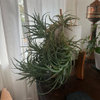
    Thank you very much everyone for your kind replies. I have followed your advice and cut off the offset. It's stem though, didn't seem to be rotten, is that normal? Ive attached pictures below.

    I was asking about plastic because Ive noticed that the pot tends to get quite warm at the touch on those very sunny days (no clouds). I don't recall noticing this with my terracotta pots.

    @rina - I did 1 equal part of each ingredients, so there's 1/3 of turface in the mix. Side question, does perlite holds more water than turface does?

    I'd say the air circulation in my home isn't favourable, but it is definitely warm and dry. My only option for them to be outdoors would be east facing which doesn't get direct sun after 12pm, and considering that we've been getting quite a rainy summer over here, I think they are better off inside my home :P But the window in which my succulents sit is always half way open during the day, as well as another window across the room. But now that I think of it, this particular succulent is sitting on a glass shelf *above* the window opening, so the air circulation may not come through? I will look into it, thank you.


    Heres pictures after cutting the offset:

    Would this be rot that started to spread over the other head?


  • 9 years ago

    Turface holds about double the amount of water of perlite. It's a lot more! This thread may be helpful: https://www.houzz.com/discussions/porosity-water-holding-capacity-cost-of-common-soil-components-dsvw-vd~4061703

    I think 1/3 turface is too much for 6a indoor growing. So you could either repot in a less retentive mix or reduce your watering accordingly.

  • 9 years ago

    ewwmayo answered your question about perlite.

    I started using much less of turface long time ago - now using max 20% of total mix and often even less.

    Air circulation indoors could be improved using small fan.

    I have almost all succulents outside, they have been getting lots of rain this year. Since May, it rained more often than not:


    Outside, with sunlight in the morning until about noon sounds almost ideal to me - much better than indoors. JMO :)

    I do not think that stem in last 3 photos is as healthy as you think - but am looking only at the photo. I see it more brownish than creamy-white or green I believe healthy stem should look like.

  • 9 years ago

    The good thing about plastic pots is that it helps prevent overwatering because when you lift them you can tell how dry the plant is by the weight. It's more difficult to do that with terra-cotta or ceramic pot.

    With that cutting, I would remove the worst leaves and put it in a pot by itself to see what happens. You have nothing to lose.

  • 9 years ago

    Maybe you can try cutting a little higher, as much as you can of the remaining stem until you reach healthy area . It does look suspiciously brownish as Rina said above. Maybe also cut off the few leaves that are becoming brownish at the tip as well.

    If the stem is rotten you have little chance of rerooting the cut piece. Maybe you can try rooting the healthy leaves as well from the cut. If rot continues to spread on the other heads, I would try rooting more of the healthy leaves from the other heads as well. You can probably better appreciate the root damage when/if you choose to repot as suggested by ewwmayo above.

  • 9 years ago

    Thank you so much everyone for taking the time to share your advices, that means a lot to me.

    Yesterday I removed the rotten leaves from the offset and took a few healthy leaves for propagation. Only a tiny 'healthy' looking rosette is left on the stem with 2 healthy roots, which I put in a pot. Fingers crossed.

    I will indeed reduce my watering as of now and will adjust the turface in my mix for future potting/repotting. Thank you.

    I've just taken a look at the two remaining heads and it seems indeed like one is starting to rot as well. Should I separate them? Should I unpot to have a look at the roots? I also tried to find where I would need to cut to divide them but they are so close from one another, I could not figure it out.

  • 9 years ago

    Might be best to check out the roots at this point. When you start seeing rot on the leaves it often means the rot process started some time ago where you can't see it :( Cut anything mushy/soft, it's better to cut more than take a chance to leave some rot behind... Let dry for a couple days then repot in the new mix. Don't water before at least a week, longer depending on how much root you cut. If no root is left you need to wait until new roots grow before watering.

    mariec_6a thanked Alain (Pacifica, CA;10a)
  • 9 years ago

    I'm surprised at the 20 percent turface recommendation. Reading a lot of material in different threads, I had the impression that 1-1-1 was sort of a gold standard and the alternatives I've seen recommended were for greater water holding capacity for folks who can't water as often as is required by the 1-1-1.

    I wish there was a guide!

  • 9 years ago

    Pete - In my opinion, 1:1:1 is FAR too much for succulents unless you are in a very hot location and growing outdoors. With much less water retaining mixes than 1:1:1 people can still water fairly infrequently with succulents.

  • 9 years ago

    Ewwmayo, Could you give an example of what type of mix you'd make if you wanted to have less water retention? I am about to fill a large weather-exposed planter with various cacti (in N. Florida) and I've been concerned that the 1:1:1 I've been using in pots holds too much moisture. It's humid where I am, so it can take a while to completely dry throughout, and we do get rain frequently at this time of year. My hold up with changing my formula is that I wouldn't want to use perlite in the planter, and grit is ridiculously expensive when you need as much as I do just for the 1:1:1. I'm hoping for someone to give me a miracle solution :/

  • 9 years ago

    Argreen73, how large is your planter, approximate dimensions and what type/size/ cactus are you putting in? How many plants? etc. photos would help too... any details you can provide will help you get a more personalized, accurate, recommendation:-)

  • 9 years ago

    Argreen73 - You can just reduce the Turface of your 1:1:1 mix. It's not a must to use 1:1:1 ratio and it is best to customize to your specific plants and growing conditions.

    Above I already linked a thread with many different options.

  • 9 years ago
    last modified: 9 years ago

    Argreen

    What kind of grit are you buying if you say it is ridiculously expensive? Plain chicken grit - that is granite chips, no shells added - is what seems to be quite inexpensive to me. I get it from farm supply store, in 50lb bags, for just about $10/bag. And almost 100% of it is useable. If you want some fancy, decorative stones-grit on top, use just a layer on top (topdressing).

    And why not perlite? I know some ppl don't like it since it is very light and supposedly floats to the surface - but that takes time! I buy it in huge bags too - bulk is always less $$$ - the bag is about 20kg. Lightness of it is great advantage when using bigger containers. Using heavier materials could make it impossible to lift/move if needed. And if you use topdressing, it will not show or fly away or float.

    Something else to consider: if the container is deep, there is no need to fill it all up. You'll be using way too much of anything, making it more expensive and heavy. You didn't say which plants you are planning on using in it (and size of the container), but for most succulents, you don't need feet of mix. See this thread for suggestions...

  • 9 years ago

    Thanks for the replies everyone!

    lisasfbay9b, the planter is 35x35x35, which is actually a lot larger in person than what I imagined when I ordered it (even after laying it out). I have done other planters; two with agave, two with cereus peruvianus, and one with a golden barrel. I'll attach the photos I have and you'll see the big square ones on either side of the building. The other planters have pretty substantial plants in them, so these will have a variety of smaller cacti and euphorbias in them. I'll attach photos of those as well rather than try to list them all. Some in the photos will go in, but some may not -- just depends on how it's looking as I go. Basically I need the best all-around option I can come up with that will hopefully agree with at least most of what I plant.

    ewwmayo, I just realized that it was you who wrote that water holding post. I read that a few months ago and printed out the results, actually! I played around with pumice as a substitute for bark when I was having trouble finding the bark, but my plants seemed to do better in the premade 1:1:1 I bought from Bonsai Jack. Those were not exposed to rain, however, so these will have a very different situation. I will read back through again since I've had a little more experience since the first time I read it.

    Rina, the only thing I have available here that I've been able to find is Manna Pro poultry grit from Tractor Supply. The largest size is 25 pounds, which is around $11 after tax. I think that's reasonable in a normal situation since almost all of it is the right size, but if you look at the pictures attached, you can imagine how many bags I've had to buy. Yikes! I tried a local company who sells crushed granite, so I bought the two closest sizes. One was too crushed -- almost more like sand, and the other was too large. I sifted the larger bags but got very little useable product, so I just poured that in the bottom of a couple of the taller planters to fill space. I won't be able to move the planters regardless... let's just say the company didn't cheat me on the quality of steel they used... but I am happy to use lighter materials for sure. The perlite would be very noticeable if I used it, but maybe a topdressing would be a good idea. Would that not keep the 'soil' from drying out? We have a lot humidity here, so drying can take a little longer than other areas. Oh, and I am definitely not going to fill the entire thing with gritty mix. I was thinking I only need 18-24", what do you think? I bought some 5 gallon water bottles from walmart and will probably fill the very bottom with some rocks (then bottles on top of that). I know it doesn't help drainage, but I can afford to lose a good bit of that bottom space.

    Thanks again for the advice everyone -- I'll read the links you posted!

    Allison


    Here is the office front from a distance and closer photos of each side (taken at various times during progress):


    Some of these will be going in the largest planters:

  • 9 years ago

    Very big plastic bottles will help offset the bottom space. It is not helpful or necessary to have so much soil mix. The pot will be extremely heavy/completely immobile if filled with too many large rocks.

    You may wish to take inspiration from the Lechuza planters (but not the self watering aspect). They have around 30cm / 20% root and soil mix space while the rest is empty:

    http://www.lechuza.ca/en/trend/cubico-color-40-nutmeg/13151.html#undefined

    These are commonly used in commercial buildings, malls, etc.

  • 9 years ago

    Thank you, ewwmayo, that's so helpful. Whether or not it's exactly perfect, I just needed a place to start. I've been overwhelmed with the size since these monstrosities showed up at my house, so that makes it doable! :)

  • 9 years ago
    last modified: 9 years ago

    Argreen

    Those are very nice planters.

    I use topdressing all the time without any problems, but am in z5. We do get some high humidity, but it doesn't last for months - I do not know how that compares to your locale. You could use bigger, decorative rocks too - they will have more space in-between. But see if someone from similar location as yours have suggestions.

    I wouldn't use much more soil than 12" I think. IMO, all those plants on a shelve will have plenty of room - after all, they are looking great in about 4-6" deep pots?

    Those inserts shown in link Kevin posted look good. I use regular plastic planters as inserts in tall containers - but have only 2 so tall, they are 15" square and the pots fit right on. I used same in one heavy metal container I have - again, just lucky that commonly available plastic pots fit on top. I did drill drainage holes all my metal planters.

    Maybe you can use couple of layers of plastic bottles to fill extra space - save the big rocks for a rock garden :)