Software
Houzz Logo Print
nurjane

Need weed control advice!

9 years ago

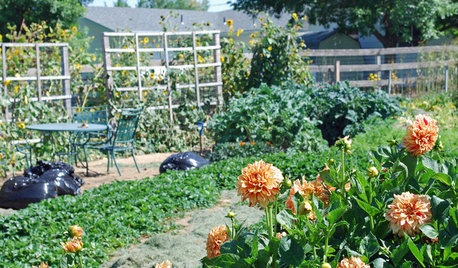
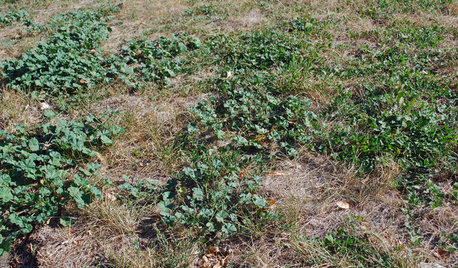
I have a veg garden 28X50' which includes 2 rows asparagus, here in S. New Hampshire. It is infested with "Shaggy soldier"; Galinsoga Quadriradiata, and worsening every year. Have used landscape fabric/grass clippings/straw over the years with fair results to keep the weeds down, but now feeling very defeated. So much so, that I may not use the garden next year and try cover crops and/or spreading cardboard or plastic over the garden to kill weed seeds. I try to keep methods/plants organic as I can. Any help/advice/sympathy would be appreciated!!

Comments (17)

  • 9 years ago

    I've always used cardboard on my several raised beds with good results! Nancy

  • 9 years ago
    last modified: 9 years ago

    Thank you. When do you apply, and for how long? Love your name....that's mine, too...Nancy Jane!

  • 9 years ago

    That looks like one of the weeds we have. I read suggestions from Vermont Extension when I googled. I make the mistake (frequently) of leaving soil bare too long. This spring my excuse for two new asparagus beds was all the rain. It is now covered in shredded leaf mulch. I have beds surrounded my weedy lawn so the weeds that give me the most trouble are those with runner roots. What I have found most help since I hand week, is a good weeding tool. My first was a Cape Cod weeder and now I use something similar. The garden writer for Hippo Press recommends a cobra headed weeder. They are all L-shaped. What I don't understand is why nurseries and farm stores don't stock a decent hand weeder. I haven't used my scuffle hoe in ages since my beds are so small but that is something else you might try for shallow "tilling". I think a good weeder makes the job easier. For tiny weeds, I just drag the weeder between the plants. For the bigger, nasty weeds, it becomes a digging/prying tool.

    The paths in my high tunnel start off with a thick layer of wet newspapers covered with fresh grass clippings. They eventually break down and weeds start poking up through but are pretty good at keeping down weeds for a year or two. I will also use to edge a bed to keep the creeping weeds etc. out of a bed. I use beds rather than a large area garden to reduce the amount of open space for paths. I try to plant my raised beds densely. Last year a bed with a metal trellis for beans and sugar snaps had pepper plants on both sides.

    When I had a large area garden (corn) with paths, I used a mini tiller frequently.

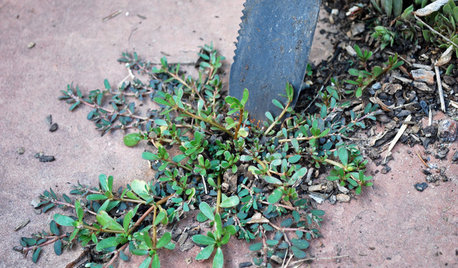
    This year I seem to have more purslane and based on the amount growing in some buckets of aged horse manure, it might be coming in with the manure. The wide grassy area between beds gets mowed. The beds are edged with a spading shovel in the spring so there's a trench around the beds. The runner weeds are discouraged from creeping into the trench (but not completely). The grass paths are also wide enough for garden cart, riding mower.

    Good luck. I'm further north in NH than you so our weeds might be similar. Shaggy soldier isn't a big problem for me, Creeping Jenny is. Our first asparagus patch 9 years ago is full of weeds barely produces anything so I'm determined to keep my new beds weed free.

  • 9 years ago

    Thanks, defrost. I did buy from Johnny's this year the Collinear Hoe, which works pretty well for upright weeding of small starter weeds. Problem is, I frequently can't get into the garden due to work or rain, then the "Shaggy Soldiers" are big and the hoe won't cut them, so then I'm hand weeding again. My fault, I suppose. This year I used no mulch for weed control; not a good idea! Even my pathways around raised beds are choked. Blah! I think I will use your method of wet newspapers with grass clippings now, since most of my garden is now weeded, and hopefully that will make the rest of the garden season happier for me! Thanks again.

  • 9 years ago
    last modified: 9 years ago

    I don't think I have a solution but will offer some thoughts you may or may not be aware of.

    1.Galinsoga quadriradiata (Shaggy Soldier) Is not listed as a weed but a wildflower. Apparently quite wild at that.

    2. afaik - weed seeds may last as long as 40 yrs until that soil it turned over and the seeds can see light and water. Personally, I have stopped tilling my soil just for that reason. While I like to use cardboard or newspapers to keep weeds at bay the point here is it does NOT kill the seeds just prevents them from germinating.

    Soil solarization can be of some use here or using a propane torch to kill weeds & seeds. https://www.harborfreight.com/propane-torch-with-push-button-igniter-91037.html

    1. There are many small flower heads on this weed, each about a quarter of an inch wide. The flower heads are composite, meaning they are made up many individual flowers, each of which produces seed. The composite flowers appear white on the edges and yellow in the center. If you roll some of the flowers between your fingers you may be surprised to find that the small black seeds have already formed, even though the flower doesn't look like it has gone by. Galinsoga reproduction is not affected by photoperiod, so it makes seeds whenever it can. A single plant can produce up to 7,500 seeds, and mature seeds can be formed in as little as 6-7 weeks. That means that a single escaped plant can lead to a serious infestation. Further, there can be up to three generations in New England and New York, with four to five generations of this weed per season possible in the Mid-Atlantic States. In my neck of the woods, and most likely yours, too, Hairy Galinsoga appears to have become more and more widespread over the years. In part that may be due to seed being transported between farms via manure, compost, potting soil, and transplants. Once it gets on an individual farm, it spreads quickly via spreading of soil amendments, cultivation, field equipment and anything else that moves soil. Galinsoga is one of the most difficult to control weeds of vegetable crops, but it's also a weed in landscapes, gardens, ornamental beds and nurseries. It can even be found in urban settings like sidewalks and vacant lots.

    The above is from this link. https://www.uvm.edu/vtvegandberry/factsheets/galinsoga.html

    4. this is from another web page [quote]Appeared in large clumps in my backyard this past summer (2009); we'd
    done a lot of digging as the first phase of some landscaping work, and
    the area it appeared in was freshly dug earth
    .[/quote]

    https://www.minnesotawildflowers.info/flower/shaggy-soldier


    HTH

  • 9 years ago
    last modified: 9 years ago

    Thanks lazy, and defrost! Good info. Another year and a half for me before retirement, and my stamina is similar to yours, defrost. Then my mind starts working negatively....why am I bothering for just a few veggies??? Not good. Tomatoes this year are terrible! Looks like fungus. Just started getting zukes, maybe zucchini lasagna for dinner tonight. Great year for kale, green beans, broccoli. Not so for cukes and tomatoes. What the heck? I've decided I'm wrong to use sprinklers for watering, so next year, maybe drip hoses. Maybe that's why I have a fungus on the tomatoes. Sorry to wander so much! It's fun to compare notes, though.

  • 9 years ago

    Thank you gummy! I have read those links. Almost overwhelming, right?

  • 9 years ago

    Certainly. I think the secret is to not let the plants go to seed - which it apparently does several times/yr. Once it does prob several yrs of forcing germination to kill the plants or kill the seeds on the surface. Either way it's a lot of work.

    One link mentioned testing everything brought on site for seed germination before use.

    Can you think of anything you used that could have contained seeds? Manure? Compost? etc.?

  • 9 years ago

    Oh absolutely....many years ago, farm manure!

  • 9 years ago
    last modified: 9 years ago

    I forgot to comment on the Purslane - one of my favorite things to grow.

    Instead of me commenting read it for yourself.

    Power-Packed Purslane A Nutrient-Rich Weed rich source of omega-3s.

    http://web.extension.illinois.edu/cfiv/homeowners/030726.html

  • 9 years ago

    LOL gumby, this morning I noticed the leaves on the horse manure were very big and juicy looking so I tasted one. I've tried them in at least one salad but today, I am putting lots of purslane plants in our weed dump.

  • 9 years ago

    Can you say - Buffet? <smile>

    We really are all spoiled American people. We throw out plants we call weeds while in other countries they eat them. After we throw them away we try to grow plants not native to this country that don't want to grow here and need to be pampered.

  • 9 years ago

    I knew about purslane as an edible, from my son, who is a plant lover like me,and healthy eater, and also from my GF, who is so knowledgeable about horticulture that she could be a master gardener. Haven't tasted it, nor the Galinsoga, but prob should. Actually noticed someone selling the Galinsoga on line! I enjoyed the article on the benefits of purslane....wow! Pesto! I have some purslane as well. Annoying little bugger in my front flagstone walkway crevices, Lol! Back out to the garden, now! Thanks again everyone!

  • 9 years ago

    Even though I'm tossing the purslane, I am fascinated by what some people eat and we don't. Hard to imagine corn on the cob is not popular in England. Sumac is a valuable spice and essential ingredient in some cuisines. Yes, I do have some but I purchased a packet (or perhaps was given it) and did not dry any local sumac.

  • 9 years ago

    I had no idea that Galinsoga quadriradiata (Shaggy Soldier) was/is edible. Does that mean the OP has a gold mine?

    I'm kidding. Even good things must be in balance.

Sponsored
High Point Cabinets
Average rating: 5 out of 5 stars21 Reviews
Columbus' Experienced Custom Cabinet Builder | 4x Best of Houzz Winner