Software
Houzz Logo Print
qwimjim56

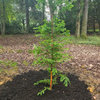
Is this an Ash tree?

9 years ago

Hi, is this an ash tree? http://imgur.com/a/vHnH8

and here are two more trees, are they ash as well? http://imgur.com/a/rSYZ7

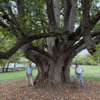
and finally, this is a different type of tree, it's the tree on the left in the wide angle shot, anyone know what it is? http://imgur.com/a/FQyB7


thanks!

Comments (9)

  • 9 years ago

    no one?

  • 9 years ago

    Top looks like an Ash but I can't name the species.

    I can't see the detail on the second and third trees. Can you do some leaf close ups?

    You can insert pictures straight into your post so we don't need to follow links and open new windows. Some members won't click links at all.

  • 9 years ago
    last modified: 9 years ago

    I usually don't bother to view links -- they often require javascript & have all kinds of advertisements, etc. If you've got it on your computer, it's simple just to upload to this website & it'll display in your post....

  • 9 years ago

    Thanks! So neither of these tree should be planted in this day and age, either the green ash or white ash? It's too bad because they're nice trees

  • 9 years ago

    Actually their main attractive feature is the foliage, with their branching tending to be sparse and irregular*, the flowers of most species inconspicuous and the fruits hanging bunches of winged seeds that lack compelling coloration.

    *Plantings of Caucasian ash even have the chronic problem of narrow forking resulting in breakage and failures

  • 9 years ago

    White Ash in eastern North America has spectacular Fall colour but alas no, don't plant an Ash for the near future. If you intend to prophylacticly treat for EAB, I'd wait a few years until the initial population wave has passed in your area. If you never intend to treat for EAB, you should wait until natural biological controls for EAB are well established and have demonstrated effectiveness.

  • 9 years ago

    I love ash trees because they let some light through, i guess that's a disadvantage to some :)

  • PRO
    8 years ago
    last modified: 8 years ago

    OK Mike, though Ash trees of your size are literally dirt cheap to self protect each April from EAB. $20 worth of generic drench for 20-25 year old tree like yours. Even if removal and replacement costs over $600 per tree, unfortunately structurally wise your untrained trees will require a lot of corrective pruning. By removing poorly attached limbs, and removing or slowing down any competing leaders. With the observation of adventitious trunk sprouts and prolific flower production, those cruddy round balls that stay on tree even in winter, because of an iconic aphid problem. Either local EAB have already begun damaging your trees, or they are already in poor health. Similar to declining trees mass production of seeds every year, signs that a tree is suffering traumatic event. And prolifically seeds in order to produce offspring to keep its family line going. By observing how each tree looses its leaves in fall, or if individual limbs loose leaves as early as August. One can get an idea of how much damage EAB caused that year, and what limbs might not come back next year. You may even end up with one individual tree dying off before the rest, as arriving EAB attacks weakest ones first. And after most Green Ash killed off locally, borers will primarily begin attacking single leaf Ash, Black Ash, UK Excelsior, then White Ash in earnest. Last to go is Blue Ash, which is North America's oldest ancient progenitor Ash species.

    Rather than just let all your Ashes be killed off by EAB, then remove. (Not that anyone will even notice trees declining, only after they are removed) I suggest temporarily protecting best one or two, while replacing the rest. Unless you can get discount for group tree removal. This will spread replacement cost out over few years. Or if selling property anyways soon, treat trees and let next owner deal with it. But if trees are dead when selling property, inspectors will notice and compel you to either remove at your cost, or minus worth from final price of property sale. If not planning on replacing anyways, then treatment might be best option. Just think of treatment, like applying beneficial fertilizer each spring.

    Ironically someone living in city or along major road would have better success planting Ash, than Maple or Linden. Since before arrival of EAB, Ash had proven to be one of most superior urban species. Best extended flood and drought tolerant, survival of road salt, along with super compacted soil and planting too deep. At worst developing into super slow growing dwarf tree, where other species would die. And along with superior surviving Honey locust and Sycamore, young Ash can produce good structure without required formative pruning. Heck, before todays cultivars, 60 years ago Ash was even more iconic than sycamore for producing strong apical dominance. At least all these quality traits hold true for wild and planted ash here throughout the Midwest. And not true for states like California or Hawaii who primarily planted Raywood Ash, a crappy cultivar that structurally puts callery pears to shame.

    If Nursery or contractor sold you these Ash after 2002, by time EAB officially identified. I would not purchase new trees from anyone who failed to warn you its species faced future problems and had limited lifespan. (But your 20+ old trees look like planted in 1990's when already 6-7 years old) I also suggest self educating yourself on topic of good condition tree selection at Nursery, and correct installation method of B&B trees. One would think that's what experts that grow and plant trees are for. After all, its their career. But while they do know how to do things the right or wrong way, its up to customer to actually request that things be done correctly. Which they will have no problem doing, as long as one just asks. Otherwise contractors save time by installing trees the outdated way, thus shortening its potential lifespan in the end. But today customers may not even notice if tree planted upside down. Since even upside down trees can last some five years, just like incorrectly planted ones do.

    Here is link to this old house video explaining what a primary root flare is and looks like. https://www.youtube.com/watch?v=fI12XNNqldA And actually one of most beneficial things one can do for new tree, is sweep its root flare clear of any accumulating soil or mulch each April. Because an expanding root flare is a trees evolved tool, preventively severing any circling roots that may strangle tree, by using buttress root pressure. Trees lacking any visible flare above ground, especially trees with trunks that resemble poles entering ground. Are programed for obsolescence within one decade. Worst of examples, are any trees that have landscape walls built and filled with dirt around their now buried bases. Making this fad, literally number one way to kill a tree. Along with Mulch/soil mounding fad which is now expected to claim more trees lives...than EAB and Dutch Elm disease combined! OK Mike, hope I helped you become a smart Ash, ha.

Sponsored
AIS Renovations
Average rating: 4.5 out of 5 stars15 Reviews
Custom Craftsmanship & Construction Solutions in Franklin County, Ohio