Software
Houzz Logo Print
whaas_5a

Where are the worms?!

9 years ago
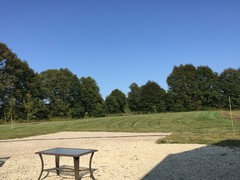
I bought a lot 2 years ago and wrapped up construction last fall.

I planted quite a few b&b and container trees throughout the 1.5 acre lot over a 2 year period.

Some areas have obviously been disturbed/compacted and other areas are not.

I've noticed there haven't been any worms even in the good undisturbed areas.

The areas was farmland up until 15 years ago. Over those 15 years most of the land was tilled and had winter wheat planted on it.

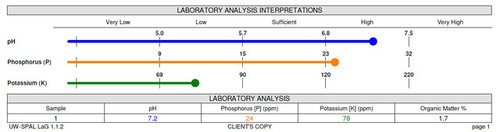
Any ideas why there wouldn't be any worms in this sandy/silty loam? More details of soil report below.

Eitherway any goods links on how to introduce worms and recommend sources? I did some initial reading and looks like the organic content may need to be improved.

Hopefully that will improve with organic fertilizing and grass establishment/mowings. I'd love to top dress with purple cow but wow the expense! Open to ideas on that front as well.

I was thinking about simply pulling up the outer ring of the mulch where I planted trees and placing them there. The mulch has a high bark content and does improve the organic content. In addition for new trees I plant I'd add to the soil at the outter edge where I dug.

More details of soil report

Comments (19)

  • 9 years ago

    There may have been a lot of pesticides used on that land. Worms are highly susceptible to certain chemical agents. If this is the cause, a few years of good land management will lend itself to a habitat in which worms may thrive.

    whaas_5a thanked rgreen48
  • 9 years ago

    pesticides is far more likely. To have no worms due to the ice age, it means that no one ever planted a tree or a rose bush in a pot containing worms, within 20 miles of the site. The answer to your query is always the same: plant cover crops, lots, very thick seeding, plant immediately a mixture containing winter killed plants and overwintering plants, it won't be just the worms coming back but also the rest of the fauna and flora. right now in WI you are better off planting buckwheat, canola, rye, and hairy vetch, but oats and clover are also possible. In my experience two mowings control the surviving rye and vetch next spring, but if you care about good soil, follow that with a summer cover crop with sorghum and cowpeas (other species are also productive). Then your soil will really take off.

    whaas_5a thanked glib
  • 9 years ago

    That soil test says the amount of organic matter in the soil is 1.7 percent and that is really low. Earthworms need organic matter to live on and that low amount may well explain why you do not see them. Buying and dumping earthworms in an attempt to increase the numbers is not a good idea since, with no food source (organic matter) they will either die off or leave for better places to live.

    Add organic matter to the soil and they earthworms will move in.

    whaas_5a thanked kimmq
  • 9 years ago

    The land was previously cultivated. It's not in the condition of virgin forest which would naturally have been worm-free.

    It hasn't been cultivated in the past 15 years, so it is extremely doubtful that any past pesticide use would still be a factor.

    You undoubtably have *some* earthworms, just not in nearly the density that you would expect to see in a healthy horticultural environment. You would probably find a few if you hunted at dusk or at dawn, during or right after a rain, in an area where there is already a good coating of organic material over the ground.

    You don't mention the character of your landscape although you do say "grass establishment" so I assume any lawn is newly sodded or seeded? Are you using a deep layer of organic mulch? Worms like best of all an environment where moisture is retained in the soil and there is lots of organic matter at the surface for them to eat, and where there is not a lot of disturbance to the soil (i.e. repeated cultivation, "double digging" etc.) The less you disturb the soil going forward, and the more organic matter you provide at the surface, the greater number and diversity of worms you will see. (It's not just important to have a high number of worms, but also good populations of different species that work in different levels of the soil, and this is best achieved by leaving the soil undisturbed and adding organic matter at the top.)

    I don't know what "purple cow" is but you shouldn't have to spend a lot to add organic matter onto the soil. A variety of materials are good organic mulch, check to see what is free or low cost in your particular region. Wood chip mulch is excellent and can often be obtained at low or no cost from tree trimming companies, from municipal wood chip piles, etc.

    If your planting is substantially finished at this time you have no need to dig anything in or further disturb the soil structure as it starts to (re) establish itself. Just make sure you use deep organic mulch and always replenish it as it breaks down. If there is very wide spacing between your shrubs and trees, focus in filling in with more planting over time - roots in the ground are beneficial.


    whaas_5a thanked theparsley
  • 9 years ago
    last modified: 9 years ago

    "It hasn't been cultivated in the past 15 years, so it is extremely doubtful that any past pesticide use would still be a factor."

    The OP says that most of the land was tilled and planted in wheat 'during those 15 years.'

    We know that tilling itself is detrimental to worms near enough to the surface, but it usually doesn't reduce numbers to almost nothing.

    Near me there's a farm run by the family of some good friends. Throughout the 60's, 70's, and 80's it was worked by mechanical tilling and chemical controls. They took out crops, and used just fertilizer to replace. Once heavy with worms, they had killed them all with chems and did nothing to replace organic matter but to turn under corn stalks and crop debris. At some point between the 80's and 2010 they did a worm survey and realized what they had done. They did not at first use extra organic matter, they just stopped the indiscriminate use of pesticides. The worms returned.

    That said... kimmq is right... they also need food.

    It's tough to emphatically state what happened on this particular piece of land, but worms are pretty opportunistic creatures. Provide them with food, don't kill them, and they will thrive.

    whaas_5a thanked rgreen48
  • 9 years ago

    Wait and see. Worms are not the be-all and end-all of gardening and soil health.

    whaas_5a thanked User
  • 9 years ago

    All thanks for the great feedback this far!

    All little more info...

    my overall goal is to aerate soil, add organic matter and improve water retention. Right now water retention is terrible.

    I plan to add gardening beds with mulch so we are good there. I was thinking about adding worms in these locations so they would expand from there.

    In addition I plan to plug aerate so that clippings and other organic matter can make it into the holes to help.

    Any other ideas for a large property?

    The tree line hasn't been touched in decades. I planted a few plants in there this spring and summer and didn't see any worms which is odd to me. Overal I plan to fill most the lot with shade and ornaments woodies.

    Next step is get a succession plan for the 90% basswood you see. Just planted quite a few shagbark hickory nuts. Next will be black maple, a few sugar maple, ironwood and muscle wood for understory.


  • 9 years ago

    if you want to aerate the soil, you do need worms. They do close to 100% of aeration in systems where they abound. But if you have poor soil and try to grow a lawn, it will not work for the lawn and will not work for the soil. See if you can prioritize.

  • 9 years ago

    Does aerating the soil to get organic matter deeper going to help with moisture retention?

    Trying to get to a somewhat cost effective demoniantor to get things going. The lawn isn't doing terrible considering the poor rainfall for the last month plus but it's not doing as well as it should with the rains we had in spring.

    Guy that put down 500 lbs of grass seed said to just fertilize.

  • 9 years ago

    I think there might be a slight miscommunication...


    whaas... when you say that you want to aerate, are you meaning with a mechanical aerator? Like the type which pulls plugs out of the ground?


    If so, there's nothing wrong with that, but if you are looking for the most cost effective solutions... do you already own an aerator? Were you going to rent one? How much is the cost?


    If finances are a factor, you can accomplish much the same results with time and practices which do create healthier environments.


    If you can lay out your goals, and the steps you are now prepared to take, as well as what you were considering, I'm sure some brainstorming could do done to give you options.


    If you are going to be tearing up areas of lawn to create gardens, for instance, theparsley mentioned getting wood chips. You could spread those out on top of the ground now while there are still leaves mixed in the chips (that will end come autumn.) Or... as was mentioned, you can consider a cover crop that leaves behind valuable organic matter.


    Your timetable may be the best determining factor also.

  • 9 years ago

    Hey!

    looking at a mechanica aerator for the lawn. Going after the lawn right now and would love some ideas.

    for the gardening beds I'm all set there just need to get the laege expanse lawn taken care of.


  • 9 years ago

    the aerator aerates down to a couple of inches. The worms aerate down three feet. Likewise, compost on top will put OM in the first inch. Cover crops will put OM in the first two feet.

    whaas_5a thanked glib
  • 9 years ago
    last modified: 9 years ago

    Like all other living things earthworms need a food source to be able to exist in any place and their food source is organic material. Aerating that soil will not do much to push the organic matter deeper in to the soil but as the Soil Food Web increases as organic material is added to that soil they will move it deeper.

    Perhaps this article may be of some interest.

    https://www.washingtonpost.com/lifestyle/home/the-zoo-beneath-our-feet-were-only-beginning-to-understand-soils-hidden-world/2017/08/08/f73e3950-7799-11e7-9eac-d56bd5568db8_story.html?tid=ss_mail&utm_term=.db0c584b0954

    whaas_5a thanked kimmq
  • 9 years ago
    last modified: 9 years ago

    I think that at this point, if I understand the issues correctly, you should should post your questions in the Lawn Care Forum.

    Your saying that the lawn is already established, and now you are hoping to do things that will increase organic matter and attract worms and other beneficial organisms that will make for a better soil... is that right?

    If so, cover cropping is not the way to go. If you've already spent the money on the lawn, you're not going to want to dig it up again lol. Some people over-sow with clover, but over on the other forum they may have some ideas.

    The aeration will help. Spreading compost, and raking it in to the aeration holes will help. As will mulching your clippings back in. The cost of the aerator is something to consider when continual compost additions over time may be more cost effective. But time too may be a factor for you. Again though, if we're talking established lawn, I personally am not expert on lawns at all. I tear lawns up whenever I get the chance lol.

    whaas_5a thanked rgreen48
  • 9 years ago

    rgreen has a good point. I'd only caution that you don't know that aeration is an issue with the lawn (except for the presumed issue because not many earthworms). What you do know is that the organic matter is low - so add organic matter. In the first instance, just by mowing clippings back in. As a suggestion, I've found that parts of lawn that got very finely chopped leaves and similar (mulched e.g. using a mulching lawnmower, just run back and forth over piles of leaves in spring) came up very green and lush the next spring. I've found other fine mulches in a lawn in modest amounts (sawdust, coffee grounds, etc) are unnoticeable after a winter - although not sure they made a big difference either, can't hurt, and I imagine the worms liked them). I don't know about lawn cover crops, but if you can stand dandelions, don't kill them with chemicals (leave 'em or just pull them by hand - I leave 'em because I'm lazy and like them) - they can have very deep roots and have read they create good worm habitats and otherwise do their part for soil and drainage, whether the roots survive or rot in place. Mulch thickly in the non-lawn areas, of course. Lawn forum people will have more specific advice about when fertilizer or other lawn amendments help. If you really want to aerate, speak to lawn people and know why you're doing it, and whether it makes sense to do so with a new-ish lawn and what problem you're trying to solve.

    whaas_5a thanked armoured
  • 9 years ago
    last modified: 9 years ago

    well, over time my lawn became unestablished. Surely the greedy hickory and walnut roots play a role, but what made it green again was seeding rye and clover two years ago. No fertilizers. The clover stayed, the rye disappeared. I would have seeded other species but with the BW only those two resisted the juglone. Oh, yes, I seeded also sunflower, but the deer made that disappear when it was 5-8 inches tall. the fact is that a lawn is not a self-supported ecosystem. it is a shallow rooted monoculture. like all other monocultures, it improves if you grow something else from time to time. Species that die in winter do not really affect it.

    whaas_5a thanked glib
  • 9 years ago

    If glib's long (and deep) view of improving soil with deep rooted plants doesn't appeal to you, watch out because we may all be doing it in a few years. :-P Meantime, to improve organic matter without tilling up the lawn, you can top dress with compost purchased by the truckload. If you were to do that after plug aerating (if you even need to aerate), some if it would get down into the lawn's root zone quicker.

    Of course, mulch mow or just let the clippings fly out the side chute, but whatever you do, don't bag.

    Don't worry about the worms, they'll show up if you offer organic matter, but even if they don't, there's a whole micro-herd down there awaiting organic matter additions.

    Your P is already fairly high so if you fertilize the lawn at all, avoid anything with a high middle number. Compost will add P and K over time.

    whaas_5a thanked toxcrusadr
  • 9 years ago
    last modified: 9 years ago

    All, thanks for the continued feedback. I'll post on the lawn forum as well to see if they have any ideas.

    Please note, and I was wasn't specific about it, but for 10 years (not 15) cover crop was planted (winter wheat) on this lot and weeds where free flowing throughout. I planted in some of these undisturbed areas and there weren't any worms.

    Perhaps I just need time and start with the first few inches. I should also add that there is a 1 acre infiltration basin that buts up to my lot. Its has many native grasses and other weeds like Milk Weed.

    You can kind of see it here (only pic I have during break right now)...

    My end goal is to improve water retention and promote deep root growth with my trees. In addition start the aeration process to un-compact some of the soils. Worms are one of the best to do this. Just need to set my priorities!

    I've never bagged grass or leaves in my life. In fact at my previous house where I was establishing a lawn, I raked up 50 gallon bags of leave from a lot next door and spread them on my lawn to mulch in.

    Since my current lawn doesn't look that healthy and there is a lack of worms present I knew I had to focus on the soil. The layer of top soil is somewhat thin in areas too...other areas its just sandy...other areas it doesn't drain at all once you get 18" down.

    This is the purple cow I planned to top dress (at least the front). Time and money is an issue with this though.

    http://www.purplecoworganics.com/