Software
Houzz Logo Print
pattyw5

Help with disease issue.


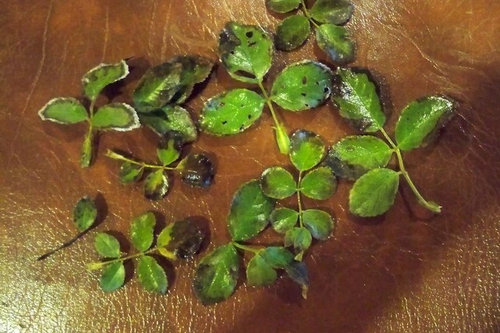
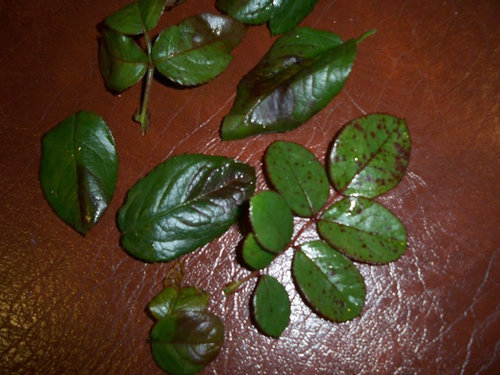
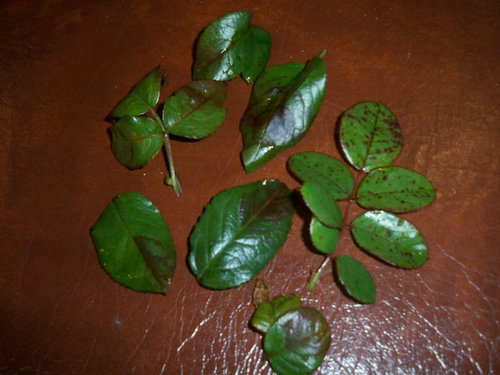
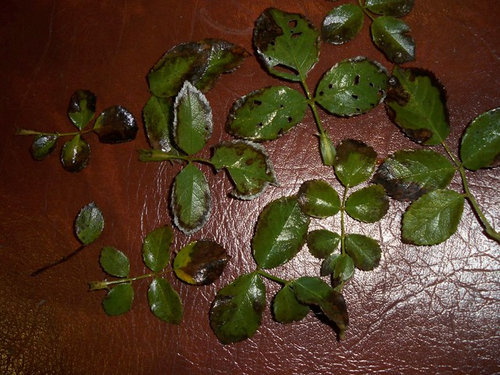
This is of course the time of year when everything begins shed their leaves or are looking rough. But these two are somewhat different.

The first is Plum Perfect. My Plum Perfect's came with downey mildew. The advice I received was to strip off all of the leaves and that they should be fine. They were fine and this is a spectacular rose that I hate to give up. I checked on her foliage constantly and this just started recently. Any ideas what this is.


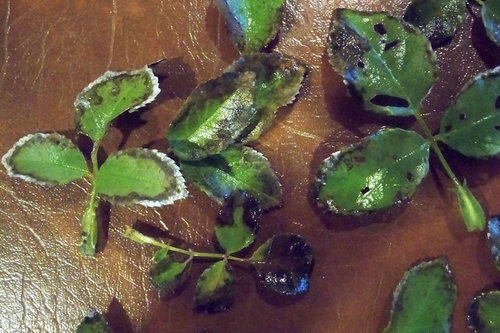
The next is Floral Fairy Tale from RU. It is a different FT than I received from Palatine years ago. It does have a beautiful flower that tends to be larger than my Palatine FT. I have 3 of them they all get this on their leaves. The white on the edges does not wipe off. It is not powdery mildew. Any Ideas what this is?


The top photo should have been down here.

Comments (14)

  • 9 years ago
    last modified: 9 years ago

    I hope someone can answer as I had the white edging on Summer Romance and Viking Queen to a smaller degree earlier in the season. I have a slew of bad leaf pictures I never published; it would be nice to figure out the issue. Thank you for posting.

  • 9 years ago

    vaporvac, most of the spot just came with this wretched weather. This white stuff is unusual. I googled about every fungus, bacteria and so on that I could think of and could not find anything. Have been picking off the leaves for most of the year.


  • 9 years ago

    Not sure what it is but Plum Perfect does crazy stuff here too...I had to strip all the leaves off ours earlier in the season...I'm hoping that it improves...

  • 9 years ago

    Henry,

    Thank you for the links I've been reading for hours now. One thing I haven't found yet is how safe is peroxide on beneficials. What happens if the spray hits a butterfly or its caterpillar or a praying mantis etc.

  • 9 years ago
    last modified: 9 years ago

    I assume that hydrogen peroxide spray could be a problem for beneficials. Why not paint it on the leaves? I used to use an eye-dropper on my seedlings.

  • 9 years ago

    Just stripping leaves isn't enough to cure Downey Mildew. It can remain dormant in stems. (This is from published articles in juried scientific publications.)

    In east Tennessee, friends who have dealt with it had it as a fall disease -temperature + humidity being what it needed. In Illinois that might also correspond to fall.

  • 9 years ago

    Ann,

    Thank you I kind of thought that might be what it was. In the last 5 years or so spring has been getting hot fast. In the last week or two temps were in the high 40's to low 50's and the roses were covered with moisture nearly the whole time. I had been keeping a close eye on this rose. They were all clean until the end of that week. Two Plum Perfects were heavily infected. I cut those to the ground already. I'm watching the others.

    Yesterday I was looking up fungicides registered for use on downy mildew. Non were very user friendly. Does any one know of a safer one to use.

    It's really going to hurt to shovel prune these PP's. They are beautiful roses. If it were not for DM this rose is perfect.

  • 9 years ago
    last modified: 9 years ago

    This web page suggests putting leaves in a plastic bag creating a moist environment to allow the mildew to propagate and become more visible.
    The Low-Down on Downy Mildew by Gaye Hammond

    Downy mildew can be controlled by high temperatures. Perhaps the reason it isn't a big problem in the South is that the entire plant, including roots buried deep in the soil, get hot enough to kill the disease. I'd like to know if a dormant plant could be heat treated to kill the disease, or whether it is necessary for the plant to be growing at high temperatures to kill Downy Mildew.

  • 9 years ago

    Someone on this form (can't remember who) posted about a product called Organocide which is supposed to take care of several things including spider mites. I bought it for spider mites, but found out it had oil in and I could not use it at the time because it was too hot for me to use it. However, I read the label and it says that it will help with downy mildew. I get that every winter here in Florida. I plan on using it when it starts attacking my roses since I can use it in the cooler months. I can not attest to how it works for downy, but it does seem to work on black spot. I have used it for that now that is has cooled down.


  • 9 years ago
    last modified: 9 years ago

    Downy Mildew isn't a fungi--it is more closely related to algae. Thus, it infects a plant systemically and is much harder to get rid of than Black Spot. One member of our club says he treats his infections with a soil drench of Aliette, which makes a lot of sense if you have a disease lurking in the canes of the rose.

    Typically, it isn't an issue in a garden because the temperature and humidity usually aren't constant long enough for the disease to wreak havoc with the garden--but it could if you were in a climate that was ideal for the disease.

  • 9 years ago

    Aliette works quite well and it is classed as a fungicide. It is also used for a wide number of diseases including fungal, bacterial leaf spot and canker. It is effective used both as a spray and a drench, but commercial rose growers use it as a spray. I don't know how easily it is to purchase for an average gardener. It is fairly expensive. It is listed as possibly carcinogenic.

    We have an organic farm, so spraying many chemicals is off limits for us. What we did at the nursery was create a better environment. We did a variety of things including opening the sides of the cold frames to improve air flow, burned sulfur at night and as last resort heated the greenhouses at night to change the environment. We would also change our watering practices so that we lowered the ambient humidity to discourage the disease. These factors are much harder to change for outdoor growing but if you are in a climate where it is a significant problem then giving more space around the roses is a help. Not overhead watering during the season when the temperatures are conducive to the disease. For most gardeners in the USA it is a problem for a short period in spring and again in late fall. In the fields here we followed the above suggestions and just waited it out until the weather changed and the disease dissipated. We also did not select roses that had significant problems with DM for commercial introduction.

  • 9 years ago

    Thank you so much every one for the advice I appreciate it. It can be difficult for me to figure out what to do. A few days ago I looked up sprays that are effective on DM starting with those on the ARS site. Then you have to look each one up. Eliminating those that are too expensive. Then look up the msds and labels eliminating those that are too dangerous to use. I really felt lost after going thru half the list.

    I don't mind just waiting it out if it doesn't kill the plant. Should the rose come down with DM in spring my weather does not always reliably get in the eighties all that quickly.