Software
Houzz Logo Print
hzdeleted_28126706

Mosquito Control: Market research

8 years ago
last modified: 8 years ago

Let's talk BUGS, there's not much worse than damn mosquitos swarming
around your property in the spring and summer months. I'm working with
my son in law and seriously considering bringing a newly approved
product by the EPA, CDC etc that focuses on mosquito control to market
in areas that are approved for sale by the EPA etc.. Not so much
repellents like Off etc. but a product that actually traps and kills the
damn annoying little jokers. It's nothing that you can purchase in Home
Depot or Lowes, it's sold only by pest control companies. Without
getting into the science of it all, the product is a trap that takes all
of maybe 10 minutes to set up. Monthly maintenance consists of
replacing what I'd call an insert in the trap.

Here's a link to a wealth of information, it's just received EPA approval etc to be sold in the United States: http://www.in2care.org/

Having said that, what methods are you using to control the mosquito
population on your property? I'm not referring to controlling getting
bitten, but controlling the conditions that favor the conditions the
mosquito population thrives in?

So for a very unscientific poll the question is. Would you you purchase a
trap to place around your residence to control the mosquito population?
It focuses on killing the mosquito eggs and larvae, i.e. population
control. The traps are about $80 each and the replacement inserts are
about $25. The effective area of each trap is roughly 1/4 to 1/3rd of an
acre.

With that, we'd greatly appreciate your participation. We are strictly attempting to determine if there is a viable market at this point.

Comments (10)

  • 8 years ago

    An investment like that seems like a losing battle to me. Even tho I regularly scout & empty water out around the yard, there are lots of other water caches nearby in neighboring yards. The mosquitoes here can breed in a spoonful of water.

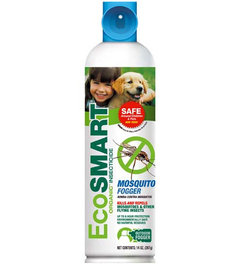
    We use this:

  • 8 years ago

    If it could be proven to me that it works to substantially lower the mosquito population, I'd bite!

  • 8 years ago

    Yes, if I were convinced that it really works, I would buy it. Better yet would be a group discount for the neighborhood. We have a lake and wooded creek ravine, natural springs, and moist soil much of the year -- and lots of mosquitos.

    I spray garlic extract, unfortunately also 2-3 times a summer have to spray a regular insecticide in the flowerbeds and groundcover, and this year experimented with setting up pots of stagnant water treated with mosquito bits/dunks in the most heavily populated areas, in the hope of attracting the egg layers (I can't say that I noticed an effect from that effort). The city comes through and fogs yearly once west nile virus has been detected -- don't see much effect from that, either, unfortunately.

  • 8 years ago

    Boy, do we have mosquitoes. We live in Sarasota/Bradenton area close to a County Park and lakes all over.

    This year out of desperation, I purchased a Dyna-Trap (not sure if that's the correct name) and hung it outside. It does not kill the mosquitoes but traps them. It has a UV lamp and a fan. Apparently the UV gives off CO2 which attracts them and they get sucked down into the trap by the fan. I bought a trap for 1/2 acre.

    I noticed a big difference after about a week. By two weeks I could go out in the yard without sprays or mosquito netting (which I wore constantly). I have bad reactions to mosquito bites and was getting eaten alive going in the yard.

    I was so impressed, I bought another 1/2 acre and had not one bit the entire summer.

    These traps are a pain to clean out because all the bugs are still alive. You have to be careful dumping the container into a plastic bag to keep them from flying off. After a while you get the hang of it.

    These traps do not affect any insects which are not attracted to CO2 or biting insects. I grow milkweed all over my property for butterflies. I grow host plants for swallowtails and other butterflies. I was very careful to not put something in my yard which would harm them or the bees.

    So far, what I find is noseeums, mosquitoes and those little white moths which fly around the lawn. Never found a beneficial insect.

    I'm pleased with the results. I see now that they are selling the traps in Bed, Bath and Beyond and other stores.

    My experience is that the traps work.

    Not sure how yours compares.

    Jane


  • 8 years ago
    last modified: 8 years ago

    Thank you for your responses. There are a wide variety of "traps" sold on the market. This particular trap is available on through licensed pest control companies. The trap focus is on population control as opposed to using a product such as a fogger to clear an area temporarily for a family function etc.

    The trap is designed for the control of Aedes aegypti, a mosquito
    species that is the vector of the Dengue and Chikungunya virus and
    breeds typically in small artificial (man-made) containers. For other
    mosquito species that prefer these types of breeding places, like
    several Culex mosquitoes, the trap will also be attractive. The
    actives in the trap will also have an impact on other mosquito species.
    The dissemination effect of the larvicide, however, is specific for the Aedes mosquito, which like to lay eggs in multiple places.

    Aedes mosquitoes are difficult to combat, as they lay eggs in
    just about any small water source, such as flower pots, discarded tires
    and empty containers. Another thing that makes it increasingly more
    difficult to control mosquitoes, is that they have become resistant to
    the chemicals that are used in vector control efforts.

    Here is a link to a great deal of information on this particular trap as well as videos which offer a great deal of detail. Thank you for your responses, they are greatly appreciated!

    http://www.in2care.org/#

  • 8 years ago

    The trap I use gets noseeums and mosquitoes. It attracts all insects which seek out CO2 which we do. Only biting insects.

    I am very impressed how well it works so far.

    Jane

  • 8 years ago

    irma while we don't see any reason it wouldn't, we cannot factually state that it does.

  • 8 years ago
    last modified: 8 years ago

    At Bed, Bath and Beyond? Great! I'll use the next $5 off mail coupon I get.

  • 8 years ago
    last modified: 8 years ago

    Attracting natural mosquito predators is what worked for us. We have a small river channel behind our property that gets shallow in dry periods, countless ponds and swampy areas in our neighborhood etc. Attracting mosquitoes to come fly in traps could go on forever and would end up in a lot if $ on replacement inserts in my area lol. It would probably work okay for people who dont have an endless supply of mosquitoes.

    *Dragonflies are really great. The adults eat the adults and babies/nymphs eat mosquito larvae..Its a double whammy. Many of the mosquitoes that cause the worse diseases are daytime biters. Dragonflies are good at eliminating these. I absolutely will not spray anything that would ever harm the Dragonflies. I think communities with high populations of daytime biting Aedes aegypti mosquitoes which cause Zika, Dengue, Chickungunya, etc should be planning and incorporating Dragonflies into their defense/prevention strategies. Obviously, in an emergency or outbreak they had to mass spray, which is the right thing to do but starting some prevention measures can work long term because pesticides aren't good for people, animals, or natural predators. Who knows what the long term effects of spraying everything and everyone from the ground and air every summer will be!

    Plus, keep on spraying those mosquitoes, and they will become resistant to pesticides so the pesticides will eventually need to become more toxic and that is a nasty cycle.

    *Bats are really great for getting the night time biters.

    *Little treefrogs will eat nightime female biters but will also eat the male mosquitoes that mate with the female biters. The males are attracted to highly scented night blooming flowers like brugmansia, jasmines, nycanthes arbor-trystis, stock, nicotiana, and white moon flower vine (Ipomea alba) etc. Male mosquitoes feed on nectar and don't typically feed on human blood. The males live about a week whereas the females can live up to 2 weeks with the main goal of mating, blood feeding, and laying eggs. I have tons of these kinds of flowers in my yard and the little tree frogs actually sit in the flowers and wait for their dinners. They stay nice and fat :) Thry obviously are eating more that just mosquitoes. Im sure they eat up some of my hummingbird moths and other moths but they are worth it. Its all about balance in nature.

    More needs to be done to save these little green tree frogs but that's another can of worms.

    Between the frogs, bats, and dragonflies we hardly have had any mosquitoes biting us in the last 3 yrs. When we first moved here we could hardly go outside especially in the evenings or cloudy days. Now I can go out and enjoy my night garden which I am thankful for because I have so many night blooming flowers. I'm not really seeing any day biting mosquitoes at all now.

    *Fish can also be used to eat mosquito larvae. The flying mosquitoes won't be caught unless the land on the surface of the water but fish can put a dent in the mosquito population. I am not using fish as a defense right now but have a little patio pond and the fish in there eat lots of bugs and any larvae that end up in their pond lol.

    Here are some types of Dragonflies found in Florida.

    https://www.insectidentification.org/insects-by-type-and-region.asp?thisState=florida&thisType=Dragonfly%20or%20Damselfly

    ~Sjn