Software
Houzz Logo Print
sarahbr2

Street lining shade trees zone 6b/7a?

9 years ago
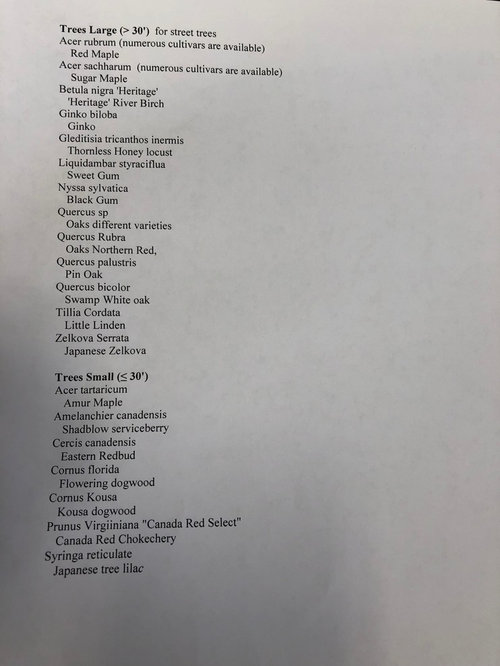
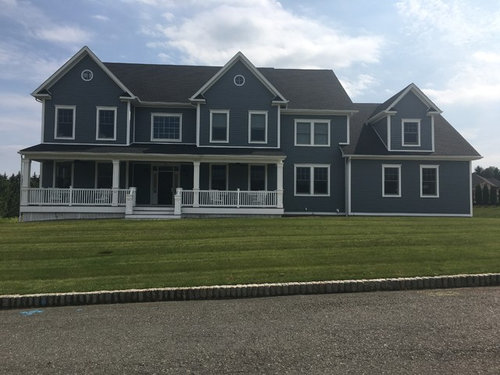
I am in NY, zone 6b/7a. I am in a new development that requires shade trees along the street. Here is a list of trees we can choose from (below). I was wondering if any of these are preferable to others? I want something easy to maintain. I will include a picture of the house below. I believe the town is requiring us to get 6 trees (one on one side of the driveway and 5 across the big run in front of the house). Thanks for any help

Comments (12)

  • 9 years ago

    Are they supplying them if not are they just examples and you could choose other trees?

    how far can the trees be from the road? Depending on the location you'll have to be aware of salt tolerant species.

    what is your soil type and PH that will also determine what you may or may not be able to use successfully.

    do you have a landscape plan in place so that you can integrate into that plan?

    The only true that's really not desirable on that list is the cherry tree

  • 9 years ago
    last modified: 9 years ago

    Let's approach it by ruling some out: sugar maple being hit by a decline syndrome in the NE. Sweet gum prone to branch breakage and surface rooting, also many do not like their spiky seed balls. Pin oak produces nuisance low branches. Flowering dogwood having related disease issues where ozone is above a certain concentration. Cherries are pest and disease prone. Tree lilacs produce pungent smelling flowers, like those of privet - to which they are related.

  • 9 years ago

    If low maintenance was what I was after, I'd be looking more toward the small tree list. I am thinking about pruning chores in the long term. Amur maple and serviceberry would be good choices. Dogwoods would be OK paired with a larger companion for some shade.


  • 9 years ago
    last modified: 9 years ago

    Go with Ginkgo. And tell them to correct the spelling. Can you mix and match, or must they be rigidly uniform?

    tj

  • 9 years ago
    last modified: 9 years ago

    Elm and English oak are two favorites, but don't plant too many of the same variety along the same street or a disease is likely to sweep through--the reason why you don't see too many elms or oaks lining streets anymore.

    Mulberries are another, if you don't mind a terrible mess from all those berries falling. Or Walnut, but they can attract noisy crows. Both used to line streets in the old days.

    (quick note on mulberries: Black tastes the best but berries stain more than white, if you get a fruitless variety don't get a male variety because it can lead to pollen allergy issues for some people)

    Zelkova is basically a disease resistant type of elm, and both elm and mulberry have beautiful leaves.

    I don't know if you can consider a flowering cherry. If you buy one that's not grafted onto different rootstock, they can get huge, and are fast growing. The downside is cherries have a higher chance of succumbing to disease or pests, but this can often be prevented by expert care.

  • 9 years ago

    I second the Ginko trees. Make sure it is a male.

  • 8 years ago

    Sugar Maple is awesome, but really a Tree best suited for wide open spaces.


    I don’t think the decline is a specific pathogen, rather a combination of several factors in street planting situations that they are more susceptible than an average tree - namely, compacted, limited volume, paved-over soil, excessive reflected heat, and road salt runoff.

  • 8 years ago

    Of that list...I’d say ginkgo, swamp white oak.

    Nyssa sylvatica is a great tree, but I’m not sure how well it does as a street tree. Maples also tend to decline quickly as street trees.

  • 8 years ago

    You are lucky to have a wide open canvas and no overhead power-lines. Decent amount of space. Of those trees, my favorites are Black Gum (Nyssa sylvatica) and sugar maple. Sturdy trees that are native and have good fall color.

    Of the smaller trees I like Eastern Redbud and serviceberry. In your zone you could try the less hardy redbud cultivars with red foliage.

  • 8 years ago

    I'd avoid the small trees. The house is tall, and needs tall trees to ground it. None of the trees strike me as obvious losers, though is low maintenance is the goal, the obvious choice is the honey locust. It's the only one with small enough leaves that they don't necessarily have to be raked up.

  • 8 years ago

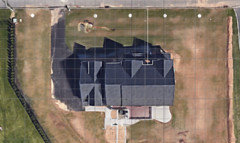
    Sorry for my delays in responding. The need auto be about 8 feet from the road (I think range is 5-10 or so). We can plant any variety and I think we can mix or do whatever as long as they are from the list. I do not know the ph or soil type. I do know there are many rocks in the land here (when we excavated there were many large boulders). I do not have a landscape plan in place yet. They have told us we need to plant 6 trees, but for symmetry I think 5 would look so much better so I am going to approach them today and see if we can do that. Below is where I was thinking of putting them. They are supposed to be every 35 feet but I think there might be some flexibility due to driveways and things. its the let me do what I want, there would be a gap larger than 35' between the left and right of the drive (each box is 10' if you enlarge the picture). We have already planted October Glory Maple and Princeton Elm in the backyard (we wanted trees that would grow quickly so we can get some shade sooner than later).


Sponsored
Mary Shipley Interiors
Average rating: 4.8 out of 5 stars34 Reviews
Columbus OH Premier Interior Designer 10x Best of Houzz