Software
Houzz Logo Print
corunum

Verticillium Wilt in Swamp Maples

8 years ago
last modified: 8 years ago
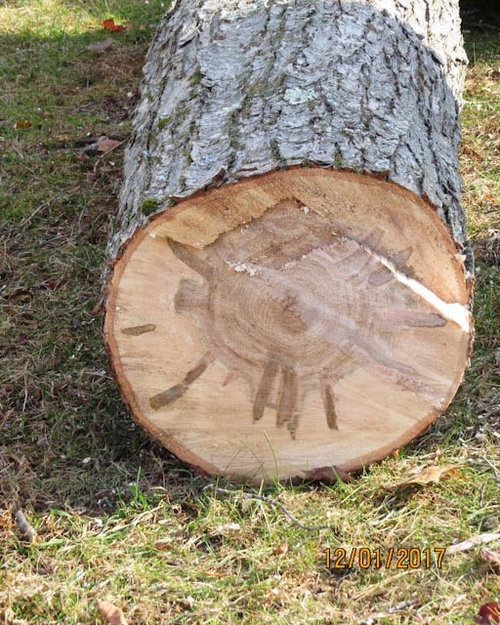
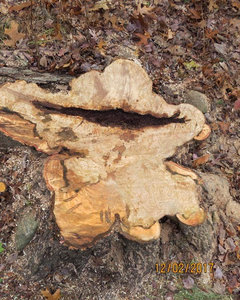
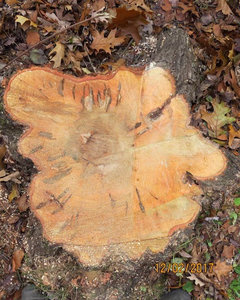
Verticilium Wilt caused those 'fingers' of virus inside 2 of our large swamp maples. It is a soil borne virus which means after the stumps are ground, I will have that whole area dug up and exposed to the sun through the winter. Come spring, new soil and new trees that do not catch the virus, like mulberry or birch, will be planted. When someone wrote, 'the meek shall inherit the earth', I think they meant microbes.

I'm just passing this info along for anyone who may notice that the tops of their maples are no longer leafing out well or the leaves are small and wilt too easily. And, the bark may exfoliate too gingerly for the tree's age. The links provided suggest how to deal with this virus and if replanting the area, the Minnesota Extension link offers a list of trees that are not susceptible to this virus.

Univ. Minnesota Extension

verticillium-wilt-treatment

Connecticut Ag Dept.

Inside the tree, those 'fingers' extending out from the center are tell-tale signs of the spread of the virus through the tree's system.

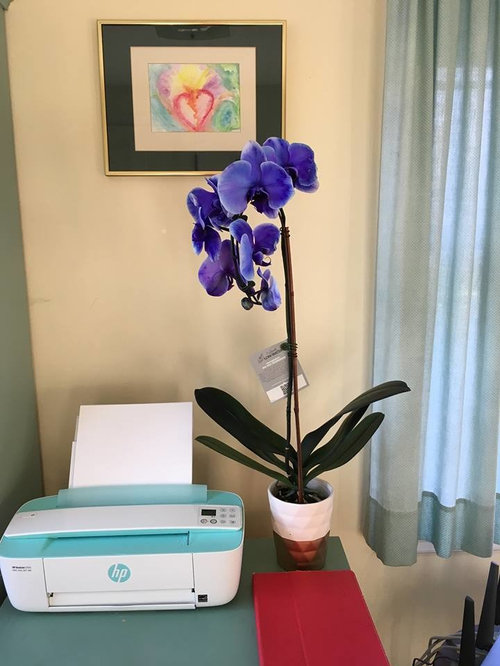
Because the arborist and I have history, (he cuts the trees, I tear up and go into the house) this morning he brought an orchid for me to soothe the wound. A fellow tree hugger. In 2008, when the 90' pines had to be felled, he brought a B&B kousa dogwood as a gift - it now has center stage in the front lawn. I'm lucky to know an arborist who really feels life.

Jane

Comments (17)

  • 8 years ago
    last modified: 8 years ago
    That pattern also looks like what woodworkers call ambrosia maple. It is caused by a fungus brought into the tree by a beetle called an ambrosia beetle. We periodically find it in our soft maples, silver and red/Acer saccharinum and A. rubrum.

    Here is a bowl made from ambrosia maple where you can see the same dark fingers extending from a dark center, though sometimes ambrosia maple is just streaky.

    The photos I have seen of verticillium look more like concentric rings, but I have no direct experience with it. So at least there is a chance that it might not be caused by verticillium.

    Your arborist sounds like a sweetheart.

    corunum z6 CT thanked NHBabs z4b-5a NH
  • 8 years ago

    Interesting! I'm going by the aborist's diagnosis and matching the pattern on Google images. I looked at the ambrosia maple images, they are very interesting. Lovely bowls and planks. Thanks,, NHBabs, new to me.

  • 8 years ago
    last modified: 8 years ago

    I've seen an awful lot of verticillium wilt in my day, especially with maples, but can't say as I've ever seen any "fingers". And I've never seen any Google images that show these fingers....maybe you could link some? Typically there will be vascular discoloration of the interior (center of the cut branch or trunk) in rings or circles and often, dark streaking of the sapwood but it always follows the grain, not cut across it. Since it is a disease that affects and destroys the vascular system, it would seem counterintuitive to have it show across grain - that's not how the vascular system functions.

    Not disputing that your tree has VW but those fingers are definitely an indication of ambrosia beetles and not of VW. But since the beetles often invade trees that are already in decline or stressed, it is entrely possible the tree was suffering from both issues. Check here for many images of ambrosia maple.

    corunum z6 CT thanked gardengal48 (PNW Z8/9)
  • 8 years ago

    Thank you, it does looks like ambrosia and you may well be correct that our trees had both problems. All new to me, so thank you for the information.

  • 8 years ago
    last modified: 8 years ago

    Note also that verticillium wilt is caused by a fungus growing in the vascular tubes and is not a viral condition.

    corunum z6 CT thanked Embothrium
  • 8 years ago
    last modified: 8 years ago

    Thank you all. Unfortunately, houzz will not let me correct the original post to read fungus instead of virus nor can I change the title of the thread. However, I am very grateful for the mistake(s) in that I have learned much more from you all and that perhaps the soil is not affected by the verticillium fungus. The stump grinding chap is coming soon and I was refusing to keep the wood chips thinking I could be spreading this disease. Above all, I am still sorry to have lost two mature maple friends that shaded us for the 43 years we've been here.

    Jane

  • 8 years ago

    It's tough to lose those mature trees which add so much character to a property. We have lost 3 trees near the house that were here when we moved in 20 years ago, all red maples. The first was simply age - it was hollow and leaning towards the house and overhanging the power lines, so we didn't want to take chances. Another was storm damage to a tree with really poor structure, and the most recent was most likely changes in soil moisture from changed drainage. We have one more on the list - a mate to the first one that has begun to drop larger limbs and seems to be losing its top. We will replace those two with one new one, and I have added several smaller trees, so the house doesn't look too bare. We also still have a pair of good-sized red maples in front of the house.

    If yours are at least 18" diameter and you know a woodturner, perhaps in exchange for the wood you could get a bowl out of the deal to remember your trees - ambrosia maple is much sought after by woodworkers.

    corunum z6 CT thanked NHBabs z4b-5a NH
  • 8 years ago

    If you DO have VW, it is a soil-borne pathogen and your soil will be very much affected. To the point that you do not want to replant the area with any VW susceptible species. And I would be very hesitant to reuse any wood chips from the tree on the property unless/until you have confirmed that verticillium was NOT the cause of the tree's decline.

    corunum z6 CT thanked gardengal48 (PNW Z8/9)
  • 8 years ago

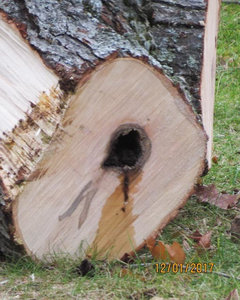
    Thanks to your information and postings, I hope I have reason to believe that it is not VM. Just took the pictures below of the stumps before they are ground. Do these shots reveal any more possibility that these trees were affected by the ambrosia beetles only versus verticillium wilt? Never thought I'd be rooting for a beetle, but it sure would be preferable to VM impregnated soil - so I think.

    My border is naked without the maples and I would very much like to plant Eastern red cedar or another evergreen tree. In between these now felled maples, is a young Eastern Redbud that is thriving. No sign of wilting leaves on the redbud which I read is also susceptible to VM.

    Please know that I am very grateful for you all taking the time to post.

    Jane

  • 8 years ago

    Your local Extension office should be able to help you determine what you have there.

    corunum z6 CT thanked Embothrium
  • 8 years ago

    The last photo looks suspicious but that's all I can say from a distance :-) VW really needs to be ascertained or confirmed by a plant pathologist. But if you want to plant conifers - have at it! They are resistant/immune to VW.

    And it is quite possible to have two susceptible species in very close proximity with each other and one contract VW and the other remain disease-free and completely healthy. So the redbud looking good is not a firm indication that you are VW free. But except for some doubts about the last photo, I see no obvious signs of VW on that wood........it may well have been just a beetle issue.

    corunum z6 CT thanked gardengal48 (PNW Z8/9)
  • 8 years ago

    Embothrium - thank you, yes, I did send the pictures via email to the University of Connecticut's Extension office. I would like to know for sure, one way or the other.

    NHBabs - no wood was saved, hence, no bowl. At this age, I'm not collecting or buying, but am a fan of 'The Giving Tree'. :)

    Jane


  • 8 years ago

    Reading the comments/thoughts above causes me to ask a question. Where were these maples planted; out in the back forty, along your front sidewalk or just in the front yard before the house? Also, did your arborist show you the easy method used to diagnose Verticillium wilt?

    corunum z6 CT thanked nandina
  • 8 years ago
    last modified: 8 years ago

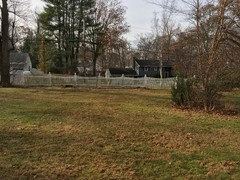
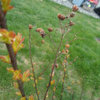
    They were here 43 years ago when we bought the house. Three maples remained near the fence, now there is one which appears to be healthy. The stumps may be visible in this picture. They stood alone, not crowded by anything. I await an answer from UCONN, but I do not know of an easy test for VM. Had never heard of it before last Friday.

  • 8 years ago

    A beetle bug is UCONN's answer -Prionus. Hats off to NHBabs and gardengal48 for recognizing it. I will tell my friendly arborist.

    "We cannot identify a disease from these pictures. Verticillium wilt would be in the vascular tissue and not in small areas like in the pictures. There are borers that feed on tree roots and then move into the base of the tree, and perhaps that is causing the damage seen.

    See if any frass (dry insect poop) can be removed from the areas. If so, then the damage is done by a boring insect. Suspect a Prionus, if so."

    Thank you all for helping me. GW is lucky to have members like you.

    Jane

  • 8 years ago

    Indeed, nandina, very wise. There is no NG in our neighborhood, but I will pass your information along to my friendly (really, nice guy) arborist. Thanks so much.