Software
Houzz Logo Print
cindy_strickland9161629

Pruning Little Gen

8 years ago

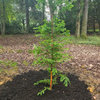
I recently got a great deal on 5 Little Gems. I originally wanted to buy the standard Southern Magnolia- the one that gets huge. My question is, is there a way to prune these trees, while they are young, to promote broader growth with less limbs? And any information on how I should prune would be helpful.

Comments (14)

  • 8 years ago
    last modified: 8 years ago

    What are you trying to accomplish, specifically? In other words what are the details of the situation? "Broader growth with fewer limbs" sounds like you are trying to do something like train them against a wall - to which this species lends itself, actually. If a body knows how to espalier plants.

    As far as the eventual size goes I have seen this selection over 40 ft. tall near Los Angeles. The original seedling, located in the SE US was nearly columnar when shown and described in the Magnolia Society bulletin. Propagations of it - including the aforementioned one in CA - that have grown beyond the bushy habit these may often produce at first have comparatively narrow crowns also.

    Hopefully you are not trying to use the planting as a screen in a snowy climate as this variety is quite prone to serious breakage under snow loads. At least in my cool summer region, anyway.

    We also have problems with foliage mildew and winter injury with this one in the P.N.W. Nevertheless, with so many of them having been planted by now there is a percentage of generally acceptable looking specimens here that have reached some size.

  • 8 years ago

    Contrary to most literature, southern mags are eminently 'pruneable'. Let us know what your goals are and where you're located. Little Gem will get fairly large in time, but it has smaller foliage and is more gracile than the straight species. My tree, planted at three feet in '88 is around twenty feet, after losing five feet from an ice storm, here in TN.

  • 8 years ago
    last modified: 8 years ago

    Magnolia grandiflora has been used for formal effects in Italy and trained flat against walls in Britain for a long time. The web has lots of pictures of pruned and trained examples as well as illustrated instructional information.

    "Can be pruned into topiary and hedges and effectively grown as an espalier"

    --Andrew Bunting, The Plant Lover's Guide to Magnolias (2016, Timber Press, Portland)

  • 8 years ago
    last modified: 8 years ago

    I’m in Southeast Georgia, zone 8b/9a., and the soil is fairly acidic, well drained sandy loam. We don’t get snow, and it drops below freezing maybe 7 or 8 times a year, and it only stays there for a few hours. Ice isnt an issue, just an occasional frost. I’m not using it as a screen; hence, pruning the tree so that it has less but thicker limbs, with a broad, rounded form versus the “Christmas tree” form.

  • 8 years ago
    last modified: 8 years ago

    Why the thinning? It's not a bark interest or "character" tree in any other way, in the sense where it would usually be desirable to expose and emphasize the internal structure. (In fact when it is opened up by mildew the usual result is that it looks gaunt, would be much more attractive with a dense covering - with the now exposed branches not having any appeal of their own). Instead the foliage, flowers and overall shape are the thing. While these often have a broader, blunter shape in nursery sizes once they start to become more narrow and pointed - and not all propagules always do this, at least not for many years - then they are starting to assume the natural structure for this variety. So while you could use heading cuts to interfere with this it would consist of fighting with what the plant is supposed to become.

  • 8 years ago

    The nature of Little Gem is to grow taller than wide, even into old age, hence the "Christmas tree" shape. Old ones I've see in the southeast possess this trait, they may behave differently in the PNW. The natural growth habit is to grow in a flexible, willowy habit, with thinner scaffold limbs, unlike run of the mill seedlings. It is sometimes called "the Bradford pear of magnolias" because of it's propensity to self destruct during heavy snow and ice events, but that isn't a concern in your area. One variety I grow that has a wider than high habit without pruning is Edith Bogue.

  • 8 years ago
    last modified: 8 years ago

    'Edith Bogue' is one of the most commonly available cultivars of M. grandiflora in NJ (at in other areas at the northern limit of their range), along with 'Victoria' and 'Bracken's Brown', but I am still confused by what the goal of pruning would be. Does the reference to "Christmas tree form" mean a more vertical grower or one more triangular in form? I don't see much a difference in the forms of 'EB' vs. 'Victoria' (both are broad; neither are dwarf). 'Little Gems' seem to be the ones most pruned (I have seen them espaliered). My 'Teddy Bear' or 'Alta' is definitely more columnar and distinctly narrow and vertical.

    My other thought is that a trees form is partly determined by its genetics but don't local growing conditions and site also play a role in its eventual form (sun exposure, prevailing wind direction, etc.)

  • 8 years ago

    Thank you for all of your advice.

  • 8 years ago

    You're not wanting to "limb it up" into a lollipop are you? It saddens me everytime I see someone do this to a southern magnolia, in nature they like to be branched to the ground with lots of leaf litter underneath them to keep their roots shaded and cool.

  • 8 years ago

    No, I don’t want to limb it up into a lollipop. I want to the tree to have less limbs, not as full, but heavier, thicker limbs that promote a wider, broader form. I understand it isn’t the tree’s natural form. I understand that some of the experts believe the tree’s bark isn’t interesting and it doesn’t lend itself as a character tree. I understand many have a preferred, subjective ideal of a tree’s traits. But my question wasn’t a debate. It was juts a question pertaining to pruning, and if it was possible to train a tree, while it is young, to force it’s form into something that it wouldn’t do naturally. And, if so, how.

  • 8 years ago

    You can "train" a tree to have less limbs by simply pruning off limbs and keeping only the ones you want, as the tree grows. If there is more to the answer you seek, maybe we still just aren't understanding what you are after. I, like the others above, don't see the WHY, but the HOW seems pretty straight-forward to me.

    If you want the limbs to grow "out" more than "up", methods ranging from limb spreaders to weighing-down can be used.

    If you do manage to accomplish what you are after, post pictures! I, for one, would be interested to see what happens.

  • 8 years ago

    BTW, make sure to use proper pruning technique (make the cut immediately outside the branch bark ridge / branch collar, etc), when you remove limbs.

  • 8 years ago
    last modified: 8 years ago

    My concern is, if I thin the amount of limbs, will the diameter of the limbs left on the tree grow larger, and will the form of the tree be more broader? Or, will the limbs left still be narrow in diameter and the tree retain its natural, narrow form? I really don’t know how else to ask the question without getting a lot of advice or opinions that don’t answer my question.