Software
Houzz Logo Print
katrina7a

Fruit flies?

8 years ago

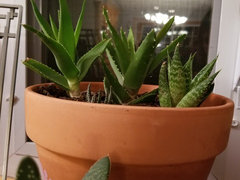
Hello there. I'm a newbie with an amateur question, thanks for your input! I have an assortment of aloes planted together in a terra cotta pot with store bought cactus mix. Yesterday I noticed there is a swarm of fruit flies hovering around my plants. I have other succulents on the same windowsill and those plants are undisturbed. There aren't any dead leaves on my plants or laying on the soil so I don't understand why it has fruit flies. Any suggestions on how to get rid of them or why they're there in the first place? Thanks in advance!

Comments (24)

  • 8 years ago
    last modified: 8 years ago

    If they look like fruit flies, they are probably Fungus gnats. They like wet and organic conditions. Flies themselves do not feed on plant but are very annoying and lay many eggs. These hatch into tiny larvae that lives in moist soil and feed on any organics they may find.

    Best is to prevent spread of them by keeping soil relatively dry - succulents should dry up between watering, and soil needs to drain fast. Unfortunately, bagged soils are often not as well draining as they are advertised. Soil could have been moist in the bag and contaminated. Using lots of gritty, inorganic substrates will help with that.

    Immediate help to eliminate flies would be using yellow sticky strips, and/or get a small container and put some vinegar in it. Put a covering over it (like plastic bag); cut a very small hole in it and slightly push down, creating a funnel. Flies will get in but can't get out. To kill larvae, get some Mosquito dunks. Crumble small piece of it into water you use to water plants. Mosquito dunks contain Bt-i, that is not harmful to ppl or birds or pets, but will kill larvae. Bt-i is also available in small bottles - if you can find it. Make sure it is Bt-i, not Bt-k.

    You probably need to repeat 2 or 3 times, about 6-10 days apart or so, since there could be many eggs in the soil and they do not hatch at the same time.

    Long term help is to make sure plants do not sit in wet soil. Also make sure there is no standing water around plants, and there is good air circulation. If you think air doesn't circulate well, small fan will help.

  • 8 years ago

    Thank you very much for the quick and detailed explanation. After reading the forums and browsing the internet I'm feeling as though my aloes are in too big of a pot as well. I thought I was giving them room to grow but really I'm probably opening up the possibilities of problems caused by the extra soil. Hmm!!

  • 8 years ago

    Do you have any photos?

  • 8 years ago


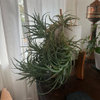
    There is also a teeny Hawthoria I plopped in the front. I'm not even sure what the plant on the right is, it was a cutting from a friend that rooted real nice and deep. Looking at this photo taken 5 minutes ago I can see there is moisture, i haven't watered in at least 2 weeks. Repotting also in order? Or treat the insects and wait until spring?

  • 8 years ago

    Excellent, will do. I potted them up before knowing to add perlite to the cactus mix (learned that reading this forum for days and days soaking in the knowledge all you experienced growers have to share!). Thanks again for your input :)

  • 8 years ago

    Katrina, many people do not take time to read here, so good for you! Even if the posts don't relate to your plants, you can learn a lot.

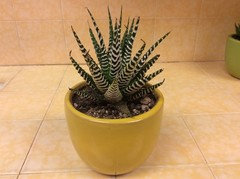
    The haworthia would love to be in a smaller pot. Here's mine, but it's even bigger now. I would recommend clay rather than the ceramic mine are in. The plants dry out faster in clay. I have to be very careful about watering because the ceramic don't dry as fast. Good luck with your plants.


  • 8 years ago
    last modified: 8 years ago

    Turns out that the potting mix is nice and dry down to the bottom, tried the chop stick trick and it came out clean and dry. Maybe my terra cotta is damp because of mother nature! We had a 65 degree day, after 2 weeks of about 10 no joke, humidity and heavy rain for the past 24 hours. I had some windows cracked to let that spring time feeling in before it goes back to 30 tomorrow (New Jersey). Maybe the pot soaked up some dampness from the air, or maybe I'm crazy thinking that's even a possibility. Anyway, Lowe's here I come, I need me a new little pot for my tiny Hawthoria and some mosquito dunk! The real challenge for me will be leaving without a new plant, even though I've wiped all the Lowe's clearance sections in a 30 mile radius clean!!

  • 8 years ago

    Whatever type, shape, style of pot you choose, make sure it has at least one drainage hole in it please. Glazed insides should be avoided, as should those with top openings smaller than their widest part...ones with ‘fat bellies’ as we call them!

    Gill

  • 8 years ago

    Fungus gnats - horrid little beasts. I first came across them when I picked up a Mammillaria and the round plant just rolled off and fell on the ground - leaving a squirming mass of white grubs that had eaten right through it at soil level. I had previously noticed small flies buzzing around it. They are attracted to peat - so stop using peat totally - a peat free gritty mix will do the business. Also the adults are poor fliers and get blown away by the wind, so plants indoors are most at risk.

    Interestingly, if I look in my older texts - Huxley and the Lamb duo, published in the 60s - in the section on pests, fungus gnats do not even get a mention. They appear to have become a nuisance more recently, I assume reflecting the increased use of peat.

  • 8 years ago
    last modified: 8 years ago

    Rina has given great advice!

    Katrina, an immediate but possibly more troublesome way is to remove all plants and destroy all infected soil. Clean and wash everything thoroughly of any soil and grubs. Have tried Bt-i but they are so persistent, could not live another day squishing gnats XD

    When repotting, mix in a lot of gritty material into your soil - assuming you are not using gritty mix yet. You can use pumice, lava rock, perlite, etc. While perlite is not a bad choice, it does float to the top over time and turns yellow. If that bothers you, you can consider lava rock that is denser (won't float) and that matches your soil colour more closely :) I usually find top dressing with lava rock keeps the gnats away. They may visit, but they don't go crazy laying eggs like on regular soil surfaces.

    It's nice seeing your updates, looking forward more from you! :)

  • 8 years ago

    Silly me, I thought top dressing was simply for visual sake, makes perfect sense though that it would keep critters from being able to lay eggs so easily. I'm thinking a spring time repotting of alllllll my plants is in order for the sake of consistency and long term health. I do have some glazed and plastic pots in use, those plants do get watered less frequently. After reading over and over that terra cotta is best now I feel guilty for choosing pots for their looks over functionality. When people say rinse the old soil off at repotting that's literally taking the roots under a hose for as long as it takes to wash everything old away? Seems so harsh, do you have to let the plants dry out for minutes or days or at all before repotting? I'm going to wait until spring to mess with those plants that are doing well currently, just curious about the proper procedure. Thank you thank you :)

  • 8 years ago

    Terra cotta is not necessarily always best choice, often plastic is actually better. Depends what kind of plant & what growing conditions. Also I'm not one for top dressing, never have been, but also rarely have had insects Thank G_d.

  • 8 years ago

    Maybe I should leave well enough alone then!!!? I have more confidence that I'm **starting to recognize when my plants aren't doing well and switching things up accordingly. The aloe pot seems to be the one taking me the longest to figure out, it's on it's 3rd windowsill since coming home, and the only pot I've noticed any invaders on. Time will tell.

  • 8 years ago
    last modified: 8 years ago

    If washing the roots, laying plant on some paper towels, newspaper or even cloth after will help to soak up extra moisture. Blasting them with a hose shouldn't be problem either, but swishing root ball in a dish of water is usually enough. Hydrophobic peat is difficult to get off the roots, since it dried up and hardened like a brick. It is better to use warm water in a dish, as it will re-hydrate peat faster.

    You'll probably loose some roots, but if plant is repotted into better conditions, it will grow many new roots, and most likely much more and stronger ones.

    Repotting is Spring is good idea, unless there is plants that are suffering in water-logged soil right now.

    Many ppl use clay-terracotta pots and swear they are best; I use mostly plastic and have np. As long as there is good drainage - drainage holes in pots and fast draining mix - plastic is ok. I have almost 200 succulents in plastic pots - some have been in same pots for few years. All tropical I have are in plastic too. And many perennials, overwintering outside, also in plastic pot.

    I am not sure if FG are attracted to peat - but they are certainly attracted to damp soils and also any mix with lots of organics in it. That is one of the reasons manure of any kind is not suitable for pots, especially indoors. It could work outdoors, as there are many beneficials to help, and usually better air circulation/wind. Hot, wet, humid, too much organic matter, standing water, poor air circulation = they are all contributors to what many pests like. Most could be eliminated and FG will go somewhere else :)

    ETA: adding to last paragraph: ...peat often stays wet for log time - and wet is attractive to FG...

  • 8 years ago

    Since I moved all plants outdoors all year round I have never seen a sciarid fly - they do appear to be an indoor problem, as other growers have reported.

  • 8 years ago

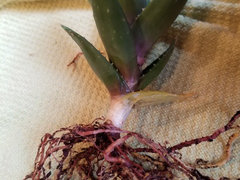
    I couldn't resist tinkering with this pot today, the gnats were bothering me, despite treatment and dry mix. I rinsed and swished off as much of the old mix as I could without feeling like I was causing too much damage. Is this normal coloring, I'm referring to the purple hues, I do not believe I see any rot on the roots.

  • 8 years ago

    Also, this was a cutting that I have had about 6 weeks that I stuck in my aloe pot. How long should I allow to dry before repotting after it's removal and rinsing today? Thanks again!!

  • 8 years ago

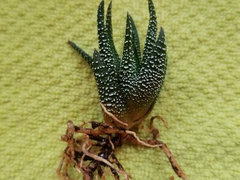
    This little guy will get a pot of his own now :)

  • 8 years ago
    last modified: 8 years ago

    Few hrs to a day should be plenty for roots to dry up from excessive water. There is no point in leaving roots to get too dry/desiccate; leaving plant on paper towels usually helps to get rid of excessive moisture fast. Cut off anything damaged, let soak up extra water, pot into fast draining mix and pot with drainage hole(s). Do not water for a day or so (depending on how wet it was and if you had to cut roots), and put where plant will get good air circulation and light, but not strong sunlight. Haw could stay in less sun, move other plants gradually into best sunlight you can supply.

  • 8 years ago

    Those annoying gnats are something we often take home from the store or greenhouse ... I have a jug of Mosquito Bits that I sprinkle on every plant that comes home with me. It will not be an immediate end to the critters; it can take a couple of weeks to catch each life cycle. But you will see less and less, and then they'll finally be gone! Sometimes I'll have to sprinkle a few more spoonfuls for a second dose here and there. But if you're vigilant, it does work, and works well!

  • 8 years ago
    last modified: 8 years ago

    Fungus gnats often come in on new plants, but not exclusively. If there are suitable conditions for them, they just 'magically appear'...and stay as long as they have them available.

  • 8 years ago

    Thank you all again! Hopefully my plants survive, and then thrive, after this change into clean soil. Lesson learned, I appreciate all the wonderful advice that I will use on all plants going forward!

  • 8 years ago

    Hi Katrina

    I used to think so too, but having kept a mix of plants with and without top dressing, it definitely made a difference. Personally, only the plants without a good layer of top dressing have been attacked by gnats. The top layer does need to be thick enough and not leave exposed soil. A side note, top dressing helps retain moisture in the soil. Would suggest using with a gritty soil mix and good air circulation if you were to try it :)

    I've used porous (non-teracotta) pots and plastic pots. Both work fine, porous material just helps soil stay less moist.