Software
Houzz Logo Print
lesssbehonest

Backyard eyesore.... any ideas?

8 years ago
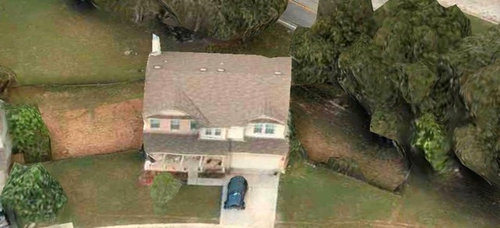
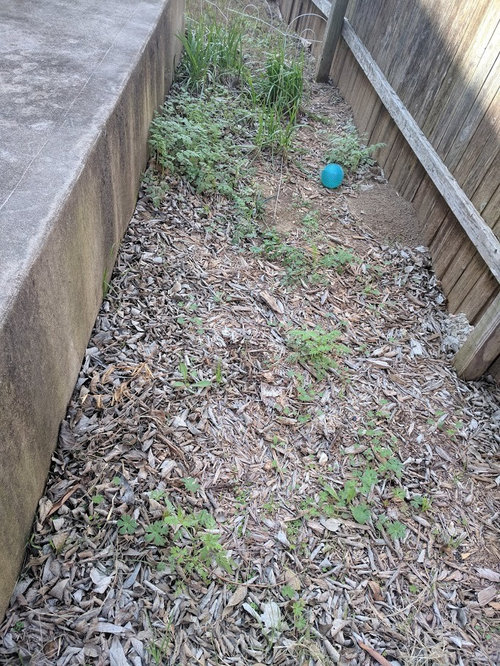
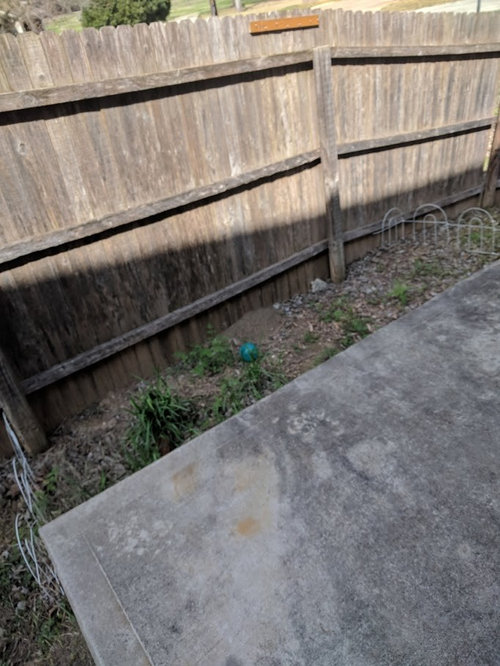
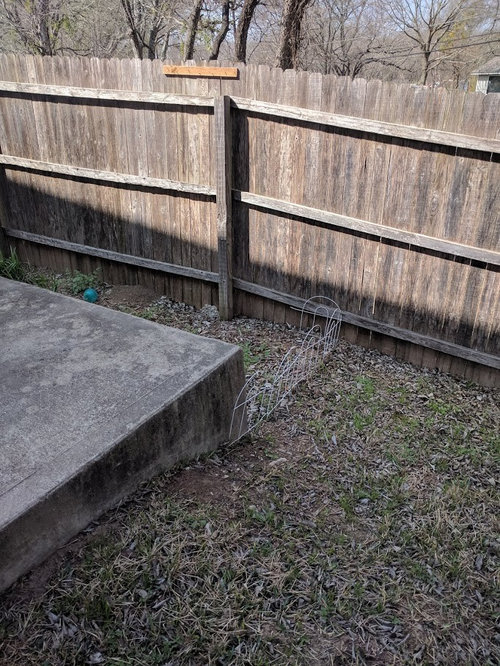
I've recently rented a home, and in the back yard there is this eyesore of a spot that drops about 2 feet from the cement porch. It has no redeeming qualities that I can see; the size is poor, it backs up directly to a fence, and it's basically shaded all day from the house.


The spot is about 10.5' x 2'. I'm open to any and all ideas for a beautifying solution! If anyone's curious for gardening info, we're in a zone 8b and that spot literally doesn't see the sun once all day long.


Additional info: The aerial photo shows the backyard design which is basically 1 med-large backyard split in half with the house in the middle. The eyesore strip separates the two sides, and is the first thing you see when you exit the back door onto the small patio. We don't plan to set up any furniture on this patio as we've got plenty of room on either side for that. Since it's a rental, we aren't looking to extend the cement patio, so that's out.


Comments (23)

  • 8 years ago

    I'd consider a rock wash.

  • 8 years ago
    last modified: 8 years ago

    Pull out all of your weeds and fill the area with several inches of pebbles. I would then place tall plant pots in the gap - as many as you like, filled with whatever you like. When you move from your rented house the pots can come with you.

  • 8 years ago

    Unless you live in an area that is quite dry, use bark mulch rather than rock. Easier to move, and weeds will be easier to remove. Don't pile the mulch against the fence. I like the idea of a row of tall pots, but a shade-loving groundcover would also work.

  • 8 years ago

    Without any sun, nothing will bloom. I'd pull the weeds and ignore it.

  • 8 years ago

    The Nandina/Heavenly Bamboo in Doug's pic is one of my favorites. Ours do very well in filtered light and some even in total shade. However, I'm pretty sure they'd be fine in full sun. A good bet is to go to a local nursery for recommendations for zone 8b. Some potted plants in your problem area could look really nice.

  • PRO
    8 years ago
    last modified: 8 years ago

    Nandina thrive in shade, part shade & sun. Very few cultivars of Nandina are invasive. In fact in that space, a spreader like compacta would be ideal. As for toxic, no one in my area ever died from nandina. The plant is placed in Toxicity Category 4, the category "generally considered non-toxic to humans", but the berries are considered toxic to cats and grazing animals.

  • 8 years ago

    Don't do nandina! Toxic and invasive.

  • 8 years ago

    What about hostas? Aren't they considered perfect for shady areas?

  • 8 years ago

    If you place hostas, daylilies, etc in that space, I'm concerned that someone will step off the porch and injure themselves. A drop of two feet is substantial to a little kid or senior (like me LOL).

  • 8 years ago

    Nandinas also thrive in dry shade.....a very versatile plant!! And they are only invasive in specific locations - not everywhere - and their toxicity is no more than it is with several dozen other berry or fruit producing plants. An excellent evergreen shrub for a container planting. And using taller containers in that space would elevate the shrubs into a much sunnier aspect (as you can see on the fence) as well as providing a psychological barrier to the 2' drop.

  • 8 years ago

    The berries can kill cats and birds.

  • 8 years ago
    last modified: 8 years ago

    We had them all over our yard. Sometimes they would just die for no reason I could detect. Or they would get gigantic. New ones would pop up in planters separated by pavers. I've removed them repeatedly from my courtyard planters, but they keep coming back. I liked the pretty colors, but I would never intentionally plant them again.

  • 8 years ago
    last modified: 8 years ago

    And so can the berries or fruits of umpteen other plants that contain cyanogenic glycosides - apples, crabapples, cherries, cotoneasters, serviceberry, elderberry, hollies and hawthorns all contain these alkaloids in their seeds and all are consumed by wildlife with no ill effect. They are seldom ever ingested in quantities large enough to cause any toxic reactions. And several cultivars of nandina do not reliably produce flowers anyway, so concerns about eating the berries are moot :-) The issue has been highly overstated.

    I actually wrote a small op-ed piece on this topic that was published in Fine Gardening.........just saying :-))

  • 8 years ago

    Do you have them in your yard? I'm in San Diego. They are everywhere.

  • 8 years ago
    last modified: 8 years ago

    Ferns, but don't they like moisture... fence could use some tall textured plantings.

    "Taking care of outdoor ferns is so easy that you often forget that they are there. They are excellent for naturalizing, and will reward the gardener with their graceful texture year after year."


  • 8 years ago

    I was thinking hostas also. We have one planted by the previous owners in a tiny little patch of dirt that got weedwhacked once by accident and yet the next year came back gangbusters anyway.

    For safety I’d see about painting a strip along the edge of the concrete, though, to highlight that it is a step. Something simple like a narrow band of white or some other light color will do the trick, plus maybe tuck some lights in with the planting to help make the edge show up when it’s dark. (Like actually pointed at the side of the concrete pad or washing it - you want to create a visual difference between the concrete pad and the planing bed so people don’t think the pad continues and fall off.) You could do that with some small spotlight type lights on the fence, too, pointed at the edge.

  • 8 years ago

    I'm with hostas also. They love shade and stay nice looking all summer, low maintenance and they are a perennial. Ferns would also work.

  • 8 years ago

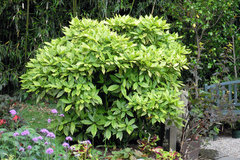
    I'm in zone 8a, and have had really good luck with Aucuba Japonica (we call it 'Gold Dust' or 'Spotted Laurel' here). It's an evergreen shrub that grows in full shade. I think if it sees sunlight, its leaves burn. I have three on my never-sees-the-sun side of the house. Mine aren't as full and bushy as this one pictured, but they are very easy to care for plants. Honestly, I never even watered them once planted! They're on their own and have thrived for over 10 years.

    Aucuba (Aucuba japonica) · More Info

    I would plant these, and then put a few impatiens & sweet potato vine in pretty containers on the patio itself as a colorful barrier to keep people from falling over the ledge. Be sure to show us after you decide what to plant. Happy Houzzing!

  • PRO
    8 years ago

    grub the weeds out and lay down a thick layer of arborist's wood chips to suppress future weeds. Then do a row of long, narrow containers that'll raise your plantings to the patio level or just above - something like thesestock tanks (don't forget to drill holes, of course). The bonus is that they'll 1) help define the edge of the patio and prevent falls, and 2) since it's a rental, you can take them and the contents with you.

  • 8 years ago

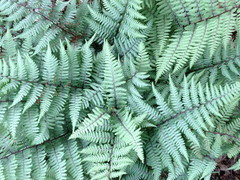
    I'm borrowing from old thread: ghost or Japanese painted ferns don't spread as invasively....Below is a picture of Ghost.

    Some ferns run (Ostrich Ferns, Hay Scented Ferns) and some clump.

    Japanese Painted Ferns are great and also Lacy Ferns. Try Athryium 'Lady in Red' Athryium 'Ghost' and Dryopteris 'Brilliance'.


  • 8 years ago

    Goatsbeard is large, flowers and is native. Choose it rather than hosta. Actea or bugbane is tall, native, flowers and will grow in shade.

  • PRO
    8 years ago
    last modified: 8 years ago

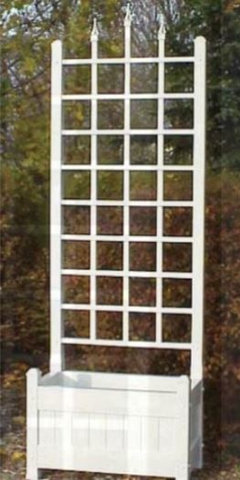
    A few trellis planters to block and beautify