Software
Houzz Logo Print
dlm2000

Food safe sealer for exterior dining table?

8 years ago

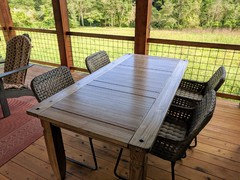
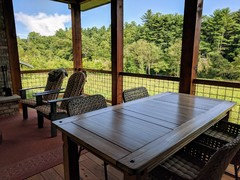
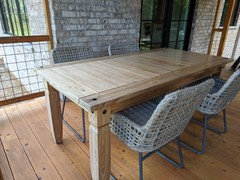
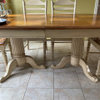
I have a Brazilian pine dining table that I used on a 3 season porch for 15+ years. It's now on a covered open porch with deep overhangs but is still subjected to weather - sun, rain and snow (although minimal snow and we can probably get a cover for winter) and it needs a renewable protective finish. Renewable is key as I don't want to be stripping or sanding repeatedly. We use Penafin on other exterior wood, like porch decks and posts because of the excellent ultraviolet protection but that's not something I want on an eating surface. I don't think I'm being overly concerned - obviously we don't put food directly on the table but I'm not comfortable with the idea of the petroleum distillates where I eat. Any suggestions for something that can stand up to western NC sun and wind driven rain? Hoping want to protect this wood and get continued use out of this table.

Comments (10)

  • 8 years ago

    Most finishes that cure/dry to a hard finish are safe. Oil based polyurethane is not safe to eat, but when applied and dry it is safe. Varnish or lacquer are the same. Shellac is not safe as a liquid if denatured alcohol is used to dissolve it, but use vodka or whisky and you can safely drink liquid shellac.

    What you want is a weather resistant finish.

    DLM2000-GW thanked User
  • 8 years ago

    Ok, so maybe I'm overthinking it, but.... The skin contact with something like penofin concerns me - I'm an elbows on the table kind of person - and I often sit at that table with my computer or doing paperwork so that is plenty of skin contact, hands/arms. Our baby granddaughter will be visiting and is sure to be held by someone sitting at the table where she can reach out and touch it, too. Skin is the largest organ and I want to be safe. Not crazy safe, just safe, especially for the baby.

  • 8 years ago

    The manufacturers of all wood stain/dye/finish products include proper handling and application requirements. Some stains or dyes can cause reactions to skin/eyes/breathing----safety information is required to be included on containers.

    I know of no stains or dyes that are manufactured to be the final finish. All, to my knowledge, need to be covered by some kind of finish. Those finishes come in several types, oil based, water based, alcohol based or lacquer(requiring lacquer thinner as the dissolving agent).

    All of those types of finishes are manufactured to provide a coating over wood, stained, dyed. or natural for protection and beauty. All are applied as a liquid and all dry/cure to a hard state with varying protective properties. Shellac/lacquer finishes are susceptible to water damage, so are less desirable as dining furniture or kitchen/bath finishes. Varnish(non poly) is more moisture resistant, but can be damaged by hot cooking equipment. Polyurethane is basically a liquid plastic, very impervious to moisture , but prone to chipping when struck, especially on edges.

    All the above are food safe when cured/dry. And all are inert as far as allergies/skin problems when dry/cured. The off gassing(when the carrier liquid is drying---called VOC's) can cause respiratory/skin irritations---which are included in the directions for use and safety information. Oil based finishes and lacquer create the most severe VOC's when curing. Shellac(alcohol based) smells some---I regularly use it in my shop with no masks or ventilation with zero effects other than the shellac smell---which disappears in less than 20 minutes. Actually, shellac flakes(before dissolved in denatured alcohol is a natural product and the flakes are edible. The taste is not pleasant, however. I suppose a person could use vodka or whisky and make a night cap beverage. And thin shellac coatings are used on foods---how do you think M&M's don't melt in your hand, but do in your mouth. ;-)


    DLM2000-GW thanked User
  • PRO
    8 years ago

    I would use a waterborne varnish. Easy to maintain and keep up.

    DLM2000-GW thanked Palace Painting & Decorating
  • 8 years ago

    After looking at the data sheet for Penofin I agree it is probably best not used on this. Not because of petroleum distillates, which evaporate away as it dries, but because of the carbamate fungicide.

    An exterior varnish would do the job.

    DLM2000-GW thanked toxcrusadr
  • 8 years ago
    last modified: 8 years ago

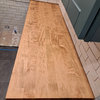
    Thought I'd throw an update here - I always like to see how things end up for posters so better late than never. And thanks again for all the suggestions.

    I ended up using General Finishes exterior 450 water based top coat in satin and am pleased with it. Long term, we'll have to see, but at least I feel the table has some protection on it and I'm not worried about skin contact ;-) I gave it a good cleaning and sanding before starting and rubbed it back between coats to get any little nibs out.

  • 8 years ago

    that's lovely!

    So glad you updated

    DLM2000-GW thanked talley_sue_nyc
  • 8 years ago

    Looks great, can you make me one? :-P

    DLM2000-GW thanked toxcrusadr
  • 8 years ago

    toxcrusadr if you mean can I MAKE a table for you - I didn't make that one! It was a Pier 1 floor sample 20 +/- years ago, $100 IIRC and has turned out to be one of the most used pieces we have.

Sponsored
Haus Studio
Average rating: 4.8 out of 5 stars28 Reviews
Franklin County's Preferred Custom Cabinetry & Design Studio