

Working/experimenting with succulent gritty mix
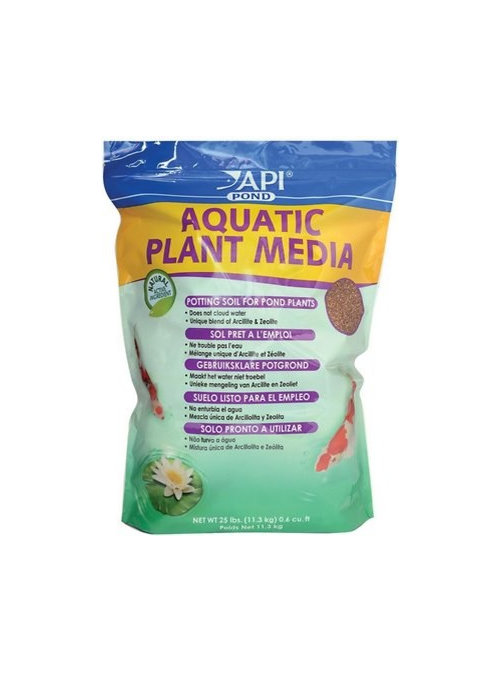
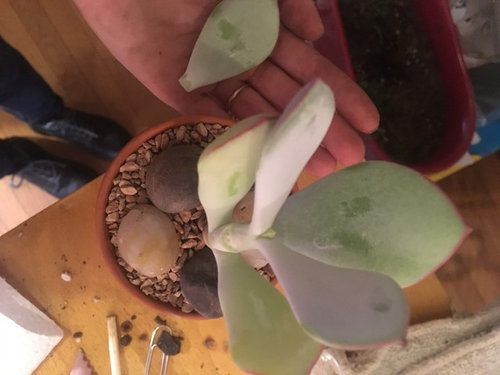
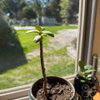
So, it all started with bonsai jack’s succulent gritty mix, as I’m sure it did for many of you. I have experimented with mixing that with other things, finding similar ingredients ect. Recently I found a bag of API aquatic plant medium. It seemed like a promising thing and was super cheap. I have already planted something in just this mix, but I was wondering what could be added to make it even better? Perhaps some pumice? Crushed granite? I’m trying to avoid pine bark all together, I’m wondering if anyone had succesfully experimented with any alternatives for the pine bark? Or even with this particular aquarium soil I was speaking of (it has a wonderful partical size for the small, chunky Korean style growth I work toward) suggestions, comments, questions or experiences are all welcome! Picture of plant in said media. A leaf got broken off and I was not happy about it!
Comments (63)
 8 years agolast modified: 8 years ago
I would think that fertilizing with 1/2 recommended amount with every watering is more than enough, and increasing that amount is not necessary regardless the substrate. I am going by what some other ppl, that fertilize regularly, say since I don't. In general, constant overfertilizing (any plants) is not beneficial in the long run.
You said you use terracotta pots and according to many they dry up faster. It must be quite warm indoors for substrate to dry up so fast that you have to water every day. I have many succulents in a mix of grit and perlite only, and they are indoors, under lights, for about 6mo because of the climate I am in. Most are in 1 room (just the plants in there :) with lights on for approx. 12hrs/day, and I would think that creates a microclimate in there - probably just a touch warmer than rest of the house. I do not water them every day, not even every 2days. Closer to 1x/week - I water when the substrate is almost completely dry. Succulents do not need constant moisture.
Rylee B
Original Author8 years agolast modified: 8 years agoOh I know, but after two or three days, leaves are actually starting to shrivel. I’m actually thinking of getting a humidifier. I’ve told friends this before and they didn’t believe me until I dumped out a pot and showed them! I’ve even messed around with putting some red lava rock on the bottom with a layer of coconut coir to hold moisture, but that just lead to root mealies somehow. Welcome to the American south east. It’s hotter than heck and there are bugs everywhere...
perhaps I should use plastic or glazed pots to hold more moisture? I could drill additional holes for aeration. I feel like they suffocate the roots.
Also, if you look up the fertilizer I use it is called Super-Kabuto. Specifically formulated for daily watering of succulent and cacti, even using a very specific type of nitrogen. If you haven’t checked it out, you should!
Related Professionals
Bloomington Landscape Architects & Landscape Designers · Sioux City Landscape Architects & Landscape Designers · Effingham Landscape Contractors · Pittsburg Landscape Contractors · Fredericksburg Landscape Contractors · New London Landscape Contractors · Edison Landscape Contractors · Janesville Landscape Contractors · Tallahassee General Contractors · Somerset General Contractors · San Diego General Contractors · Santa Barbara General Contractors · Las Vegas General Contractors · Mesquite General Contractors · Coeur d'Alene General Contractors- 8 years agolast modified: 8 years ago
I really do not believe too many statements similar to:..."Specifically formulated for daily watering of succulent and cacti"... Most are made about products in order to sell them for lots of $$$, to sound like it is something new and works better than anything else. It is much better to read product label, and educate ourselves on function of each. For example, is there an explanation what ..."very specific type of nitrogen"... is - how it works and why? I believe I read lots about fertilizers to know that "Super" or "Special" etc. do not mean anything unless properly explained. I am not criticizing any specific fert (I do know about Super-Kabuto...), just saying that superlatives like that do not mean anything to me personally, and do not make me run out & spend $$$ on something. Back to 1st statement - I do not believe that succulents should be watered daily under typical/normal conditions.
I am not quite sure of getting humidifier for succulents either - they grow in arid climates and many suffer quite a bit in humid ones. Many fungal diseases are results of high humidity. There are ppl here that live in humid climates, and hopefully chime in. Actually, Crenda already posted about it... Much better idea could be a fan, that would provide much better air circulation.
As for potting mix - it is good idea to adjust type and amount of substrates to suit climate. It should not be layered but mixed well, and drainage is important under any climate. Btw, maybe I missed it, but is there drainage hole(s) in your present containers? Do you, by a chance, have photo of the mix you use right now?
You didn't say what temps you grow succulents in...
- 8 years ago
I notice you also haven’t stated what size pots you are growing on, or how you water. Very small clay pots could dry out in a day if they are just given a splash of water. Are you soaking the media when you water? It sounds like you definitely need to switch to square pots. I don’t use clay pots smaller than 3 inches, as they just dry out too fast.. also I second the recommendation of not getting a humidifier...
i do grow cuttings in pure Turface in shallow trays, it works quite well..
Rylee B
Original Author8 years agoI grow several different sizes of plants, but I mostly have 2 inch and 4 inch pots, as I greatly prefer small plants. I keep them small purposefully. The small size is probably to blame, as I definitly soak (and mostly try to bottom water, too) my pots. When you say square pots, do you mean the shape? Or was that a typo? As I said though, I have a lot of plants, so I have sizes ranging from a foot to less than an inch. Some have different soil as well. I think it is probably the size, but hopefully the Turface will aid in the water retention.
Rylee B
Original Author8 years agoRina, I definitly research every individual ingredient in my ferts. I don’t even use said fertilizer alone. I have different combinations and added micro nutrients for each plant. I have spent years of trial and experimentation trying to choose the right one (I actually have about 4 others for different plants and times of year. Once again, only as a base ingredient). I have many plants of different sizes in many different soils (don’t worry, I keep a detailed log so I can keep track of what I try and different combos). I use almost entirely gritty mixes besides with a few plants. I will get a few example pictures. I am currently cutting out all pine bark (I use bonsai jack, sometimes alone, sometimes as a base) because they are dirty little disease flakes. But it has cost me some water retention.
Rylee B
Original Author8 years agolast modified: 8 years ago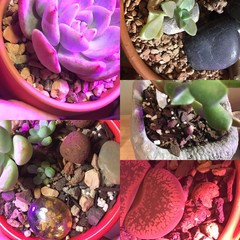
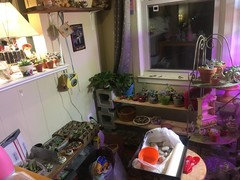
First picture is Turface, bonsai block, charcoal, small lava rock, pumice and some azomite. Second is a more organic mix with pine bark, cococoir, pumice, Turface, perilite. Third is the api medium this post is about. Third is black gold cactus mix with added perilite and lava rock. Third is entirely crushed lava rock and grit with just a little Turface.i also have a batch in bonsai jack alone, and then another with bonsai jack with bark painstakingly removed mixed with the api plant medium.
p.s. Sorry about the growlight party colors
- 8 years ago
I do not use bark in mix for succulents but not because I do not like it, but because it isn't easy to find in smaller size. Whatever bark I find, I use in mixes for other, non succulent plants. I have quite a few, and there is never enough bark. If I had enough, some plants would have min 50% of bark in their mix, or even more (not succulents). I wonder what bark has been mixed in if you consider it ..."dirty little disease flakes"... Maybe it was just a bad batch? I can't say that any of my plant was diseased because of the bark.
I can't comment on premade mixes like ones sold by Bonsai Jack since I never used it; I make my own. As for fertilizer, if I use any, it is only one. I like to keep things as simple as possible, and not to have too many different things to keep track of.
Rylee B
Original Author8 years agoYeah, unfortunately I was too poor to finish perusing my biotechnology degree. In a way, this might be the closest I’ll ever get! When I finally get a bigger house, it’s really on. For the moment I live in the dirty south in an apartment built in the early 1900’s. Basically, any wood turns into disease flakes untreated here. I once found mold on my leather shoes in the closet. I guess I just enjoy the complexity of experimenting with various nutrients and soils. I’m currently working on a hydroponic system, too. My “real job” is in IT so I’m all about the details and the spread sheets and making things complicated in order to fight the maliase of my unfulfilled life. This is truly my passion so I’m never really satisfied. I’m always trying to improve my system (sometimes to a fault). I don’t have a lot of access to high quality supplies or substrates around here so I have to get them online. Lemme know if you have any recommendations! (Especially for some sweet, sweet online nurseries. Especially if they are Korean, but not exclusively)
Rylee B
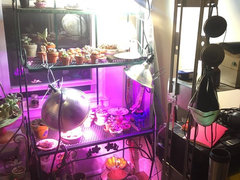
Original Author8 years agoAlso, I have about... 9? different areas for my succulents. All with different lights and airflow and purpose. The left side is more of the natural sunlight area. There is a heat lamp out of the picture on that side, and that lamp has a smoll grow bulb in it just to give a little light to those babies and the props. Sorry for the long messages. I literally have no one to talk to about this stuff. But I think you can gather the me having no friends thing from like....everything. Everything I’ve said and shown.
 8 years ago
I think it's possible that I use the largest pieces out of all of us. :)
When I first started using gritty mix (thanks to Al!), I did go with the original formula, but my proclivity for watering kept even that mix too wet for my liking where my objective was to be able to water daily if/when I felt like it. My pieces just got bigger and bigger through trial and error.
So now, I use totally screened perlite, lava rocks, and pea gravel. Nothing really degrades, so that's a plus. (There's an occasional bark piece in my mix because I've tossed in some from here and there.) I have some pots where my mix from 3+ years ago are just reused with additional mix when repotting.
On the other hand, here in 110+ weather, I HAVE to water every day or two, which is why I've been messing around with other potting combinations in hopes of reducing my watering to once a week...hopefully.
- 8 years ago
Rylee, yes that was a typo, I mean to say plastic pots, not square ones. Definitely use plastic if you have 2 inch pots or you will have to water very often. And if you have mold growing as easily as you say, please do not get a humidifier!!!!
 8 years agolast modified: 8 years ago
I buy orchid bark mix from http://www.calwesttropical.com
It's not mulched down, just whole medium sized bark. I only recently started this so cant say for certain on my opinion. I'm also trying cocochunks. The oil dry I used from NAPA was no bueno, the pieces were too small and all compacted in the bottom of the pot and just made a big mess and an unhappy plant or several. No thanks.
I've been meaning to buy some hydroton, I guess it's called, but havent made it a priority yet. I still have bark to work with.
 8 years ago
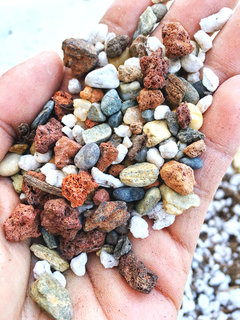
Grace: I see you're holding a mix of types of pebbles in your hand - what is your mix made of? why did choose those materials and not just one type or another? Do you plant outside as I do? How do you mix the perlite with the much denser grains, do you wet before mixing? I wet my mix and this prevents the perlite from floating above as I mix.
- 8 years ago
Asclepiad,
It's a 1:1:1 mix of lava rocks, perlite, and pea gravel. I screen the lava rocks to get rid of powder, and screen the perlite to remove all the powder plus smaller pieces (which basically makes a 4cf bag into something like a 2.5cf bag). Then I just mix 'em up! Between the lava rocks and pea gravel (the latter being really heavy), the perlite can't float in the mix. Even when I flood a pot, I don't find perlite to noticeably float to the top.
 8 years agolast modified: 8 years ago
asclepiad_fan's question is one that I often have: how people come to the various mixes they have and why they chose each component, as opposed to just using one component. Or to put it another way is why some use a water retaining component, a medium retaining component, and one that doesn't retain much water, when they could just use the medium one by itself or with one other component that does one or the other (if that makes sense). This isn't meant in a critical way all. I'm always interested to know the process as to how people come up with their mixes and what function each component has.
- 8 years ago
I cant speak for all but I believe most of it is trial and error paired with availability.
I am trying straight cocochunks with an orchid of mine and cocochunks with perlite for some other stuff just to see what happens and if it works, how well?
- 8 years agoGrace,. on another thread, Rina was expressing concern about a component of my gritty mix that looks the same as your pea gravel. Do you know what kind of stone it is? Her concern was that it may be limestone, although the place I purchased from sells gravel and limestone separately.
- 8 years agoJeff, for me it was like a Goldilocks process. Too light, too heavy, too big, not wet enough—just right (for me). Starting with the original recipe for GM, and then replacing one component with another, I found perlite to be good but too light, messed around with pumice or pea gravel but liked the look of pea gravel more (and available to me at the same place I get lava rocks), and lava rocks—I really liked because it’s like a heavier, more substantial and colorful version of perlite. I still use pumice if I have it around. There were a few different varieties of smooth river rocks I liked more aesthetically but way more expensive than pea gravel.
I’d water it one day and dump the next to see how wet it was. To this day, when using a new potting mix of any kind, I make an empty pot, drench it and dump the next day, repeating until it gets to that ideal dampness I want.
I just sent in multiple bags of my mixes to a forum member who wanted to test moisture retention in soil over 10 hours, and look forward to results. - 8 years agoPluto, it just said 3/16” (or was it 1/8”?) pea gravel, and they had various sizes, but I don’t know much else. Lyngso, where I used to buy this, had limestone separately too, but I’ve never tried it. Do you recall what the concern was?
I think I started using this combo in 2014/2015. I don’t think I can grow a pepper in it like I did with the OG GM, but otherwise, for succulents and some houseplants, i haven’t experienced any noticeable issues other than the pain of procuring the components and mixing it up in bulk. Because I go through spurts where I don’t fertilize at all, I do try to mix in some Osmocote when I repot annually. - 8 years ago
Grace, that's what I'm looking for, thanks. I was thinking about perlite being similar to pumice as far as water retention but different in price and weight. I like the idea of using all pumice, but if it's too expensive, then perlite could be used. (I mix them for cost purposes.) If using all perlite, it's too light, so grit or pebbles can be used. Then if that doesn't hold enough water, Turface is often used. So the three-component one I understood the most is grit/perlite/turface, first and last of which I don't have.
Right now I'm experimenting with just 1/8" pumice (small pots) sometimes mixed with perlite, and adding vermiculite--which I know isn't popular; I don't have any clay substance right now--if I want more water retention, or lava rock for less. Subject to change.
- 8 years agolast modified: 8 years ago
Grace, the concern was what type of rock it was. She thought it may be limestone which is not good for most succulents. What I bought was labeled #9 aggregate, but looks exactly like pea gravel. The place I go carries many sizes of the same gravel. They also have similar sizes of limestone. The gravel is many colors, while the limestone is white/grey.
- 8 years agolast modified: 8 years ago
I mentioned limestone before and said that some succulents may not be very happy with it. I do not have a list, but not all succulents grow in limestone, in their natural habitat. I never read anything that says what would happen to a plants that prefers non-limestone substrate if it was grown in a limestone substrate. If there is some limestone in a mix, it probably won't kill them, many plants will likely tolerate it. From what I read, many succulents prefer substrates that is slightly acidic.
- 8 years agolast modified: 8 years ago
Rina, I wasn't questioning if there were succulents that like limestone, I've seen enough if your posts to know you're probably right! I was just questioning how much limestone was in pea gravel, if anyone was aware.
 8 years ago
Many cacti, specially those of Mexican habitat, DO like limestone, they grow amongst great chunks of the stuff.
Epithelantha micromeris and A.n. Other.
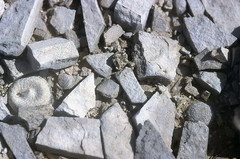
Consequently I incorporate about 20% crushed limestone into my gritty mix. Which I also use for the few succulents other than cacti which I have acquired - Euphorbia, Lithops, Pachypodium - they seem to do well on it. 8 years agolast modified: 8 years ago
I stopped using the 'original' gritty mix because many of my succulents were dying to rapidly from not enough moisture. But I still think it comes in very helpful with many of my cacti.
 8 years ago
The Canadian shield has a lot of limestone. It's readily available here in just about any size desired. Virtually all of my succulents prefer acidic substrates so I've stayed away from limestone.
I never had any issues with bark and pests, but mine was reptibark and quite expensive. Over the years I've found better ingredients to use than bark and don't really use it much anymore.
My current watering is around every 6 days. I like keeping my retention around there to minimize effort for watering and still get good growth. Winter is the best season for growing here and everything is watered fully regularly throughout the year.
 8 years ago
@ewwmayo what is your current formula for a succulent gritty mix?
- 8 years ago
So this is a great discussion on alternatives to gritty mix, and mostly it has been focused on replacements for the bark component. But can someone tell me what was the intended benefit of using bark in the gritty mix? What did that organic component supposedly do for the mix?
- 8 years agolast modified: 8 years ago
Bark is supposed to be cheap filler. That's all.
Still experimenting with my current mix and it is different for different plants. Ranges from pure pumice, to grit/turface/pumice, to Lechuza Pon.
- 8 years agolast modified: 8 years ago
I noticed that at least one of you experimented with sand in the gritty mix. What do you think coarse sand does for you in that mix? As I understand it, small particles like that will give you more perched water table (PWT), and it will also increase the adhesion of water to the top of the soil after a watering. The raising of the PWT is bad, and the slight increase in water adhesion for a day after watering might or might not be good, depending on the succulent. I am guessing something like an Adenium might like a little higher moisture level in the soil but not enough to compromise drainage.
@asclepiad_fan How did your mix with 25% sand work?
- 8 years agolast modified: 8 years ago
Sand helps adhesion and retention, which is helpful for some plants. One example is using a thin layer of sand with seedlings, which makes them easier to water and caters well to their shallow root systems.
Some succulents struggle with the higher porosity/larger gaps in the mix, which smaller particles help mitigate. This is most common for Mesembs and rooting plants.
As you note, it is another way to increase water retention and there is a trade off. I do not add enough to significantly increase PWT at the bottom of pots.
Rylee B
Original Author8 years agolast modified: 8 years ago@ewwmayo I just ordered some lechuza pon! What’s the deal with the fertilizer in it/what do you think over all?
- 8 years ago
Good question. I'm not giving it much credit but I never did measure how much it helps either. That's a good reminder for me to take a measurement and see.
- 8 years ago
Rylee - Took some measurements today and the fertilizer levels with Lechuza Pon after half a year look to be around the same (bigger pots) or less (smaller pots) than what I was doing with regular Foliage Pro fertigation and my gritty mix.
This likely has to do with how many pieces of time-release fertilizer end up in each pot and how long each pot takes to dry out. It could be attributed at partially to do with my measurement method too.
I watered around once a week by soaking for all of winter and spring so it's probably fine with no additional fertilization for half a year or more.
 8 years ago
I live in the coastal plains of NC, grow zone 8 here.
MY CACTI MIX:50% Crushed Oyster Shell
25% Miracle Grow Cacti Mix
25% Orchid Bark Mix
Then I add about 10% Humus/Manure + Worm Castings (50/50)
I know that doesn't add up correctly, but I like to mix small batches in cups:
Two cups of Crushed Oyster ShellOne cup of Miracle Grow Cacti Mix
One cup of Orchid Bark Mix
About one-half cup of Humus/Manure + Worm Castings (50/50)
NOTE: I buy all these ingredients locally to save money on shipping, etc.
I only give my cacti food a few times per year (Spring and Summer). Less is more!- 8 years agolast modified: 8 years ago
Brett
I wonder about oyster shells. They may change pH of your mix. And they could contain too much salt if harvested from the ocean. Lots of cacti (not all) grow in alkaline substrates, so maybe there isn't much to worry about; but many other succulents may not be as happy. I know that ppl specializing in growing cacti would be much better judges of which cacti to grow in alkaline substrates, and hope they will chime in.
Manure isn't generally recommended to be used in containers. Maybe you are trying to assure that your cacti are 'fed' well - but how much manure is there in substrates they grow in in their natural habitat? I have to admit that I have only about half dozen of cacti, but have many succulents and I wouldn't add either to the mix (shells or manure). I hardly ever fertilize - usually if they are sprayed at the time I fertigate vegetable garden - not too often, since I use mainly rain water in watering cans and have more control over what gets watered. Salt would be of concern to me too.
- 8 years ago
Brett: How find do you crush the oyster shells? Is that a good idea to harvest oyster shells and then run over them with your car and crush them? Do you knock them with a hammer to get fine grains?
 8 years ago
Some chicken grit is oyster shells, or maybe it contains oyster shells. I'd think harvesting them would be too salty, like using beach sand instead of coarse horticultural sand. But I guess they can be washed/rinsed. And I'd probably puncture a tire running over them! LOL
 8 years ago
We used to have a house on Cape Cod with a driveway of crushed oyster shells... no punctured tires :-)
- 8 years ago
Asclepiad_fan: I buy them at Tractor Supply and they are used to feed chickens. I thought about crushing them too. But that's a whole lot of work when you can buy a large bag fairly cheap. They're also a good source of calcium for plants. :-)
- 8 years ago
Now that you mention it, I have seen houses around here with the crushed shell driveways. This past year it seems like if I run over anything harder than butter I poke a hole in the tire. I just figured that was one more chance! LOL
- 8 years ago
Rina_Ontairo: My soil mix drains extremely fast. During the summer I can water in the AM and the soil could be dry by the evening in many cases. I prefer a gritty mix and they won't always work best for everyone. Aeration is important for dormancy here.
They key for me is having a something organic that holds onto a bit of moisture on scorching hot days and allows water to drain during rain periods. For my Adenium, I substitute coco coir chips for the orchid bark and do NOT add manure. I don't have much luck with Peat Moss here.
As for my cacti and Euphorbia and Pachypodium, etc., they get partial cover during rain. Sometimes I have to move them to cover. LOL - 8 years ago
Bret
I was wondering about oyster shells you said you use. Maybe I am wrong, but I already mentioned that they may change pH of the mix. Good for some cacti, but may not be best for most succulents. And typically too salty if harvested from ocean. Sorry for repeating myself, I said the same in my previous post. Pls. correct me if wrong.
I believe your mix drains well - you did mention adding humus/manure/worm casting (I consider warm casting being manure :); but I did notice only small amount.
- 8 years agolast modified: 8 years ago
Rina is correct. There are concerns about pH and using crushed oyster shells in mixes. There was quite a bit of discussion about it and I believe with Al too.
That's why the recommendation was to totally avoid crushed oyster shells and use granite instead.
Crushed shells are very common for poultry as it gives them calcium while also aiding their gizzards. But not so good for plants.
Personally I never tested/bought the stuff but I did look into it years ago before making my own mixes.
- 8 years ago
Before a while, I took a cactus out of its pot and planted it in the garden. Then, I realized it was the one I planted in a mix of dutch potting soil with coarse beach sand -- The potting mix is an equal amount of potting soil and coarse sand. With time, the potting mix decomposes, but the coarse sand remains for much longer.
The sand is not the regular "pure" sand made-up of nothing but silica sand. It is a mix of weathered beach stones, some coarse sand, and much oyster shells. The grain size is almost like that of brown sugar grains. The cactus was thriving and did not show signs of stress because of salt (It was washed) or alkalinity (because of oyster shells). It may prove bad for other plants, but cacti did well.
In the past, this type of sand was quarried for the construction industry. It is locally known as "Zifzif" in Arabic and Hebrew. I did not find the name in other languages, but it is basically coarse sand, though the coarse particles are mostly from rocks and oysters. Quarrying the sand has been mostly banned because of its effect on beach ecosystems and it is very hard to find in hardware stores. I collect whatever amount is necessary and wash before I use it. It seems that my cacti love it.
- 8 years ago
Many cacti grow in limestone and may not do so good in more acidic substrate. So for those, shells will be OK to use. That doesn't mean it will kill plants that don't... One should check what they grow in in their habitat to decide...
- 8 years ago
I am actually curious now to test my coil mix. I purchased an NPK probe to test the ph from China. The oyster shell idea came from Samuel at Exotic Cactus and Succulents who is a well-known master grower in Florida. In my location, I can get them easy and cheap and they also work great for seedling mixes. The brand I use is called MannaPro Oyster Shell which also has coral calcium.
According to his description:
This is the same fine gravel I use it as substitution for Dyna rock, I'm using this oyster shell for years with the best results for all my seedlings as showed on my seedling kit for sale, using oyster shell as top layer for seedlings avoid fungus keeping the top dry and clean, I use it also for mixing a special blend to plant a very valuable plants like lophophoras, aztekium, pelecyphora, ariocarpus, lithops, rare mesembs, or any plant that need a very good drained soil.
I live on the Crystal Coast of North Carolina and also had great luck using Red Lava Stone (my favorite), horticultural pumice and GS-2 stone or river rock. But, they ARE pricey and not readily available around here. I also use perlite when all else fails, but I am just not a huge fan.
Finding a soil mix that works for your area and your watering style is the key to success. Some of my cacti have grown big now (24-inch pots) and I like to save money when I can. After many years together they seem to understand my routines—get with the program—and seem to be happy. Again, I am NOT an expert and still have much to learn! :-) Rylee B
Original Author8 years agoJust wanna update! The Api plant medium is AMAZing. You can use it by itself, or mix it! (But really it’s actually just fine alone) my go to mix that I have actually had others try with glowin review is the API media, pumice, crushed granite, crushed red lava stone. My plants have never been happier!









rina_Ontario,Canada 5a