Software
Houzz Logo Print
prairiemoon2

Help interpreting my soil test?

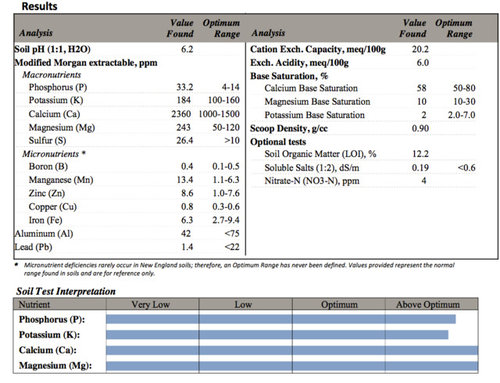
I had a soil test done in 2016 that showed I had more than enough of everything. The pH was 6.2 and it recommended I raise it to 6.5 with lime and that I add 1/4 pound of nitrogen only. I used only fish/seaweed emulsion during the growing season last year and I didn't add limestone yet. I'd like to avoid taking another soil test if I can and wondered how much it might have changed in two years. I have lime and wonder if I should be adding it now. I think it's pelleted. And to gain just a 1/4 of a pound per 100ft of nitrogen, in an organic garden, is just applying fish/seaweed emulsion enough or is there something else I should use? Here are the test results....


Comments (23)

  • 8 years ago

    how were your yields last year? it takes quite a while for lime to effect the soil. 6.2 to 6.5 isn't a significant change.

  • 8 years ago

    Hi Randy, I thought I did okay with growth last year. I wasn't intensively gardening last year being distracted by other things, but considering how the report tells me I have more than enough of everything, I thought I should have done better. As for the lime, I guess if I add it now, it won't be of much benefit this year but I might as well get started now right?

  • 8 years ago

    I wouldn't worry about the lime.......and frankly, I'm not sure why they suggested you alter it. 6.2 to 6.5 is not much of a change and since the vast majority of veggies will grow perfectly well in a pH of 6.0 (and some even lower), I wouldn't bother. My soil tests out at 6.3 and accommodates just about everything!!

    Supplementing N is another matter. N is extremely mobile and never hangs around long and almost always can use bolstering. Many gardeners address this by adding compost or composted manure or other source of OM to their gardens annually. Or you could add some alfalfa meal if you wanted something a bit faster acting. I would save the fish/seaweed emulsion for supplementing during the growing season when your plants are in active growth.

  • 8 years ago
    last modified: 8 years ago

    That makes a lot of sense to me, Gardengal. Since I didn't get the production or performance I would have expected with all the extra fertility I seem to have, maybe all it needs is more nitrogen. I do use fish/seaweed emulsion only when the plants are growing.

    I remember last. year, I bought a couple of bags of organic compost and put a very thin layer on a few beds and called it a day. I thought about adding blood meal but didn't want to attract critters. This year, I can pay more attention to the nitrogen needs. Alfalfa Meal is something I've used on my roses with great results, so maybe that's what I'll do.

    Okay - I'm ready. lol. Now if the weather would just warm up. :-)

  • 8 years ago

    "a very thin layer" of compost is probably not going to cut it :-) I'd add 2-3 inches! And work it in well before planting.

    FWIW, I mulch ALL my garden - edibles and ornamentals - with compost annually......about 3 inches. As a result, I seldom find a need to fertilize anything, except for plants growing in containers.

  • 8 years ago

    Agree with gardengal on the lime - forget it. It could end up causing you more harm than giving any benefits. For organic N additions alfalfa meal, fish meal, cottonseed meal, crab meal, feather meal, soybean meal are all excellent sources. The key is in how much and how often to apply it as some a re hot and rapid release while others are slow release but long lasting.

    Alfalfa and blood meal are both hot (can burn plants) and fast acting but need frequent replacement in low doses throughout the season. The others tend to be slower acting, can be added in larger amounts, and need less frequent applications.

    Dave

  • 8 years ago

    GGal - I'd love to stick with compost, but I don't make my own and commercial organic compost is pretty expensive. I usually buy Coast of Maine Lobster compost that is about $12. for a 1 cu ft bag. I'd assume alfalfa meal is less expensive and since I only need the nitrogen, maybe I could get away with that.

    Dave, I do like using alfalfa meal - when you say alfalfa meal can burn the plants, how do I use caution so it won't? Do you top dress around plants, or just add it to the soil and work it into the top 3 inches before you plant? And how do you know when it needs another dose? I imagine a bag of alfalfa meal tells you how much to apply.


  • 8 years ago

    Do they have any bulk composting around you? We have "leafgro" down here that I can buy for around 30 bucks per yard, and I have an uncle in PA who frequently talked about getting bulk mushroom compost for cheap.

  • 8 years ago

    Groundskeeper - I will have to look into that. It may be I could get some delivered in bulk. There are a lot of places here that sell compost, but not a lot that are organic.

  • 8 years ago

    Agree. Any of them need to be well worked into the soil prior to planting. I prefer 2 weeks ahead of time. Then side-dressing works well with any of the various amendments throughout the season. Amounts and spacing time will depend a lot on your climate and the needs of the various plants but no, don't count on bag instructions since garden fertilization isn't the primary use, the reason for sale, for many of them.

    In my climate, depending on the product I am using, I shoot for monthly feedings of the nitrogen lover crops. But for example, corn needs more and more often sometimes, leafy greens need more and more often than root crops do, etc. You need to know the N needs of the various plants.

    Feather meal, if you can get it, is my personal favorite. For next year consider planting a legume cover crop that can be turned into the soil before planting.

    Dave

    prairiemoon2 z6b MA thanked digdirt2
  • 8 years ago

    "There are a lot of places here that sell compost, but not a lot that are organic."

    By definition, compost IS "organic" :-) It is created from decomposing animal and plant matter......hard to get more organic than that!! That there maybe some inorganic articles (ie., shreds of plastic, etc.) in it is really not much of a concern. And a commercial composting operation is typically large enough and hot enough to effectively neutralize any residual chemicals that may be on or in the original ingredients.

  • 8 years ago
    last modified: 8 years ago

    GG - I don't trust or depend on people to compost in a way that will break down every ingredient that I'm trying to avoid. Here is a link to the University of MD warning gardeners of contaminated compost and manure. So evidently it's possible. And I work hard to keep my property organic and that's how I keep it that way. In addition to which I want to use my consumer power, as small as it is, to promote organic practices and reward companies who use them.

    Gardener Alert - Beware of Herbicide Contaminated Compost

  • 8 years ago

    Just an fyi... some people do use synthetic ferts (nitrogen) to help 'heat up' their compost piles. I really do not know if any commercial, or municipal compost producers use synthetics, but it wouldn't hurt to ask. I also don't know if adding such N products in the making of compost has any 'legal' effect on the organic certification process under which some growers adhere. I'm not saying that it's bad or good, just that it happens, and some growers may prefer to know the process under which the compost was made.

  • 8 years ago
    last modified: 8 years ago

    Dave - If you wanted to plant right away and not wait 2 weeks, would it work to side dress from the beginning and not work it into the soil? I know for roses, I've never worked it into the soil, because the roses were established and I just side- dressed them with it and have not had a problem with burning. So if feather meal is your favorite - why is it? And a legume cover crop, will provide nitrogen in the soil? I do turn my pea foliage in after I harvest, does that count?

  • 8 years ago

    RGreen, I had in mind the community compost programs in our area. A few towns collect yard waste from residents and then offer the finished compost. And many of the residents use commercial fertilizers, pesticides, herbicides on their lawns. I'm not sure where a commercial organization gets the materials they use to make their compost.

  • 8 years ago
    last modified: 8 years ago

    Look at the date - that is old news!! Those persistent chemicals have long been banned from any sort of residential use and most commercial compost operations will limit or restrict any stockyard or feedlot products and only allow residential yard waste.

    Personally, I have no issues using any kind of commercial compost on my garden.....it is about as safe a garden product as you can get. And I live in WA state where the issues with these persistent herbicides first surfaced back in the 90's!!!

    ETA: Commercial composting operations have no need to add anything to activate or speed up the process. It is just unnecessary given the size of the piles they work and the activity they receive. Plus it would not be financially feasible to do so. And because of the heat generated by these commercial operations, it really doesn't make a whit of difference what the yard waste ingredients have been treated with.....they are completely neutralized by the composting operation. In fact, commercial operations are far more efficient at this than any home composter!!

    Once again, given the ban on the residential use of the very few persistent herbicides out here, I would have NO concerns about using compost from a commercial yard waste recycling operation!!

  • 8 years ago

    if you have access to shredded leaves they make for excellent garden mulch and as they break down they add organic matter to your growing bed.

    i think the herbicides mentioned in that article are still in use and readily available. a search for Clopyralid gave several sources you can order it from.

  • 8 years ago

    Not at all readily available!! Very few sources to obtain by mail order and most require a pesticide applicator's license before they will sell to you!!

  • 8 years ago

    "Dave - If you wanted to plant right away and not wait 2 weeks, would it
    work to side dress from the beginning and not work it into the soil?"

    Not the same thing at all. You have to understand how dry organic supplements work, be they compost or alfalfa meal. They aren't quick fixes. They take time to decompose and until they decompose there are few nutrients available for the plants to use. So you always have to stay ahead of the plant needs for organics to work.

    Organic gardening bed prep for this spring started last Fall with several inches of compost and cover crops. And side dressing through out the season is for the plants future needs, not its current needs. If you have done your applications properly then there is always some organic matter that has decomposed enough to feed the plants.

    I prefer feather meal because it is readily available to me, slow acting so no fears of plant burning, has long time benefits, and also provides keratin and other minerals that some supplements lack. But it sure isn't the only amendment I use. I routinely plant cover crops, use alfalfa pellets, composted manure, vegetative compost, and even some blood meal. There is no single perfect amendment.

    As far as community compost - like gg said it IS organic. "Organic" in no way means pure. And it is easy enough to evaluate the quality and safety of it before buying or using.

    Dave

  • 8 years ago

    how does one evaluate the quality and safety easily?

  • 8 years ago

    Very easy to do a bioassy to detect if any of the persistent herbicides are in the mix. Otherwise, a visual inspection of the product should tell you what you need to know. Should be dark, earthy looking and with no discernible bits and pieces and should smell good.

  • 8 years ago


    Hi Dave - Thanks for the explanation of dry supplements and how they have to be broken down. I think I get that. If we back up a little, this thread was about my soil test that shows an abundance of everything I need in the soil, including 12% organic matter. I’ve been using organic methods on the soil, mulching with leaves and grass clippings, for years, as Randy suggested. Growing cover crops, turning them in. Doing a lot of that in the fall. Burying food scraps directly in my bed. I’m actually showing perhaps too much fertility, according to the test results and the links they offered me to explain that.


    I’m just trying to determine the best way to provide nitrogen for my plants for this season. And whether I need to adjust for the pH.


    I like your suggestions for alfalfa meal and the other options you listed and I think I can make use of that. Happy to know the reasons you like feather meal. Yes, I understand that using varied sources for amending the soil is the best way to get an all around fertile soil to grow in.


    Thanks very much…. Happy Spring!