Software
Houzz Logo Print
umbadesigns

Side yard walk material

8 years ago

Hello! We are planing to create a more structured walkway on the side of our home. The area is shady 75% of the time, it is pretty much hard dirt/clay. I am planning to plant a few foundation plants to the left of the path so my question is what would be the best material for us to create this path from? Also would a stabilizer of some sort be beneficia? Please note we would need to roll our trash cans down it once a week.

Crushed gravel
Decomposed granite
Mulch

Comments (15)

  • 8 years ago

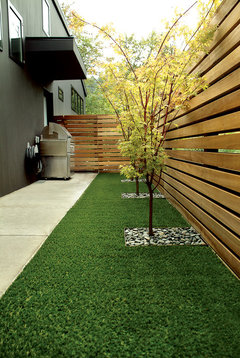
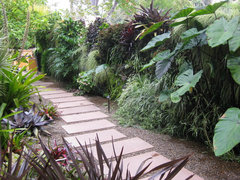
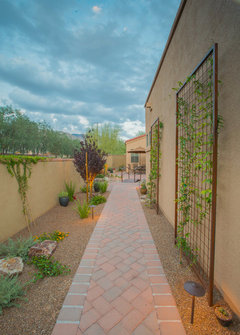
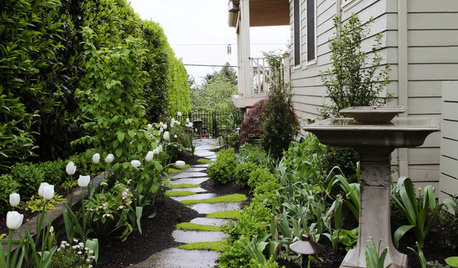
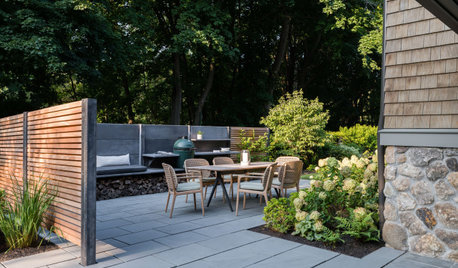
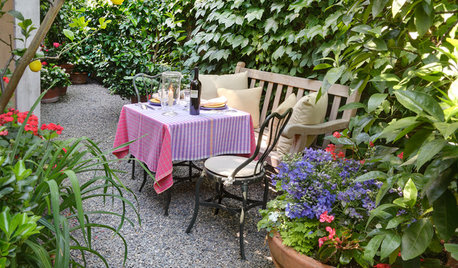
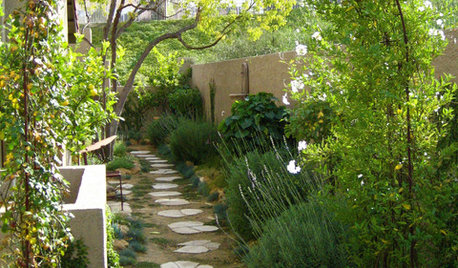
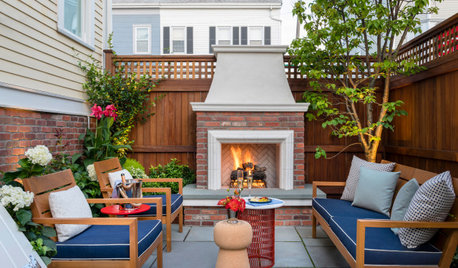
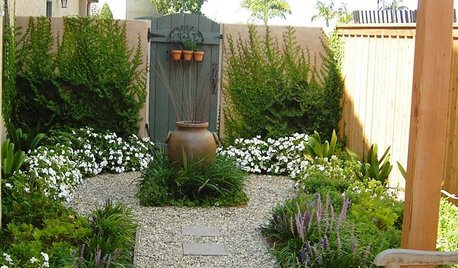
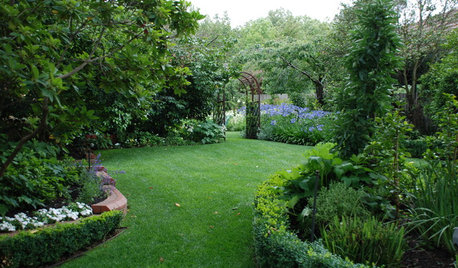
    None of the above. How about something like one of the below pics?


    van Adelsberg / Grant Residence · More Info
    ^Easiest to maintain and keep looking neat.
    Green Wall · More Info

    Transformed Tucson Courtyard · More Info

    Cee Smith thanked Denita
  • 8 years ago

    I was hoping we could do this ourselves. I am unsure if we could do some of these.

  • PRO
    8 years ago

    UNless you want to carry the trash cans your choices will not work. You need a much more stable material for that purpose . The first pic should be a doable DIY with a visit to you tube for how to.

    Cee Smith thanked Patricia Colwell Consulting
  • 8 years ago

    That third photo looks a bit more approachable after doing some research. I now need to figure out what to put between them to ensure they stay level with whatever that is.

  • 8 years ago

    If you click on the "more info" link on the photo posted you can see the answers from the landscape design company on the materials used.

    Cee Smith thanked Denita
  • 8 years ago

    Not as hard as I initially assumed. I wonder what a good substitute for river rock would be as it’s quite costly here. I’m wondering if I could paint our pavers.

  • 8 years ago

    I'm not a gardener or landscaper. I found a good article on various rocks that might help with your decision.

    https://www.houzz.com/magazine/5-gravel-and-stone-types-for-a-rockin-landscape-stsetivw-vs~10654066

    Cee Smith thanked Denita
  • 8 years ago

    None of the above, if you want to roll your trash cans along it. You need at least most of it to be a structured surface (pavers, flagstones, tiles, etc.)

    Cee Smith thanked Toronto Veterinarian
  • 8 years ago

    You can get 24" square concrete pavers at big box stores. Is that wide enough for the trash can wheels to run on? Look up how to lay pavers. This is a utility walkway, and you don't have a huge amount of available width since you can't move the drainage swale next to the walkway. If there is room and you want, you can give it a brick or smaller paver edging in a contrasting color, but this will also require a metal edge to hold smaller pavers in place.

    Cee Smith thanked NHBabs z4b-5a NH
  • 8 years ago
    last modified: 8 years ago

    Hello Nhbabs,

    The side of our home has a lot of mud weed and dirt, it’s also where I see a lot of water funnel through from the backyard to the street during heavy rains. The width of the path is 7 ft.. length 32. We considered incorporating some sort of concrete paver and gravel combination with edging to help keep the materials in place. Not sure if that’s a good idea in the space but those were our thoughts.

  • 8 years ago

    My concern comes from how to effectively start the path from our driveway and where where to stop it. I do believe the trash cans will roll over 48” pavers. I remember measuring them and thinking we would be fine.

  • 8 years ago

    The path should start at the driveway and go all the way to the back of the house. Only you can decide where to end it in back based on use and how the backyard plan progresses. (Where will the cans be stored, will this be often used by family or guests as a way of entering the back yard, how will garden beds and the patio end up arranged, etc.) 48" is two of the large pavers wide if you are wanting to keep it simple, and it will be easiest if the path is wider than the wheels on the trash cans. Well-tamped sand or gravel with fines such as knit pack or crusher run as a base and an edging to keep base and pavers in place, making sure that there is a very slight tip away from the house so that water drains away from the building. You don't want ornamental stone between the pavers as two of images posted by Denita show because it will interfere with your main function of being able to roll the trash cans. You don't want to do anything that involves interfering with the drainage swale. Look at ADA paving to be sure you know what works well with wheels. This is just a path to the back, and while I am sure you don't want it to be ugly, because of space, location, drainage, and your needs for wheels to work on it, it isn't going to be a hugely ornamental space where folks linger to enjoy. Because of your inexperience with laying a masonry path and your wish to DYI (if I am understanding correctly) fewer large pavers will be easier than many smaller ones. You will want to research well the how-to part of this and not take short cuts if you want it to meet your needs.

    Cee Smith thanked NHBabs z4b-5a NH
  • 8 years ago

    A recipe for disaster.

    A husband who does not want to..

    A-Edge the pathway

    B-Dig under the pavers to ensure they have a proper foundation.

    C-Dig any period

    D-Watch a video on how to properly install even a simple gravel path.

    When I asked why.. is response was..

    ”he did not want this to take a long time.”

    So,

    can anyone provide some tips on how I can successfully install this path on my own and how far I should dig?

    thank you

  • 8 years ago

    You can follow the directions you laid out above, including watching videos and reading up on path building. Or see if there are any classes given anywhere locally such as a big box store or community college. You can rent a tamper to firm up the gravel. Shlepping around sacks or wheelbarrows of base material and digging is way more fun than hitting the gym and you end up with a tangible, useful end product as well as finding new muscles. Or if you don't want to do it, start saving to hire it out. If you only do a halfhearted job, you will find it falling apart in a relatively short amount of time and messing up the drainage and you will have to dismantle it and do it again. Until you have the time or energy, live with it as is rather than doing a bad job. Don't do just gravel as walking on and pulling wheeled cans across loose gravel is miserable. You need a firm surface with a clear edge that will not direct water towards your foundation if it is impermeable.

    How does the current (grass?) surface work? Can you live with that for a while? DIY doesn't typically happen all at once, and you seem to have a lot of projects going on right now. Choose which one is most important to you and do a good job on that for this season. Next season choose another. Otherwise it will become overwhelming. You have to choose between time, quality, and cost, and you aren't going to get all three at optimal levels. This is a new home. It won't be perfect for years (if ever) unless you have a lot of $$$ to throw at it.

Sponsored
Urban Upkeep LLC
Average rating: 5 out of 5 stars6 Reviews
Columbus High Quality Painting Expert