Software
Houzz Logo Print
ytang1228

Mystery Moisture from Exposed Vault Beam

8 years ago

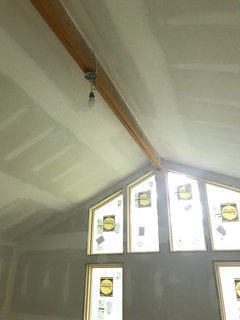
My husband and I are (finally) at the last leg of our renovation. As a part of the reno, we added a master bedroom addition to the back of our house that has a vaulted ceiling. We are currently completing the final touches on trim work prior to painting, and recently noticed moisture beads collecting and slow dripping from the end of this exposed vault beam closest to the exterior of the house and cannot for the life of us, understand where its coming from. This exposed beam IS connected to the attic on one end (the end running to the interior of the house), and leads us to believe it may have to do with heat and moisture collecting from the attic. Another guess is the spray foam insulation was not properly installed, leading to potential gaps in insulation around the beam. We noticed that the few times this has happened, it was always a dry and hot day completely ruling out the possibility of this being a roof leak.


Does anyone have any idea (1) what may be causing this moisture beading, and (2) what type of service (e.g. attic maintenance, insulation service etc.) we should hire to try and solve this for us? We are extremely nervous about this due to all the huge negative implications this could mean right at the tail end of our reno.

Comments (12)

  • 8 years ago
    Thank you Sophie! Do you know what type of handyman or subcontractor (roofer? Framer?) would be best to come confirm and fix this for us?
  • PRO
    8 years ago
    last modified: 8 years ago

    Hard to understand your description. Can you post a pic? Your attic should be dry, not a source of moisture. Do you have a lot of recessed can lights, pull down stairs or mechanicals up there? What climate? How thick is spray foam? Closed or open cell? Sure sounds like roof leak..

    Home performance contractor or Energy Star certifier might be best fit for diagnosing problem.

  • 8 years ago
    Our attic is dry and is vented. The point where the beam ‘enters’ the attic is very small.

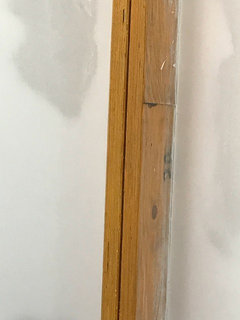
    We have confirmed is it not a roof leak. The condensation/‘sweating’ of the beam we have pinpointed now to never occur during rainy cool days or mornings, and only later afternoons when the sun has had its full force on that area of our roof for a while. I’ve included a photo of our beam with the condensation area. The crack between the two wood pieces is now increasing in size as hot afternoons are increasing in occurrence. We are going to contact our framers now as our next attempt at knowledge... but I like the idea of an energy star certifier as well.
  • PRO
    8 years ago
    last modified: 8 years ago

    The moisture might be from the drywall finishing process. The fact it's cold enough to drip, suggests air leakage or insufficient insulation. Doesn't look like the engineered beams were fastened together enough. I suggest squeezing sealant into the crack before tightening if air leakage is suspected.

  • PRO
    8 years ago

    What finish will the beam get? Perhaps you could super-insulate it before covering it.

  • PRO
    8 years ago

    This seems like an air migration issue. Either warm moist air from the inside condensing on a cool surface at night or warm moist air from the outside condensing on a cool interior surface in the day. An energy consultant armed with precise details of how this was constructed is your best bet.

  • 8 years ago

    We are thinking about a short-term test: wrapping/taping the beam in saran wrap, holding it together with a clamp, and running a dehumidifier in the room for today and tomorrow to see how much/if any 'condensation' builds up between the saran and the beam.

    Currently, we are leaning towards a combo of the two suggestions from Springtime Builders and Joseph -- (1) squeezing sealant into the crack and bolting the beam together to prevent the crack from acting as another conduit for moisture. And (2) if the saran wrap testing has a positive result, foam insulating the beam and covering it with a faux beam. For this second step, would you all suggest going with a faux beam, or just drywalling the beam?

    PS. thank you all for responding! All of these feedbacks and ideas are helping us wrack our brains more!

  • 8 years ago

    No caulk in the world works when you have an element bridging conditioned and unconditioned space.

  • 8 years ago

    @Sophie: Is there someone/type of service you would recommend we reach out to to help us look into whether this is the core issue? Would you suggest that we cover up with insulation foam around the small opening where the beam 'enters' the attic?

  • 8 years ago
    last modified: 8 years ago

    Read up on best building practices and vented vs unvented attic assemblies on the Building Science website, and hire an Energy Rater. Also have a structural engineer take a look if the EnergyvRater raises some issues. https://buildingscience.com/

    https://www.resnet.us/find-a-certified-auditor-rater

    I know your addition isn’t constructed correctly with that beam thermal bridging. That is unsound Building practices.

    How incorrectly built is unknown. Where you go from there will depend on a number of facts not internettable. Only site inspection can give you a plan. It could be creating a sealed attic system. It could mean completely redoing the job because it is structurally unsound as well as improperly air sealed and insulated.

  • 9 months ago

    Rosie, did you solve your problem? My great room has the same issue - I was thinking of tearing down the sheetrock nd spray foaming.

  • PRO
    8 months ago
    last modified: 8 months ago

    Vaults are notorious for not getting enough insulation into them, and thus creating condensation. Same thing with beams that extend into attics. Those vaults and attics should be unvented conditioned spaces, not unconditioned vented spaces. That thermal transfer creates huge issues when incorrect insulation and ventilation strategies exist or are mixed up. Lots of moisture damage can be created by a mixed approach.