Software
Houzz Logo Print
dadoes

Toploaders get moldy ...

8 years ago
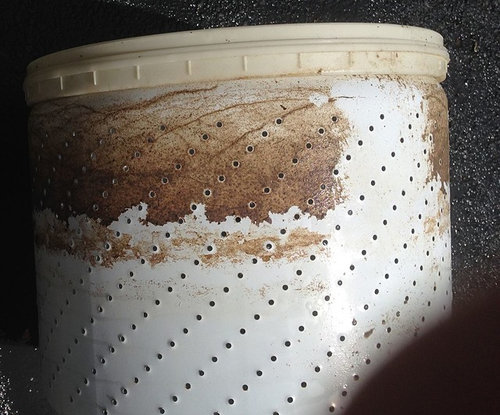
Mold and residue isn't only a frontloader issue.

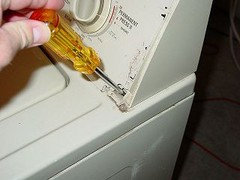
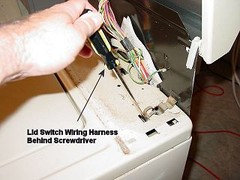
This is an "old-style" 1999 Kenmore 90 toploader. I refurbished it in 2010. Used it a few times, passed it on to a family member in July 2012. It recently developed a leak and I had opportunity to disassemble it a couple days ago.

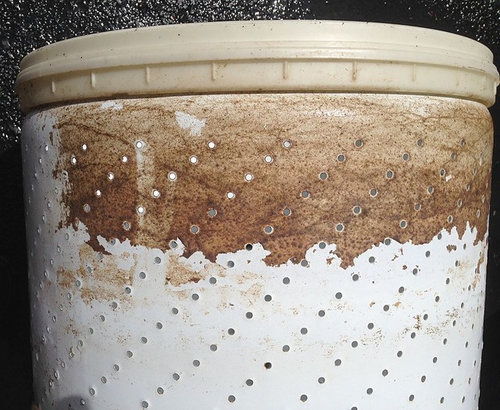
Note the greasy residue around the exterior of the inner basket (I'd already scrubbed the clean area). Looks perfectly clean from the normal view inside (sorry, don't have a picture), although there is a musty odor. Six years of accumulation.


Too much washing in cold water and perhaps not enough detergent. Soils stick to the outside of the basket and other areas beneath, same as grease adheres to a sink at the water line if cold dirty dishwater is left standing.


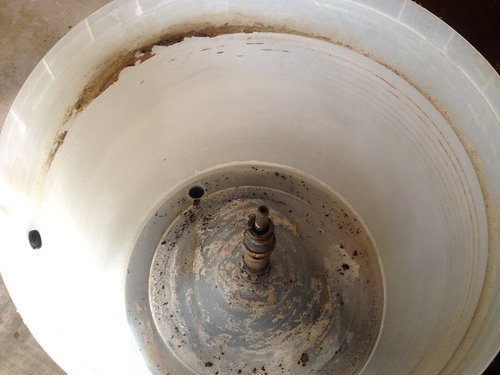
The outer tub has some accumulation on the side and debris on the bottom.


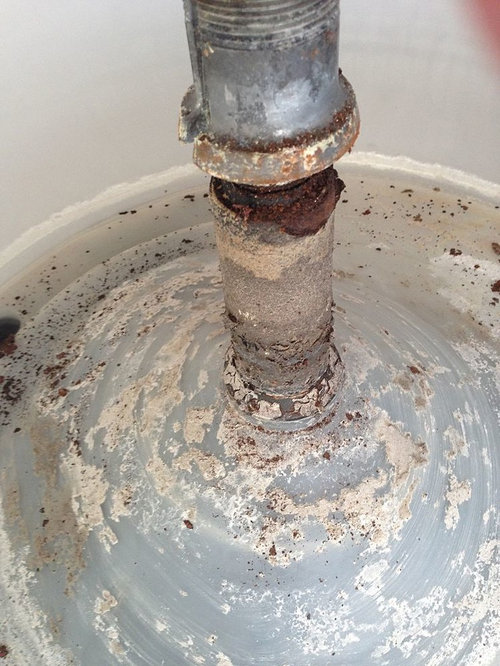
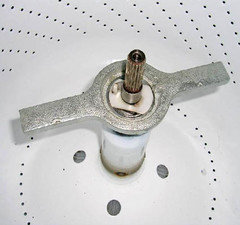
The centerpost has a heavy accumulation.

Comments (25)

  • 8 years ago

    Yep, that's just gross.

    Like I've said before, I've had a top load Whirlpool (direct drive) with the semi transparent white outer tub (like above). That thing was clean as the first day after 17 years.

    All from hot washes and bleach (for white loads once a week). Even using fabric softener, it never had a chance to get funky.

  • 8 years ago

    Holy cow that is interesting... thanks for showing us!

  • 8 years ago

    That crud at the bottom looks like it could be hard-water deposits. Has the machine been in a damp climate? I live in dry New Mexico but always leave the lid of my top-loader Maytag Bravos open for hours after I do load(s).

    Your pics are downright disgusting. I know you're an expert on washers, dadoes, maybe the person who used the machine for the past few years didn't know how to keep the washer in good condition. Thanks for your post.

  • 8 years ago

    In the last picture, is that rust? What did that outer tub look like when you first refurbished its in 2010?

  • 8 years ago

    I know a few people who have machines that look like this. Mostly softener build up from cold washes. Our TL or FLs NEVER looked like this. Again, hot washes are very good at preventing this.

  • 8 years ago

    Unbelievable. I am glad I routinely use warm and hot water. I live in TX as well and the water here is very hard-makes having a water softener a must. My partner's Mom does not have one and I see what it has done to the inside of her 1.5 year old dishwasher. A buildup of crud on top of the deposits from the hard water must ruin many a machine.

  • 8 years ago

    I've seen any number of toploaders like this. The main point I was making is that ALL washing machines will develop residue if not used with some care ... not just frontloaders that are often the target of complaints nowadays in that regard.

  • 8 years ago

    Dadoes do you think its a common problem of people using too little detergent expecially in full fill washers?

  • 8 years ago

    Combination of factors .. chlorine bleach (or lack thereof), detergent dosing, environment, softener in some cases (not used in this one), temperature.

  • 8 years ago

    Thanks for the photos and details Dadoes. Not a pretty sight.


    If we use hot and warm water washes and powdered detergent, do you think this will not happen to us? I use liquid detergent, but not often. I do use chlorine beach on rare occasion, but only for hygienic purposes (raw chicken contamination for example) since we have high iron content in our water supply and LCB makes our whites turn a yellowish orange, so I reach for oxygen bleach for whitening purposes.


    I never run a cold water wash.


    I sure hope that's enough. Bite nails.


  • 8 years ago

    Sea...I inherited my mothers Roper top loader. I found what looked like slimy lint on my washed load. I ended up doing a full tear down...what I found was disgusting. Tons and tons of moldy slime. I'm talking Walmart grocery bags full. It was caked everywhere. My mother used cold water and was heavy on fabric softener. I used the roper for several years after cleaning it (boy I loved that washer) . I finially gave it away to an older man that rebuilds them and donates them to folks that can't buy a washer. He told me when he investigated it it was still clean as a whistle. Hot water, lots of powder detergent and easy on the fabric softener. I do use liquid detergent but powders are my daily driver. I have to be careful though because a few years ago I found I enjoy liquids. Lol.

  • 8 years ago

    I'm glad to hear after the cleaning of your mom's old washer, your washing habits kept it clean Mama. I hope it does the same for me. Fingers crossed. Thanks.

  • 8 years ago

    Help Needed, please! I’m going through a divorce and dealing with a recently broken foot. Soon-to-be-ex has all the handyman skills and tools. I don’t have the knowledge or the mobility to break down my top loader but am sure it has the buildup pictured in this post. It has a moldy smell and some soap scum buildup on the agitator. I almost always use warm wash-cold rinse setting with liquid detergent and never use fabric softener (only dryer sheets). I do use 1/2 cup white vinegar with detergent occasionally to deodorize teenage son’s stinky outdoor play/work loads and liquid laundry bleach occasionally with white loads or kitchen towels. Is there any way to de-scum the exterior of the inner drum without breaking the washer down? And what can I do about the moldy smell? Thanks.

  • 8 years ago

    First I want to wish you well. I know your plight well and can only say you are not alone but things do get better. And yes, teenage boys have the worse smelling laundry but it can be de-skunked with proper temps and detergents. There are experts here who will assist you. (MamaP are your ears burning?)

    First to help you best what machine do you have, include type, brand and model number. With this info people here will be able to give you specific direction.

    My first suggestion is nix the cold water anything if your machine allows. In modern machines warm is not warm but barely tepid and hot is barely warm, but that all depends on what machine you have.

  • 8 years ago

    It’s a Kenmore 80 Series top loader. Model# 23832100. I think it’s about 10 years old?? My temp. options are cold/cold, warm/cold, warm/warm, and hot/cold. Thanks for the encouragement.

  • 8 years ago

    Hcbm, I was LOL'ing at being refered to as expert.... ..wish I was a expert but in actuality I just play an expert...Haha...Thank You for your lovely compliment.

  • 8 years ago

    HU- Ok so you have an older machine which is good. Probably full fill and true tap hot/warm? I hope I am right. Can you confirm?

    First how hot is you hot water, mine is basically warm as I only get 105-110 at the tap. If yours comes out hotter great. I would run a hot wash no detergent but use real bleach. The bleach should say it kills 99% of germs or use a washing machine cleaner and add boiling hot water to the machine so the machine can really attack the mold and slime. You want really hot. You might have to do this a few times to get rid of the smell.

    Moving on to laundry skip the cold for most everything. Even in rinsing it can close down the fibers of the fabric and not let dirt and stink out. MamaP can explain it all much better, I've learned so much from her. I would use hot on most everything except very delicate fabric and even then hot is usually ok as long as you only use gentle agitation. I would switch to powdered detergent and least for some of the loads, as liquid is known to gum up machines.

    Maybe Dadoes will chime in here on how to get your machine cleaner. And after your foot heals you can think about getting a few tools. I now own not just a screw driver and pliers but a reciprocating saw, cordless power drill, hack saw, various plastering and painting tools and amp meter. Every time I attempt to fix or do something (after watching many You-Tube videos) and asking lots of questions here and of real handi-people I feel like I have won a prize. I love the feeling of succeeding at something I never thought I could do.

  • 8 years ago

    The full correct model number is 110.23832100. The leading 110 indicates it was manufactured by Whirlpool. The serial number is coded for the year and week of manufacture, if you want to know that info.

    Rinsing in cold water is not a problem.

    Disassembly procedures can be found by searching YouTube videos. Any Whirlpool or Kenmore direct-drive machine from 1982 until production ended disassembles the same way ... but there are some differences in exactly how to tilt back the console for access to the clips that anchor the outer cabinet to the rear panel. Your model has trim pieces hiding the console screws that (carefully) snap off.

    A sledgehammer and a special tool called a spanner wrench is needed to remove the inner drum. It can be done (carefully!) with a hammer and chisel but the proper tool is considerably easier.


  • 8 years ago

    Wow! Thanks for the great and quick responses. I’m not sure what full fill and true tap hot/warm mean but if it means that it fills with water almost to the very top then, Yes it does. I don’t have a clue what true tap hot/warm means. I guess I could check the hot water from my tap with a meat thermometer? But I’m pretty sure it is quite hot. I believe that the HW heater may bet set higher than the recommended “safe” temp. I can barely get down the stairs, let alone get myself and my crutches into the back room and around all the junk to check the temp setting. I’m not sure the prefix to the model # is 110. The label/plate where I saw the model # had 111 not 110.

    For the hot wash with bleach, how much bleach should I use please?

    I can switch to powder detergent once I use up the liquid I have. My daughter has been helping with the laundry for the first time and found a tub of powder Oxy-Clean. It says to add with other detergent to every wash if desired. Do you have an opinion on this product?

  • 8 years ago

    111 is a production code for the machine type (tub capacity, 27" width cabinet), not directly related to the model numbering. 110. is probably hard-printed (instead of engraved) on the model/serial plate as a lead-in to the model number field.

    "True" tap-hot temperature is a reference to getting the full temp in the tub as per what flows out of the water heater. Newer machines have temperature sensors that limit the hot and warm temperatures IN the tub. They moderate the hot water flow by adding some cold so the resultant Hot temperature in the tub is less than the water heater setting. Warm fill is alternately warm and cold (typically more cold) so that the resultant warm temperature in the tub is not a direct mix of hot and cold but typically is approximately 75°F to 80°F.

    Your Series 80 is an upper-middle featured machine and parts diagrams indicates a temperature sensor board ... so it should have a Warm and/or Cold temp choice labeled ATC (automatic temperature control) which involves the temp sensor. In your case the machine probably doesn't limit the temp nearly as much as newer machines (the selections may or may not be labeled 100°F for warm and 70°F for cold, possibly 75°F for warm rinse). Yours is helpful to *increase* the warm and cold temp during winter season when tap cold temperature is lower (than it is in summer). Non-ATC warm is probably a proportional mix of 40% hot and 60% cold. Hot temp choice should be at water heater temp, with no cold mixed in.

  • 8 years ago

    I'm glad Dadoes saw this. He is really an expert on everything to do with these machines.

    I would read the bottle of bleach and see what it says to sanitize. I'm guessing a cup of bleach. Just use as hot water as you can. Maybe your teenage son can help by boiling some water and pouring it in for you. Do not try and do that yourself with a broken foot. Just used a washing machine for the first time in my over 10 year old front loader which had zero musty odor. The rubber boot had a tiny amount of discoloring. I used Carbona Washing Machine Cleaner with activated charcoal and was so surprised by how different the machine looked inside. It looked very shinny and smelled sunshine fresh. The boot looked brand new. I am now going to use that cleaner every month. I really thought my machine was clean, but now know it could be cleaner.

    Oxi-clean is a brand name for oxygen bleach. I do use it sometimes. I think there are better brands, but I would use that up before buying something else. I would not use it on brights and darks, only on lights and whites. It can fade clothes. It will probably not clean your machine. It needs hot or very warm water to work well and can be used with any detergent. It is hard to rinse out if sometimes. Also don't use it with liquid bleach as they cancel out each other.

    Stick around and read some threads. I did several years ago and was shocked to find out how much I learned from the kind people here. Hope the foot heals fast.

  • 8 years ago

    Thanks so much. When I make it down the stairs to the laundry room next, I’ll look for the ATC label. Will it be printed on the panel near the temp. choice knob?

  • 8 years ago

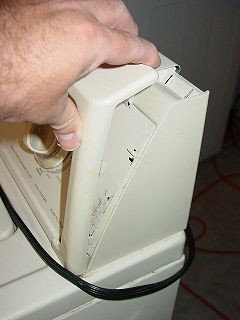
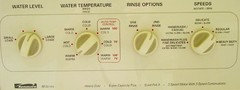
    This is an example from a Series 90 model circa 1999 (the machine of this thread's original topic). Various models/years designated ATC differently, some may not indicate it at all even if the machine has the feature.


  • 8 years ago

    Okay. Mine doesn’t look like that. Guess I’ll just have to try the hot water with bleach only washes a few times in the attempt to get rid of the moldy smell. And switch to the hot wash/cold rinse with powder detergent for most loads. Thanks for all your help.