Software
Houzz Logo Print
amyinowasso

Growing your own mulch

I brought it up on the conversation thread, but no replies. I am growing rye grass I can cut for mulch, and plan a bed of sorghum. I don't know how to dry and store these materials for later. Any suggestions? I also plan to grow cow peas as a living mulch. Any other ideas for living mulch? I tried oregano once, THAT was a mistake.

Comments (35)

  • 8 years ago

    haha! How about mint? I haven't considered it yet. . . but I look forward to following this; perhaps I can or should consider.

  • 8 years ago
    last modified: 8 years ago

    I was JOKING! LOL Oh, I meant I was considering growing living mulch, not mint! LOL

  • 8 years ago

    LOL! I'm imagining oregano or mint as a cover crop!

    Both varieties of mint I have are in an area I don't care if the run wild! If they escape the bed they'll just smell nice when I mow them down. My oregano is in a raised bed along with a few other thug plants. We'll see how that fight goes! Lemon balm, comfrey, oregano and some chives and walking onions. This is a temporary location for the onions and chives, so they will be sitting out the battle of real estate.

    I've been debating what to plant for a cover crop. I was planning on buckwheat, but I haven't had time to chase down seed. I have a bunch of PEPH seed that I wasn't planning on growing, but I may just scatter a mixture of it and maybe some clover along with some mustard. Vetch might be something I look at, too?

  • 8 years ago

    I can't remember where I first got buck wheat, but I think it was in the bulk bins at Whole foods. Sprouts probably has it. Bob's Red mill has it packaged, but I don't know what processing that might entail. I would try the local feed store. I have grown it as a summer cover crop, but I bon't recall it making a lot of biomass.

    Vetch. I have an article. "With all the benefits the vetch conveyed, those tomato plants were both healthier and higher-yielding than two other plantings done for comparison, one with black plastic as a mulch and the other with no mulch, just bare soil. This happened in all three years of the study. A further study, using greenhouse tomatoes, yielded similar results. And in an intriguing follow-up, a researcher at the same lab, Autar Mattoo, did a groundbreaking molecular analysis of the results, pointing to genes for longevity and disease resistance being activated by the presence of the vetch."

    I can't find the article now, but I also think I read to sow it under fall bassica.

  • 8 years ago

    Oh, and so you don't think I'm a total idiot, I sowed the oregano in pots with pepper plants, like the first year I gardened. I still have one of those pots of oregano, LOL.

  • 8 years ago

    I hadn't thought of the Red Mills buckwheat. I'll check that out. I can buy 50 lb bags at the feedstore, but I'm not sure I want to mess with that much right now. Some of my CSA friends are big on the buckwheat and often use it to choke out bermuda. I can't attest to how well it works, but it may be worth a shot? It probably should have been planted before now?

    I have quite a bit of vetch in part of my garden already. It's in the pathway I've left open in case I need to use a tractor or whatever. I need to clean some of that area up and dig out some bermuda and ragweed. May wait and work on it before the ragweed goes to seed.

    I'll probably go with the southern peas for the time being and plan on sowing vetch, wheat, snow peas, daikon radishes, turnips, and possibly clover in the fall. We run a similar blend in our fall food plots for wildlife.

  • 8 years ago

    Well, now, choking out bermuda would be a noble use for 50 pounds of buck wheat. I believe it is a warm weather plant, and goes to seed in as little as 30 days. Here's what Johnny's says.

  • 8 years ago

    I planted brown top millet, pearl millet, elbow rye, buck wheat, and clover last year. I was most happy with pearl millet for biomass. But how you plan on harvesting it will make a differance. I just disc mine into the soil.

    I plan on buying brown top millet ( for the birds) and a tall millet ( for biomass) to use this year. I still have 50lbs of clover and 50lbs of elbow rye which will be used this year.

    I was very happy with the 3 loads of mulch that was from the trimmings under the power lines. This is the first year I could go " no till". I expect that was because of the of the 12 to 15 yds of trimmings I mulched with last summer.


  • 8 years ago

    Wait, Slowpoke, Weren't you the one who was going to grow flowers this year? LOL Love that you're going no till. Me too. I don't have a choice, though.

  • 8 years ago

    Larry, All those yards of trimmings sound so awesome! That is great to have so much mulch.

    I should plant more for the wild birds and for biomass. I just always try to do too much with the space I have.

    Dawn

  • 8 years ago

    LARRY ::waving:: so good to see you!

  • 8 years ago

    Nancy, you should see the Red and White clover, winter peas, turnips, radishes, I planted last fall, they are in bloom now. The Ebony rye is heavy seed head and looking good.

    I was hoping to find bulk zinnia seed today when I was in Ft. Smith, came back with 50# of foxtail millet instead. I have three brush piles to burn and then I will work the ground and plant clover, millet and Bermuda.

    Dawn, I love seeing the birds in the millet and the bees on the flowers. I am hoping the birds like the Foxtail as well as they did the Brown top millet.

    Nancy, I have had to go no till also, the old body is just falling apart. I have 2 tractors. now and do about every thing from a tractor seat. I still have 2 tillers left but they need work,I just use them enough to keep them running, it just causes too much pain.

    Amy,it is good to see you also. I still read some of the post on garden web.but seldom respond because I only have a tablet now and can't see what I am doing

  • 8 years ago

    Amy, do you not like Oregano as a ground cover because it spreads? That is why I DO love it! When I want less coverage, I just dig it up and move it or give it away. I’d love to hear your thinking on this. Here is a pic from yesterday.

  • 8 years ago

    Oh, yeah, Dawn (II), oregano is a great choice to cover an area like that, but I won't put it in the vegetable beds. Like any mint family plant, it wants to take over. How much shade is it getting there? It looks great! I would grow a whole yard of it if it would grow under the trees! Or maybe plant mint, too, so it would all smell good. There is actually a place in the front yard where nothing wants to grow. Shade most of the day, then sun during the heat of the day. I've considered mint there.

  • 8 years ago

    Interesting article. Found it while looking up Millet as a cover crop, but I'm more interested in Sun Hemp. Of course this took me to Peaceful Valley's cover crops, and THAT was interesting, too. Generic things I can get at Holman seeds. They probably have different kinds of millet, but, they tend to be in packages bigger than I need.

    We cut the Elbon Rye today. I would say 2 4x8 beds gave us the equivalent of one bale of straw. it looked like so much more.

  • 8 years ago

    I've ordered some Sunn Hemp from Peaceful Valley. I already have some sorghum to plant, I'm just vacillating between 2 places to put it.

  • 8 years ago

    It's almost like I'm reading about tech stuff or math--this thread. I don't quite understand how this works. I get the basics, you plant seed and it grows into plants...and then you chop it? Pull it? And use it to mulch your beds...after they've been planted in the spring? Or do you put it on the beds during the winter? Or does it stay (planted) IN the beds during winter.

  • 8 years ago

    H/J kind of all of the above. I grew Elbon rye in 2 beds over the winter (and it laughed at all cold weather). Elbon is a variety developed, I believe, at the Noble Foundation and Elbon is Noble spelled backwards. It is cereal rye. You could grow it for the grain. I grew it in the bed that had nematodes, as it is supposed to kill/surpress them and in the bed next to it, because it was there. IF I'd been on the ball, I would have cut it sooner to make room for cool season crops, but that didn't happen. I'm pushing toward no till in my garden, too, So I wouldn't let DH yank the roots out (this messes with his OCD). I planted tomatoes in the stubble of the non nematode bed, and right now it's like built in mulch. We'll see how that goes. So we could have cut the rye and incorporated it back into the soil for organic matter (and there are time frames for replanting, because it might compete for nutrients while deteriorating). We could cut the rye, as I did,and lay it out to dry to use like straw mulch, which could conceivably be used later as winter mulch.

    I want to mulch my beds, but I don't want to bring in herbicide residue. So I'm trying to come up with ways to grow it myself. Some people use grass clippings. My yard is weedy and the bermuda often goes to seed before we cut it, so I'm afraid to use those. Compost maybe.

    I've experimented with living mulch, which is basically "underplanting" a shorter plant under a taller one. I put oregano in pots with pepper plants. The oregano won. I let Tulsi grow under my peppers last year, and I had to cut it back so they could get some sun, LOL. At least it winter kills. I have cut both comfrey and tansy for mulch, too.

    If you have a spot in summer where nothing will be planted for a while, you can plant buckwheat. You cut it before it sets seed (30 days, I think), incorporate it or "chop and drop" or whatever, then plant your fall crop. I'm going to let some vining cowpeas grow in one of the tomato beds as a living mulch. I know they will try to climb, but that will be an experiment, too.

    The sorghum I have was meant to make very tall plants for later mulch. The Sunn Hemp I want to plant to crowd out weeds in the new bed and give me dry matter for mulch or compost.

    There are lots of things you can plant as winter cover crops that will enrich the soil, keep nutrients from washing away and give you dry matter. I linked an article above about using vetch before tomatoes that helped with disease resistance. Austrian winter peas will grow through the winter.

    You can research the Ruth Stout method of growing in mulch for other ideas.

  • 8 years ago

    Beautiful information, Amy, thank you!!!!!


  • 8 years ago

    I can hardly wait to do something in this realm.

  • 8 years ago

    The Sunn Hemp has arrived. (I was right Nancy, I didn't have a chance to do anything till now so $7 extra would not have been worth it for quicker shipping.) I got this from Peaceful Valley, and yesterday discovered Southern Exposure Seed Exchange carries it. And, BTW, it's not hemp. It's a legume. I have never figured out how to post PDFs here, but googling Sunn Hemp in Oklahoma brings up an OSU fact sheet.

    The tomatoes in rye stubble look as good as the ones in my other bed. The rye tomatoes are "compact" tomatoes. One is a dwarf, 2 Heidi's which aren't sprawlers. I think the Jetstar will be the biggest in that bed. I love that the stubble makes a built in mulch. I was afraid it would be allelopathic, but it has not bothered the tomatoes and further reading says the biggest problem would be with corn. Check out this article. My notes:


    kill at least 10 days before planting corn.


    Weed suppressor. Rye is one of the best cool season cover crops for outcompeting weeds, especially small-seeded, light-sensitive annuals such as lambsquarters, redroot pigweed, velvetleaf, chickweed and foxtail. Rye also suppresses many weeds allelopathically (as a natural herbicide), including dandelions and Canada thistle and has been shown to inhibit germination of some triazine-resistant weeds (336).

    Rye reduced total weed density an average of 78 percent when rye residue covered more than 90 percent of soil in a Maryland no-till study (410), and by 99 percent in a California study (422). You can increase rye’s weed-suppressing effect before no-till corn by planting rye with an annual legume such as hairy vetch. Don’t expect complete weed control, however. You’ll probably need complementary weed management measures


    I threw buckwheat in the other bed with rye stubble. I planned sorghum there, but thought I would give it longer to decompose before planting a corn relative. I'm also looking for other places to plant buckwheat in order to attract beneficial insects like tachinid fly.

    Let the experiment begin!

  • 8 years ago

    So...read the instructions BEFORE planting. Sunn Hemp needs an inoculant and they say not to plant too close together or it smothers itself? I may be thinning.

  • 8 years ago

    Amy, please keep us updated on the Sun Hemp. I wanted to plant some last year for deer cover, but the price plus shipping was a little more than what I wanted to pay. I am also afraid I am too far north to get good seed production.

    I would not worry too much about bad germination in the rye stubble. I disc in some Elbow rye a few days ago and planted purple hulls, soy beans, clover, Bermuda, tillage radishes, foxtail millet and some type of unknown bean seed, even watermelon, I have stuff coming up everywhere. I am not sure what all is coming up, but there is a lot of it.


  • 8 years ago

    Good thing, Larry, to have lots coming up. At this time, sun hemp won't set seed north of southern Florida or southern Texas (according to SESE). My seed, from Peaceful Valley said product of India. Don't know where SESE gets their seed, but I read growers in Florida were trying to develope new varieties.

  • 8 years ago

    I was looking at my garlic which will be ready soon. I like to plant it after cowpeas. I read a post on Facebook where a guy grew buckwheat and oats as a cover crop before garlic and planted the garlic directly in the growing cover crop. Both will winter kill and provide a built in mulch for his garlic. Someone responded with this article. Both of them are further north. I'm so pleased with my tomatoes in rye stubble I'm ready to try this. The info about radishes was very interesting in that article as well. I've heard of daikon radishes as cover crops before.

  • 8 years ago

    This "book" is more about managing pest insects, but there are sections about cover crops and mulch, so I'm going to drop this link Manage Insects on Your Farm: A Guide to Ecological Strategies. The book is free on line at SARE

  • 8 years ago

    I downloaded that. Thanks Amy!


  • 8 years ago

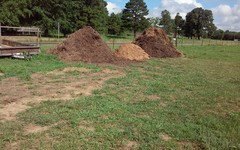
    Amy, thanks for the link. I have been collecting old hay from around hay rings to use next year. I now have a pile about the size of 2 cars, but by the time it composts all year I may be able to carry it in a Walmart ba

  • 8 years ago

    The sunn hemp is sprouting. Some have true leaves. Will it out pace the weeds? I'm doubting it. Could have used more rain. Next time maybe I'll soak seed first. I ordered more from SESE, it arrived today. I also got hairy vetch for later, some more sorghum, Iron and Clay cowpeas.

  • 8 years ago

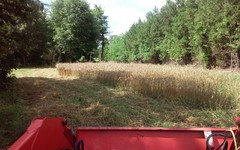
    Elbow rye being cut, it will be used soil builder, the seeds for bird food.

  • 8 years ago

    Amy, please post a picture of your sun hemp.

    I am still trying to collect mulch for next year. As you can see, it may be compost next year.

    The rye I cut down looks good, the clover is now stick above the rye stubble.

    I will try to post this before I loose it. I can't see what I am doing,nor touch what I am looking at. Please forgive the chopped up post, but this is hard for this old man to do.


  • 8 years ago

    I have not been impressed with the sunn hemp. It grew to about 4 inches and stalled. DH mowed it yesterday. I think he forgot it was there. (He goes into the "zone" when mowing.) I'm thinking about putting sorghum where it was.

  • 8 years ago

    Amy, I have been kicking around the idea of planting corn for biomass. I have not known of any one doing that, but deer corn is about 6 bucks a bag, and what you don't use for seed you could feed the wildlife. I planted about 10 pounds of bird seed I had left over one year. I am not sure what all came up, but it looked to be in the sorghum family, but no birds sprouted.

  • 8 years ago

    Ha ha, maybe you should try chicken scratch to see if you can get chickens.

    I also have iron and clay cow peas. I need to get them planted, but between the heat and the chiggers, I don't want to go outside.