Software
Houzz Logo Print
pvnrhodeisland

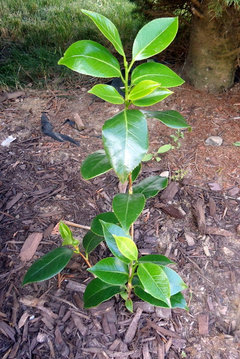
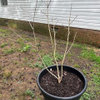
Newly planted April Dawn - R.I.

8 years ago

I planted my young camellia in the ground on April 27. It overwintered in the house (purchased July 2017) and looks pretty good -- so far. Since it is spring and I think that's the best time to fertilize - should I give it a bit of acid? I have some dry stuff to mix with water and thought maybe I'd give it a bit. I gave it a small amount of same stuff last July when I purchased it. Nothing since then. Thanks for any thoughts.

Comments (9)

  • 8 years ago

    I am not real sure of the PH level of this soil. It is clay heavy for sure. I did amend the hole I put the plant in but I know it will outgrow the hole and hopefully have healthy roots. As I said, it looks pretty good and has new shoots emerging on some of the branches. I have heard that the northeast tends to have acidic soil -- with some exceptions to that I'm sure. With that in mind, would it hurt to give it a small shot of acid - or would that be too much for it to handle. I know they are not heavy feeders so am hesitant to do too much. Do appreciate your insights, Luis. Thanks again.

  • 8 years ago
    last modified: 8 years ago

    While you could give it a small shot of amendments, consider that your soil may already be quite acidic. My MIL in New Hampshire did not need to do this (amend) as blue-pink mopheads there always bloomed blue so she new it was not needed. In my clay, alkaline soil, those mopheads are pink. In Atlanta, where I used to live, the red clay produced blue mopheads.

    Lowering the soil pH further sounds safe... or sort of ok... but my concern is that, once the pH goes into the low 5s or 4s, uptake of some minerals (magnesium, calcium, etc) can become troublesome so I feel unsure that it may be safe... try these two easy ideas....

    If you drive around and can see lots of colored mophead hydrangeas (meaning mostly blue mopheads), the soil is sufficiently acidic so do not amend. Or you can call a nearby plant nursery, talk to their master gardener and ask if the soil in their area is sufficiently acidic for blue hydrangeas. Hydrangeas in my neck of the woods actually tolerate quite a bit a alkalinity before they develop signs of iron chlorosis. When I have tested the soil under these conditions, it has been near 7.6

    Pv Picotte thanked luis_pr
  • 8 years ago

    Wow! Terrific input and I will do all you have suggested. I'll post again when I see some results down the road. As an aside, I have been planting stuff in the ground for many years and have not really given much thought as to Acid vs. Alk... From iris to roses to clematis -- all have lived and bloomed beautifully for many years. It's just this darn camellia that deals me such a fit. Thanks so much.

  • 8 years ago
    last modified: 8 years ago

    I feel your pain. Hee hee hee! I never cared for this soil pH thing either at first. Then it started to become important when I moved to Texas and added azaleas, then camellias and hydrangeas.

    Pv Picotte thanked luis_pr
  • 8 years ago

    That's a good point about blue/pink hydrangeas, but the ph can vary within your own yard. For example, the ph next to a concrete walkway or foundation can be higher. I saw a hydrangea once that actually had blue, pink and purple flowers on the same plant. Decomposing maple leaves and tap water can also be alkaline. Roses and camellias don't usually grow well together, but there are probably exceptions. If you have healthy rhododendrons, then that would tell you something since camellias like a similar environment.

    Also, try looking at google images for the phrase "chlorotic camellia leaves".

    Pv Picotte thanked PNW-Transplant
  • 8 years ago

    I have not yet followed up on your suggestions re: checking with local nurseries about ph of soil but DO plan on doing so. Anyway, here is a picture - in ground since 4/27 - I do see a bit of yellowing on one leaf toward the bottom. So I guess maybe soil in that spot where it is planted is slightly alkaline??? The rest of the leaves look fine. Perhaps a couple of spoon fulls of coffee grounds? PNW-Thanks for the tip regarding chlorotic leaves.

  • 8 years ago
    last modified: 8 years ago

    Well, could be but not necessarily also so check the soil pH to really confirm. I could not tell from the picture but, it did not seem as if the veins remained dark green and the rest was a light green or yellow. After a while of being in alkaline soils, I would also have expected to see more than one leaf with iron chlorosis signs.

    Also, this is a new leaf and new leaves can be temporarily more sensitive to everything. For example, I have had some new leaves turn shades of green like that and also turn to shades of bronze. Then after a few weeks, they turn darker greens without me doing anything. In that case, I suspect the sun exposure diminised as nearby deciduous trees leafed out and then the leaves went back to normal. So ck it (the soil pH) out.

    Here is another way to find out... If you have colored hydrangeas planted nearby or if you know someone who does, take a look at their blooms. Provided that the owner of the plant has not amended the soil to change the hydrangea's colors, acidic soils should produce blooms with shade of blue, neutral or slightly acidic soil should produce purples and alkaline soils should produce shades of pink.

    Processed coffee grounds do not have much acidifying effect so I doubt they will tweak things that much. I would try 1 cup of vinegar diluted in 1 gallon of water the next time that you water by hand. Or garden sulfur, greensand, iron-chelated liquid compounds (sold at most plant nurseries), etc.

    Pv Picotte thanked luis_pr
  • 8 years ago

    I like that hydrangea tip - nice and simple. Will give the vinegar solution a try. After checking for sure the pH. Thanks again, Luis.

Sponsored
More Discussions