Software
Houzz Logo Print
cowhorncreek

AC and Attic Insulation

Not sure if this is the right forum to ask this question in, but will start here. If it should be directed elsewhere, please let me know.

Just had an AC guy out and unit is fine. He advised that the attic has not insulation and that needs to be installed. Have heard pros and cons about blown insulation and the Pink Panther type insulation. We live in the DFW area in Texas. What kind of insulation do you believe is best for the area. Any advice/recommendations/thoughts are welcome. Thanks.

Comments (15)

  • 8 years ago

    I have decades of construction and air conditioning in DFW. I've never seen a home built after 1960 that wasn't insulated and 99.9% built earlier were insulated long before 2018. You might have insufficient,deteriorating or compacted but I'll bet my Sunday hat there's insulation in the attic. Climb up and look then post back.

    WalnutCreek Zone 7b/8a thanked klem1
  • PRO
    8 years ago

    I chose green fiber to reinsulate my attic. (blow in)

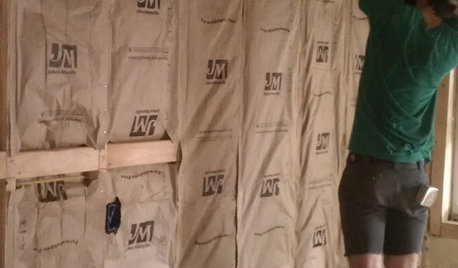
    Insulation batts are made for walls, blow in is made for horizontal applications. The main reason is that heat will penetrate the cracks that batts often leave.

    The biggest con in the insulation game is that cellulose types that are blown in are mostly air. So the amount of material used is much less in favor of cheaper cost. Problem is that over time this method will loose the air and have to be redone again years later.

    In some cases the Pink Panther type is similar, one disadvantage is that it's fiberglass and fiberglass is very itchy. I can not imagine working with a product like that day in and day out. Thanks but no thanks.

    The disadvantage with green fiber is that it is very dusty. The other is that the more weight you put on older sheet rock (ceiling) certain areas can sag. At least this is my experience in reinsulating two personal homes with it. (late 70's build both houses) and a neighbors house in my old neighborhood. But I would still use it again over anything else. I only want to do this one time and move on to the next project.


    WalnutCreek Zone 7b/8a thanked Austin Air Companie
  • 8 years ago

    You can use blown in for walls and you can use batts for horizontal applications. Each has it advantages and disadvantages for each application.

    WalnutCreek Zone 7b/8a thanked mike_home
  • PRO
    8 years ago

    how are you going to see inside the walls to make sure the blow in was filled in the wall? You have x-ray vision Mike?

  • 8 years ago

    In new construction the walls are open and it should be obvious it there are voids.

    When renovating the wall of an old house one practice is the make holes at the top of the wall and blow in insulation. That's when you need x-ray vision. The right way to do it is to open the walls. Then you have a choice to do blown in, batts, or foam.

    WalnutCreek Zone 7b/8a thanked mike_home
  • 8 years ago

    No insulation? That's shocking if true and something to do something about. I'm in a milder climate area than you but we added fiberglass batts on top of existing fiberglass batts a few years ago (to increase the R value) and the difference was remarkable.


    It's as much a materials cost as a labor cost because both blown in and batts go in pretty quickly. Both work. Be sure the contractor is experienced and keeps the vent openings unobstructed.

    WalnutCreek Zone 7b/8a thanked Elmer J Fudd
  • 8 years ago

    klem1, I was surprised, too. The house was built in 1979. After the AC guy left, my granddaughter climbed into the attic and explored (thinking she and her sister may install the insulation themselves - she quickly changed her mind). She said there was absolutely no insulation on top of the ceiling below, across the uprights, or under the roof. No wonder they are heating up. She has found someone highly recommended (I looked too, and the company has nothing but high ratings everywhere). Many said they are not the cheapest, but do the best job. For her money, she wants the best job.

    I just wonder if someone was going to replace the insulation, removed the old, then never replaced it. It is really weird.

    Thanks to all of you for your comments, thoughts, and suggestions. I am forward the info you all shared to my granddaughter.


  • 8 years ago

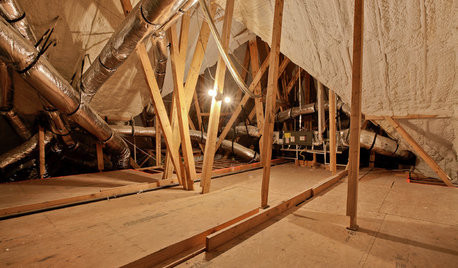
    Are you sure that the attic is not sealed because the roofline is now insulated and the insulation removed? That is what modern building science thinkers recommend if ducts need to be in the attic space. Vented attics with ducts are fine for North of the Mason Dixon line, but are not always the best in hot-humid zones. Are there ducts in the attic space? If so, get an energy rater in there for some advice, pronto. Some local government, or utility might pay all or part of the cost. Approach the house comprehensively, not just as an insulation problem.

    WalnutCreek Zone 7b/8a thanked ionized_gw
  • PRO
    8 years ago
    last modified: 8 years ago

    I just wonder if someone was going to replace the insulation, removed the old, then never replaced it. It is really weird.

    Probably not. There may have been a repair to the roof, repair to plumbing, some electrical repair, cable TV run etc.

    The insulation was moved, removed because it got wet and never replaced. I see it all the time.

    With that said my current house I'm living in there was a section in the breeze way that attaches the garage to the house. There were two big sections in there that didn't have any insulation. This house was built in '79. I am certain these areas were never insulated from when the home was built. The breeze way is extremely tight and dark, so no one has ever gone into it.

    WalnutCreek Zone 7b/8a thanked Austin Air Companie
  • 8 years ago

    ionized_gw, how in the world does one tell if an attic is sealed? The AC guy that looked at and recommended insulation did not say anything about it being sealed.

    I do believe my granddaughter said there are ducts in the attic and the AC guy said they needed some attention. Do we just look on, say Yelp, for the term "energy rater".

  • 8 years ago

    Austin, I do not understand what you want to insulate in the breezeway unless there is a bulkhead against living space in the house. . The ceiling is in open air so attic heat does not go to living space. I do like houses with garages separated by breezeways.

  • PRO
    8 years ago

    Well breezeway is not really the 'proper' term to call it. I called it that because this is how they define it on the real estate document. LOL.

    There are breezeways and then there are attached garages.

    I more or less have an attached garage, but in the style of an enclosed 'breezeway' which is why I think they named it as such on the real estate document.

    Some homes in the same style as mine, same neighborhood even the breeze ways are open. Meaning there is a roof overhead and open side walls. My side walls are not open. There is utility room in the space leading into the garage from the home.

    So sorry for the confusion. I shouldn't have called it a breezeway. If anything I did so to inform of the tight attic space / difficulty in insulating this space and possibly why I found portions of it that were never insulated.

  • 8 years ago

    With no insulation, for whatever reason, in DFW, you'll see a huge improvement with added insulation. We had compacted loose fill with a very irregular attic floor space and had a goodly amount extra blown in, and the difference on A/C and heat load is massive. We went from using 110% (Kwh) of neighborhood average, with a slightly below average size house, to 40-50% of the same by replacing incandecents with LED, topping up the old insulation, a little elbow grease sealing and a A/C furnace replacement. Northeast Tarrant County, 2200 sq/ft, last 5 electric bills below 900 Kwh...now the next one is gonna be ugly with this heat wave, but not over 1500 ugly.

    WalnutCreek Zone 7b/8a thanked User
  • 8 years ago

    Sorry that I missed these questions, WalnutCreek Zone 7b/8a. Energy raters can be found through organizations called BPI and Resnet. The local programs that can cover the costs are often offered by the State or utilities or paid for by the State and administered by the utilities. It is a real mix. A good evaluation will tell you where the most productive place to put your money is to save on utility costs. While in your case it is pretty clear that insulation of some sort is needed. the type and approach needs to be tailored to your home in your region and a local energy rater can do that. Check with your State's land grant university or neighboring states with similar climates. They usually have a lot to offer with respect to how to obtain home energy efficiency in the local climate.