Software
Houzz Logo Print
valerie_sanchez96

Need help with lawn!

8 years ago
last modified: 8 years ago

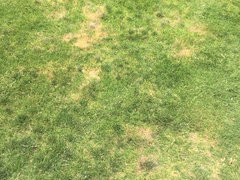
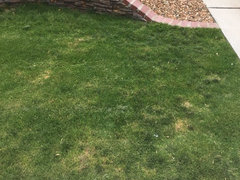
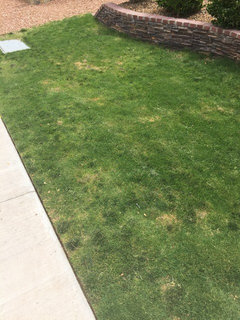
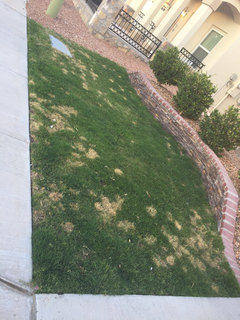
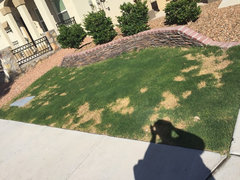
So, I’m new to this and trying to get my lawn on track. We’re in the southwest and suffer from 105 degree summers. I think I have Bermuda with a Tall Fescue infestation. Not to mention the purple broadleaf weeds that pop up everywhere. This is our 3rd summer with this lawn and seems quite patchy! In spring I started with a neem oil treatment, then insecticide, weed treatment and then iRon application. This is the worst my yard has been! I got a terrible fungus that I just treated and added Scott’s lawn food. What do I do?!

Comments (20)

  • 8 years ago

    Are you watering? Maybe too many chemicals? Call in a local professional and get some help to get on the right track.

  • 8 years ago

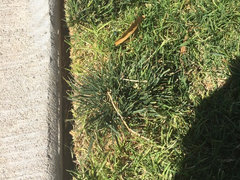
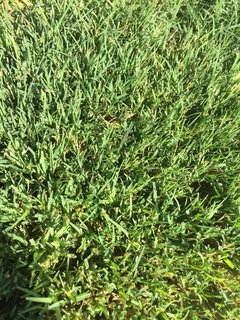
    So, I just did my backyard and I overwatered at night and got a fungus. I either overwatered the front or brought the fungus to the front via mower or shoes. Both have since been sanitized. Here’s a close up.

  • 8 years ago

    I’m not sure if my original pic came through.

  • 8 years ago

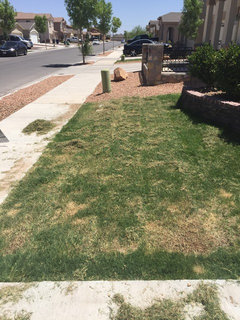
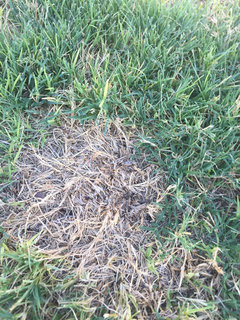
    Here’s another

  • 8 years ago

    Now that I have added pics, any idea if that's fescue infesation? I realize it's too late to overseed, but anything I can do now?


  • 8 years ago

    There is no reason that fescue should coexist with bermuda in a hot
    desert situation if you are watering properly. There are prairie
    grasses that look like fescue and will thrive in the desert, so we need
    more information.

    Where do you live? Please be much more specific than the southwest. I consider the southwest to be anywhere between San Diego, CA and Ozona, Texas.

    What kind of grass do you want?

    Is any of it in the shade for more than 2 hours a day?

    How are you watering? How often and for how long?

  • 8 years ago
    last modified: 8 years ago

    Front · More Info

    Hi there, thanks for the help. I live in El Paso, Texas and we currently are suffering from 105 degree weather! I want bermuda grass and my front lawn is not shaded at all and is exposed to well over 6 hours of complete sun a day. I set my sprinklers 3 times a week for 40 minutes. We have water restrictions here in El Paso. I was also hand watering a couple time a week to get the lawn going, so, I either over-watered and caused the fungus or brought the fungus over from the back, which is a whole other story.

  • 8 years ago
    last modified: 8 years ago

    It looks like you may need to clean out some thatch, which gets you better air circulation and less disease problems. Before you de-thatch, spot spray the tall fescue with 'Round up' . Its going to leave a lot of dead spots, but the Bermuda will quickly send out runners and fill in the dead areas. You can have a lawn service de thatch for you, or buy a little electric dethatcher . Many different brands are available on-line (Google it) After you spray, wait a week before de thatching , and then fertilize after everything is cleaned up. Your going to have big piles of material to rake up after de thatching.

  • 8 years ago

    Thanks, Tom! Any recommendation on fertilizers for Bermuda? Also, I am sure Home Depot rents dethatcher, so, I will do that. Is it fine for me to do this now or should I wait for the end of summer?

  • 8 years ago

    Dethatching now causes a bit more shock to the plant, but Bermuda is tough enough to come out of it. Bermuda is not picky about fertilizer, but in the southwest it sometimes needs some extra iron. A good product for poor soils is 'Revive' soil conditioner. They have it at Lowe's........not sure about Home depot. It comes in a 25lb bag, and it covers a lot of area! Supplement that with an application of 'Milorganite' organic fertilizer. ( available every where) The two together have a lot of iron, a wetting agent to soften hard ground for better water penetration (for deeper root growth) which is important in areas where water restrictions are in place.

    Valerie Sanchez thanked Tom
  • 8 years ago

    Awesome! I'm going to get to work on this and i'll keep you posted.

  • 8 years ago

    UPDATE:

    1. My bf and I pulled out as many tall fescue clumps as we could. I'd say, together, we pulled out about 30 clumps.

    2. We sprayed Round Up on the remaining clumps.

    Front · More Info
    3. A week later, I rented a Power Rake from HD and my mini-yard had TONS of thatch! All of the debri was dead, thick thatch!
    Front · More Info
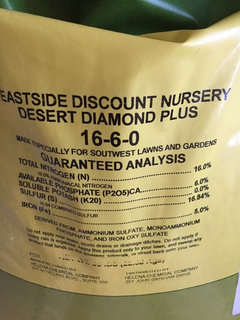
    4. Unfortunately, Lowe's doesn't carry Revive or Milorganite (went to 3 stores). HD stopped carrying Milorganite in every store here in El Paso and they didn't have the Revive fertilizer in stock. So, I went to the local nursery and bought this fertilizer, per their recommendation. Turns out it's made locally for our type of soil:
    Front · More Info
    5. Applied fertilizer and watered deeply. I can't help but feel relieved that my yard can finally BREATHE! Now, let's see how it goes! I'll post some pics in a few weeks.

  • 8 years ago

    That is a pretty good fertilizer for El Paso bermuda. As a side benefit, you never have to worry about getting snails or slugs! Ammonium sulfate used to be the ingredient in snail killer in Europe. It literally kills all of them overnight...forever. At least that was my experience even with an English ivy patch full of the critters.

    RoundUp was not the best thing to spray because it gives you those dead spots, but this IS bermuda, it will come back. The best alternative, Celcius, is very expensive.

    You can find organic fertilizer somewhere on this list. I have had success with corn meal, corn gluten meal, and alfalfa pellets. The thing to keep in mind is that bermuda will use a lot of nitrogen. Organic fertilizers generally have less nitrogen than the chems, but the entire point of organic fertilizers is to feed the microbes living in the soil, not to feed the plants themselves. Organics will feed normal plants just fine. Bermuda is the odd plant in needing so much N.

  • 8 years ago

    Thanks, dchall_san_antonio; so let me ask you, when it comes to organic fertilizer, I have read it should be applied once a year. What is the benefit/need of adding organic fertilizer to your existing fertilizing regimen? Especially if I am already using a fertilizer like the one I showed above.

  • 8 years ago

    The biggest benefit for organic will be seen if a lawn has never had organic fertilizer, but has been regularly fertilized with chemicals. The organic fertilizer stimulates the soil microbes to repopulate, and that seems to "normalize" everything. Life in the soil is good. There is a situation where the soil biology crashes and no amount of chemical fertilizer seems to work. You end up applying more and more fertilizer with no improvement. Then once the organic is applied, all that fertilizer kicks in and many people suddenly jump on the organic band wagon. That's fine, but they will never again see results like that first time. So what I have been recommending, especially for bermuda lawns, is to fertilize every 4-6 weeks with chemical fertilizer but add or replace one of those apps with organic every year. To me that is a minimum necessity for organics. If you have the budget for it, you could apply corn gluten meal every 4-6 weeks. If you don't have that kind of budget, alfalfa seems to work every 4-6 weeks.

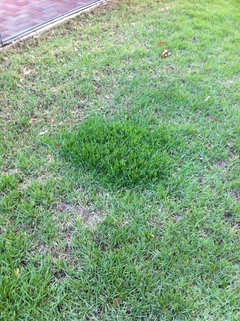
    Here is a picture of an alfalfa trial in a zoysia lawn. As I remember the guy who posted it was an organic skeptic up until he did this demonstration.

    As you can see the grass is deeper green, more dense, and growing faster than the surrounding grass. Thanks to mrmumbles for posting the picture. He applied the alfalfa pellets in mid May and took the picture in mid June.

  • 8 years ago

    Holy Mackerel! That's quite a difference. I'd have to see pricing to see what fits in my budget. As you can tell, I am a new learner and have already spent so much trying to figure this all out. However, i'll chalk it up to my learning curve. I am fine with it. In any case, if the budget permitted, are you saying the organic fertilizer could be applied along side the chemical fertilizer every 4-6 weeks or should it be one or the other. (BTW, thanks for your patience)

  • 8 years ago

    UPDATE:

    I am so, so, so pleased that I dethatched the lawn. Aside from the dead spots, the grass is lush and looks totally different. I've also been able to bring back the backyard lawn relatively fast which has left me wondering why the front grass isn't filling in as fast! I noticed that my grass blades in the front look differently from the back (Note: The back lawn is a recent lawn project and the front was completed by the builder). So, I called the builder and they tell me the front lawn is "Hybrid Bermuda". I am prepared to leave it as is this season and keep with my once a week watering schedule and fertilizing every 4-6 weeks until the first frost. However, will I need to reseed this in the Spring or should I just let it fill in?

    Front · More Info
    Healthy Part:
    Front · More Info
    Dead Part:
    Front · More Info

    I am thinking I will try an organic fertilizer for my next scheduled treatment.


    Thanks to both Tom and Dchall for totally walking me through this and getting me back on track.

  • 8 years ago

    You can apply organic fertilizer at any time, even along side of chemical fertilizer. They work completely differently.

    NEVER seed into a hybrid bermuda lawn. Seeded bermuda is common, not hybrid. The modern hybrids have no seeds. Your builder likely used TIF 419, which is commonly available and know now as 'builder's grade,' because it is so cheap and available. When I was a boy it was very expensive, not not any more. If you want to fill a thin spot, buy one piece of TIF 419 at a local nursery and patch it in.

    That dead spot looks like you might have sprayed a weed. An alternative is that a dog peed there, but bermuda can usually take animal pee pretty well. You might scatter a heaping handful of table sugar on the dead spots. If it revives quickly then it was animal pee.

    P.S. your last picture is the best of the three. Lawn pictures look much better when taken in the shade or on an overcast day.

    Valerie Sanchez thanked dchall_san_antonio
  • 8 years ago

    Great, i'll go get the corn meal this weekend and i'll probably patch in the dead spots rather than waiting for them to fill in. It's most likely not pee because I used Round-Up to kill the weird grass growths that, I think, were tall fescue.