Software
Houzz Logo Print
rgress

grass clippings vs tree compost

8 years ago

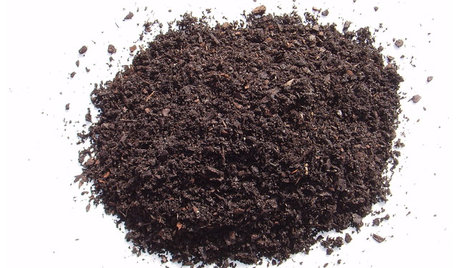
I can purchase compost from 2 different sources. Here are the description from each


1. Made of fully composted yard waste (grass and leaves), Summer Field Farm Compost is excellent for amending all garden soils and for planting. This product is also ideal for “top-dressing” grass seed because it holds moisture and keeps the seed in place. It is weed free.


2. Made from tree and shrub trimmings, our compost is 100% natural soil amendment and produced with stringent quality control measures. The fine texture is free of weed seed.


Do you think one would be better than the other?


Thanks

Randy


Comments (22)

  • 8 years ago

    Composted organics is composted organics. As long at the tree trimmings don't include anything allelopathic, you're good to go. Nutrient wise, it'll depend a little on exactly what plants went into it, but with this description, they sound entirely equivalent.

  • 8 years ago

    The wood trimmings might have more wood chips in it, and therefore might drain slightly better. But it's an amendment, I can't imagine it matters.

  • 8 years ago

    +1 Linda. If it's without herbicides, like the stuff I make on my property from my gardens for my own consumption, that's great. And check both composts regarding that! Plenty of folks use herbicides on shrubs and trees, too!

    Other than that, six on one, half dozen on the other. If you can see both before buying and both have good scent (compost should always smell like fresh earth with maybe a woody or green overtone, never unpleasant), good texture, and a good feel to them, either would do.

    In that case, I'd let price be my guide.

  • 8 years ago

    I think there is no way to avoid herbicides except by trust in the supplier. Herbicide is commonly used near shrubs.

  • 8 years ago

    If properly composted, neither should have issues with herbicide residue. The composting process will typically break them down into harmless elements. There are some very persistent herbicides that retain their toxicity through the decomposition process but these are no longer available or sold for homeowner/residential usage.

  • 8 years ago

    That's true, if "yard waste" is interpreted as coming from the yard of a homeowner. But if it's waste coming from a stockyard or a farmyard, copyralids could be there. Again, I think trust is an issue. People selling compost for gardens who know about horticulture probably can be trusted not to use suspect materials. If the seller is a nursery, you're probably good to go. If the seller is a person who owns a ranch and wants to get rid of debris, you might want to be careful.

  • 8 years ago

    I have to relate this story. I have a friend who needed to buy compost. He got in touch with some anonymous provider with a good price and asked whether the compost might be contaminated with herbicide. The seller didn't bat an eyelash. "No way!", he said. "My supplier would never spray compost with herbicide!" My friend immediately went to another source.

  • 8 years ago

    +1 DanInTheDirt. Our local township composts homeowner waste and sells it (very cheaply) back to the homeowners. Although composted, it's famous for killing delicate plants. And even not-so-delicate plants.

    One cannot be sure it's the herbicides, but nobody's claiming they're putting partially-composted materials on their plants so...

    The Composting Council discusses some persistent herbicides here: https://compostingcouncil.org/persistent-herbicide-faq/

  • 8 years ago

    Linda Chalker-Scott (or as I refer to her, the crazy lady from Washington), is anti everything. Little over a decade ago she invented her own gardening myths and then wrote editorials against them. This particular one was prompted by the clopyralid and picloram compost events in the early 2000s. We had the same thing happen in Texas about the same time where lawns were treated with clopyralid contaminated compost and the surrounding oak trees died. So this particular busted myth happens to explain what morph and others have mentioned, but it does so in one of her sensationally worded essays. Those herbicides have been banned from nurseries since the Washington events; however, picloram is easy to get (in Texas) at any feed store - no questions asked.

    Back to the question, if you are simply looking for a fine grade of mulch, compost is perfect. But both are equally poor sources of organic fertility. It requires about 700 (backbreaking) pounds of compost to fertilize 1,000 square feet of lawn. If you are looking for an organic fertilizer, you can get 50 pounds of alfalfa pellets for $12. That will cover 2,500 square feet with a higher quality product.

  • 8 years ago

    "Linda Chalker-Scott (or as I refer to her, the crazy lady from Washington), is anti everything. Little over a decade ago she invented her own gardening myths and then wrote editorials against them."

    Complete horse puckey!! The "crazy lady" has a PhD in Horticulture and is a certified ISA arborist. I would be much more inclined to take her advice than any of the yahoos who post here who are all rank amateurs in comparison!! She is far better educated and experienced than anyone who is inclined to use online gardening forums!! And she did not invent any myths.....these are long standing gardening practices that have been proven to have no scientific merit. And she is not the only one who has written articles debunking them.

    People who scoff at her advice are generally attempting to maintain viewpoints or opinions that have little scientific merit on their own.

  • 8 years ago

    Well, I used to agree with the "crazy lady from Washington" characterization, but this particular essay by Linda Chalker-Scott is right on. And, FWIW, gardening is rampant with myths that are not borne out by science, and she and Robert Pavlis have done some excellent work in addressing them. These myths are popularized with religious fervor, and are based more on belief systems than facts. So since there are a lot of myths that need to be debunked, it can appear that she is anti-everything.

  • 8 years ago

    Similar to Dr Scott, Dr. Jerry Parsons is the crazy guy from Texas A&M. Are you telling me that you never (ever) met a nut job who has a Ph.D??? Just because she knows how to prune trees and stay in school, that does not mean she has no personal opinions guiding her keyboard. I never mention this, but my background includes a masters in aerospace engineering. I was a rocket scientist for 27 years. In this case it matters because I worked with Ph.Ds all of that time. One of the engineering Ph.D.s used to carry a briefcase with him into restaurants to steal bottles of wine. Nut job? I think so. For 6 years I worked in medical research with a large staff of physicians who also had Ph.Ds in the sciences and/or engineering. Of of those physicians died in his shower with a needle of anesthesia drugs between his toes. There are many more stories. I can assure you the population of nut jobs is equally distributed across the entire spectrum of intelligence.

    One of my problems with Drs Scott and Parsons is that they never provide background sources for their claims. Normal Ph.D types wouldn't write a single paragraph without quoting their sources. As far as we can tell, theirs are opinions which are equally valid to the experience of thousands of people with anecdotal experience in real life.

    I cannot help it that the land grant universities cannot seem to replicate the success of various farming and gardening methods and materials in use around the world. Simply because ivory tower scientists cannot replicate the experiences, that does not mean the methods and materials have no merit. It must be that thirty years of successful no-till cotton in the Texas Panhandle has no scientific merit because TAMU cannot make it work for them. Oh, remember when it was thought to be scientifically impossible for bees to fly? I was in high school when I first saw that. In college we learned about air viscosity and Reynold's number. Reynold's number explains the difference in apparent air viscosity at different scales and velocities. It has been around since the 1880s, but some nut job engineer must have skipped that day in class and wrote something stupid about bees.

    People who scoff at her advice are generally attempting to maintain
    viewpoints or opinions that have little scientific merit on their own.

    That very well could be. Also possible is that her advice is taken out of context or, was originally written out of context to respond to the sensational headline. Her approach is more like an exuberant junior reporter than a seasoned expert in her field.

  • 8 years ago

    "One of my problems with Drs Scott and Parsons is that they never provide background sources for their claims."

    Let's face it. For advice on the web about gardening, virtually no one gives references. In fact, a lot of it is just viral stuff that is repeated blindly. That's how myths propagate. By people repeating them blindly. 90% of garden advice on the web is viral. You see mistakes and nonsense repeated with exactly the same words. The authors have figured out how to use copy-and-paste.

    As to PhDs and rocket scientists, I don't think that has much to do with anything. I've talked with some pretty screwed up rocket scientists. You judge someone by the quality of their advice. Chalker-Scott has come up with some bizarre ideas, which is why I originally just threw her in the "crazy lady from Washington" category. But most of her stuff is pretty sensible, and one can find real research that supports it if you bother do do the digging in the professional literature.

    As I said, her piece on compost is pretty much right. I'm less concerned with heavy metals than she is, but her points about pyralids are correct. Heavy metals arise in industrial settings, so if you live in a burg where they do a lot of metal coating, you might have cause for concern in using sewage sludge for compost.

  • 7 years ago

    Dan, about "USDA 8a, HZ10" : I'm guessing that HZ means hardiness zone. And I thought that USDA zones are USDA Hardiness Zones. Thus my confusion. Set me straight.

  • 7 years ago

    USDA zones only measure winter cold tolerance - heat zones are completely unrelated. For example, I live in a higher USDA zone than Dan (z9) but have a much lower heat zone (HZ2). So warmer in winter but much cooler in summer ! Unfortunately, not many plants come labeled with the heat zones they are appropriate to, so some guesswork or additional research is needed :-) Some sources will list a range of USDA zones in attempt to address this to some degree but it really does not apply and just serves to confuse the issue.

  • 7 years ago

    That's great, I'm glad that I asked.

    An interesting statement in it : "Plants vary in their ability to withstand heat, not only from species to species but even among individual plants of the same species"

  • 7 years ago
    last modified: 7 years ago

    There is an important lesson here. USDA hardiness zones are NOT instructive for summer gardening. They're simply about winter survivability. This forum is filled with posts from people, in the summer, asking for gardening advice based on their USDA hardiness zone. Duh? Heat zones really determine gardening strategy for the summer.

    As gardengal48 notes, I live in a VERY different heat zone than her. But I used to live in the PNW, in a roughly similar USDA zone to what I'm now. Summer gardening strategy here is wildly, crazily different than what it was there. Everything seemed backward and non-intuitive. Took me a while to adapt. My tomato season here is April-June. Tomatoes will simply refuse to fruit in my high summer. People obsess about getting their first tomato by the 4th of July. I just laugh at that.

    Instead of telling me where they are by USDA zone, telling me what state they're in is vastly more useful.

  • 7 years ago

    >> "Instead of telling me where they are by USDA zone, telling me what state they're in is vastly more useful."

    Maybe not. Think of California, Florida, Texas. (much latitude, many zones)

  • 7 years ago

    You bet. I said "vastly more useful". You could make it even more useful if you told me a city or county. Summer gardening anywhere in Texas, which is where I am, is NOTHING like summer gardening in Michigan.