Software
Houzz Logo Print
lazzz

Leaky foundation?

8 years ago
Hello!

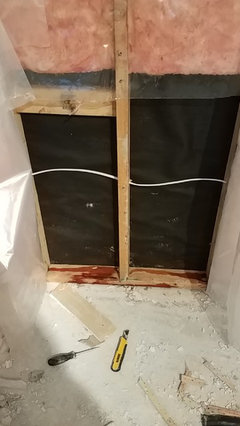
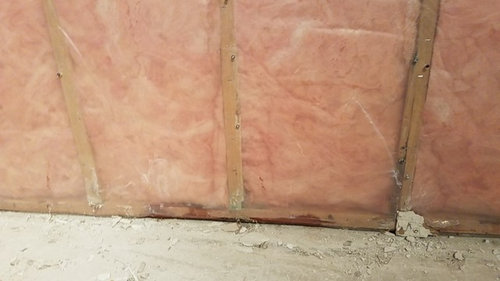
Im prepping my basement room for a bathroom, and noticed this wet wood. its an exterior wall... my question is, could this be condensation? we had 3 inspections on the house before we purchased it, came back that the basement was humid, but with their magic gun tool, they couldnt find any water...

the wood is very wet to the touch...

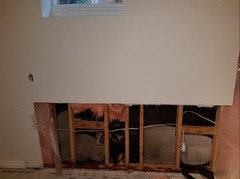
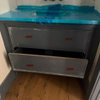
picture attached

Comments (28)

  • 8 years ago

    What thpe of perimeter drain and waterproofing does the house have? You need to remove the plastic and insulation and inspect. Take a pic and post.

  • 8 years ago
    Hi Sophie,

    thanks for helping out...

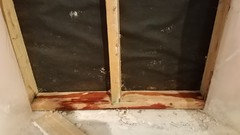
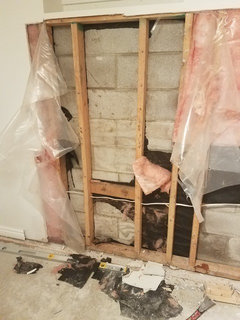
    Heres what it looks like wo insulation..
  • 8 years ago
    heres another..
  • 8 years ago

    Not condensation.

    The problem originated in the exterior waterproofing methodology. And that is where it will need to be solved.

  • 8 years ago
    if it were your home, what would you recommend doing at this point?
  • 8 years ago

    Dig down on the outside and see what you see on the basement wall. Look at your inspection report. Look at what the description of the water management is. Call a contractor or three that specializes in basement waterproofing. From the exterior.

  • 8 years ago
    thanks Sofie
  • PRO
    8 years ago

    If that's a plastic behind the wall you should take that out, that is the cause of the problem.

  • PRO
    8 years ago

    I agree with Sophie. It appears that the water problem may be on the exterior of the house and is working its way inside, causing rot and mold, due to improper exterior waterproofing and/or poor workmanship. To find out you will have to do as Sophie suggested: excavate along the outside of that wall to the depth of the sill plate and examine what you find.

    I don't understand GN Builder's comment that the plastic is the cause of the problem. Perhaps he will explain...

  • 8 years ago
    thanks everyone, im getting a little concerned, i have a foundation company coming to check it out monday, to excavate would be an enormous task for me...
  • 8 years ago

    Where is your exterior faucet? Mine sprung a leak and it was a while before I figured it out. See if there is any plumbing in the wall that might need repair. (IDK if you have frostproof faucets there.)

  • PRO
    8 years ago

    It could also be result of faulty window flashing, something to keep in mind when doing the excavation.

  • PRO
    8 years ago

    It could also be a minor grade issue. Have you had rain lately? Remember, a home inspection can only determine the condition of the home on one particular day. Before doing anything invasive or costly, make sure all of your downspouts are connected and diverted away from the home.

  • 8 years ago
    thanks guys,

    something i noticed is that the water is clear, i dont see dirt...

    Yes there is an outside faucet running above that wall, not in the wall tho...
  • 8 years ago

    Not sure I understand. If you have a frost proof faucet, the shutoff is inside the wall, about 6-10 inches inside the wall. If the pipe leaks only when the faucet is on, the part of the faucet inside the wall (the pipe part) may have sprung a leak. Mine did after 30+ years. Or if the pipe froze because someone didn’t unhook a hose and it froze and thawed, that could cause a leak. The water from the leak will fall to the lowest point it can, and that is why I found dampness behind the baseboards on the inside of the house about 5 feet underneath where the faucet attaches to the exterior. Also if the water runs a while, the water will spread along the base of the wall.

  • 8 years ago
    thanks Jane,

    Ive found out quite a bit since my last post.

    I had a foundation guy come this morning and we found a few things out

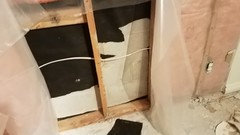
    Not sure if this is location based, i live in southwestern ontario. He said the the reason the insulation and wood was soaking wet is because of condensation. The tar paper and plastic is creating a pocket that has no way to breath. Infact we pulled the tar paper back and the concrete was clean and bone dry.

    i did the same on the west facing exterior wall, which has a window. The blocks are soaked and dry up the further you get from it.

    Im asking him what the best solution is with the window issue. We'll chat tomorrow. i would also love your opinions...

    First image is the dry wall, second shows the change from wet on the left to dry on the right
  • PRO
    8 years ago

    Is what I said in my previous post, remove that plastic or whatever that is.

  • 8 years ago
    thanks GN Builders,

    what about the problem area below the window?
  • 8 years ago
    We did spray foam insulation in our basement to prevent this problem. Just something to think about.
  • 8 years ago
    Good read, thanks Bri.

    It may be in my budget to apply spray insulation to the exterior walls, ill mention this to my guy.
  • PRO
    8 years ago

    You can also use rigid foam, or regular paper faced or unfaced exterior fiberglass insulation, they make it now with Pure Fiber Technology suitable for basement applications and for as long as you have some air space between framed wall and foundation wall you will never have any issues.

    Whatever you do, never use polyethylene, it always traps moisture.

  • PRO
    8 years ago
    last modified: 8 years ago

    It's true polyethylene is generally a poor choice for most of the continent but things are different way up north. Some Canadian building codes require an interior vapor barrier and plastic is the most common material to do it with. The cold climate research center has good information on doing it successfully and even Dr Joe with BSC seems to have softened his stance on using impermeable plastic in cold climates. There are smarter products available however that are much better than regular ole poly.

    It's hard to make an internet diagnosis but this does not appear to be a condensation issue. One would expect an appearance of more uniform moisture damage. Based on the pooled water, it seems more likely to be a plumbing leak or bulk water leak from inferior waterproofing or flashing.

    With condensation you would expect the edges of the studs to show signs of moisture. Wintertime condensation would show up more on the building paper side and summer condensation would show on the plastic side, assuming the interior is cool or air conditioned.

    Bulk water can travel in strange paths but I would try tracing it's origins assuming basement waterproofing, plumbing or weather barrier defects.

  • 8 years ago

    I do not think that to be condensation.

    Regardless, you need a hygrometer there in your basement to determine the exact conditions. And some means of altering the RH. A dehumidifier.

    But, basements are usually damp because concrete is a sponge, and old basements floors and walls don’t really have correct exterior waterproofing. Much less vapor proofing against moisture. That’s always suspect #1 in moisture infiltration.

    The usual homeowner retrofit approach on old structures is to try a water management system inside the basement. Sump pits and a sump pump. Drylock, etc. Wrong way. Once moisture makes it into the home’s walls, the home becomes damp. Because of porosity, capillary action, evaporation, and the impossibility of sealing out water from the interior.

    Best practice below grade moisture management systems always begin with the exterior. If you want a dry house, you don’t let water through the walls into the house. You stop it outside the walls.

  • 8 years ago
    I've read all of your posts over and over again, and am still unsure about how to approach this. There are many opinions, and i couldnt even get a clear answer from the contractors i had come out.

    The guy who came out friday told me to excavate and fix the problem from the outside as some of you told me. He said i ONLY need to do the problem walls. He doesnt recommend me doing the 'bone dry' north wall. He would do the west wall and any other wet walls once we open them up and see. I dont understand this, why would i just excavate the wet cinderblock walls when even in the bone dry cinder block wall the insulation was soaking wet. Who's to say once i get it done and i end up with bone dry cinderblock walls all end up with wet insulation.

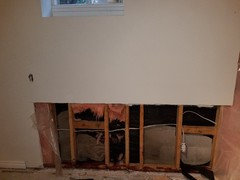
    Since ive opened up the wet wall its 90% dried out. Even with heavy storms lasting two days its drying out. Doesnt this mean it is condensation??

    I came across a video (and a QnA) of holmes in homes, he uses rigid insulation and seals it with tuck tape on the concrete walls, and puts the studs up against that, doesn't put any batt insulation inbetween studs, he does this on the floors too. This is his way of keeping moisture out. He doesnt put a vapor barrier up... he said batt insulation is the worst thing you could use in a basement because of the way it holds moisture, and mold.

    I do apologize for continuing to bother you guys, 10-15k excavation job is a very pricey approach for us, and want to be absolutely sure its the way we want to go.

    Pictures below show where its at and where it was. (I had opened more of the wall up)
  • 8 years ago
    In our previous house we had a leaky foundation area that we tried to fix from the inside first. It was a waste and we ended up having to excavate that full side of the house and correct. For us it worked out okay because the same company did both jobs and since they couldn’t solve from within we didn’t get charged for that effort only the exterior work which cost a small fortune. But we never had another basement leak.
  • PRO
    8 years ago
    last modified: 8 years ago

    It's difficult making a diagnosis on info provided but your recent post makes me think condensation is a factor. It's possible for bulk water leaks to dissipate and manifest themselves as condensation problems elsewhere. The heavy amounts of visible water below the window makes me wonder if it's one of the sources of your problem. It's possible you have multiple points of entry.

    Wet insulation and elevated moisture on multiple sub-grade walls certainly suggests insufficient basement waterproofing that needs to be fixed from exterior. The wet-looking block at the bottom right of last picture looks like sub-grade moisture entry. Sounds like the Holmes methods would be better than what you have but it's still only addressing the symptoms, not the cause. Doing just interior work might not solve the bigger issue.

    What are the qualifications of those examining the conditions? It might be wise to invest in another professional's on-site evaluation. A home performance contractor, forensic architect or engineer specializing in residential might be able to confirm problems and offer alternative solutions.

Sponsored
Hope Restoration & General Contracting
Average rating: 4.7 out of 5 stars35 Reviews
Columbus Design-Build, Kitchen & Bath Remodeling, Historic Renovations