Software
Houzz Logo Print
maackia

Cornus mas ‘Variegata’

8 years ago
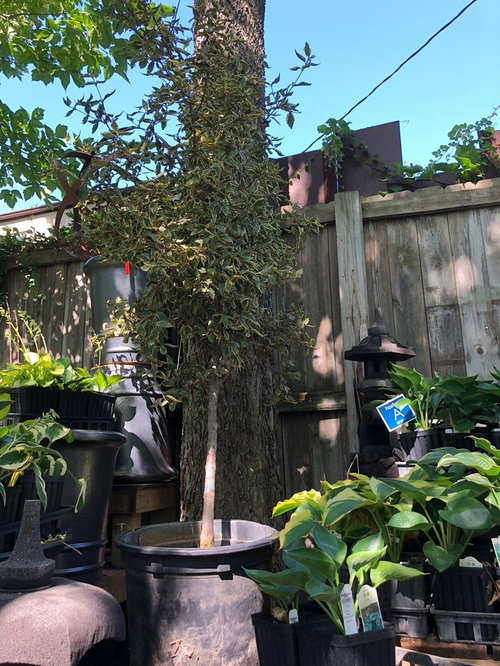
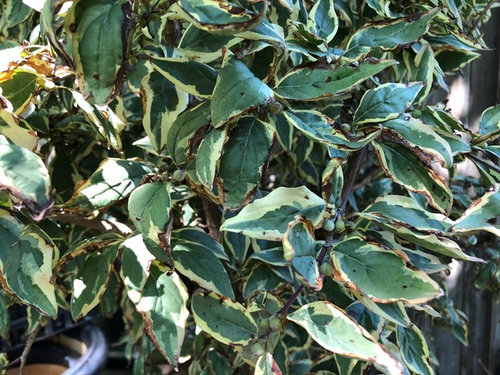
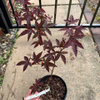
Before today, I had never seen one of these for sale. The foliage is crispy from being kept at the garden center growing farm in too much sun, but I can place it in part-shade where it will be in the company of larger trees. It would get full sun during late afternoon/early evening, which some plants seem to liike.


Comments (12)

  • 8 years ago

    I have a small one. I believe that it came from Buchholz.

    maackia thanked Sara Malone Zone 9b
  • 8 years ago

    Does it make for a nice specimen? I'd like to plant it in a new bed where it would be highly visible from the deck and sun room, which is where we spend a considerable amount of time. I have a tendency to place rare plants in highly visible locations, which doesn't always work. Rare often coincides with lack of cold hardiness, which can result in a ratty or damaged-looking plant. This one could either be spectacular or a big disappointment. I know any plant can disappoint, but this one is a real crap shoot.

  • 8 years ago

    It is pretty hardy and also quite disease resistant as dogwoods go but you are at the bottom of its hardiness range. Prefers well drained but evenly moist soils. And with the variegation, would be best sited in partial shade.....at least some afternoon shade during the hottest part of the day. Site it where you can take best viewing advantage of the very early, late winter flowers.

    maackia thanked gardengal48 (PNW Z8/9)
  • 8 years ago
    last modified: 8 years ago

    In addition to the drying out of the variegated margins it also has some spotting which is likely to be bacterial or fungal in origin.

    The zam in the modern jawbreaker cultivar name indicates the other is a Lake County nursery selection. Here is their sheet on it:

    http://www.lakecountynursery.com/lcns%20sell%20sheets/CremeDeMint.pdf

    maackia thanked Embothrium
  • 8 years ago

    May also be important to point out the Creme de Mint is not at all the same as a variegated Cornus mas.....one is a mutlistemmed, suckering shrubby form of Tatarian dogwood while the other is generally a small tree. Other than a similarity in the foliage, very different plants.

  • 8 years ago

    Ron, this one is actually C. mas, which as Gardengal indicates is marginally hardy this far north. As you might guess, the Siberian Dogwood would be fully hardy to our area.

  • 8 years ago
    last modified: 8 years ago

    Cornus kousa Samzam is zone 4B. Would be a nicer choice give.the stellar fall color.


    pagoda dogwood golden shadows would be even hardier.


    this Cornis mas cultivar would probably do fine given your acidic soil and micro climate. It's specimen size as well. If it's reasonably priced and roots look good I would pick it up

    maackia thanked whaas_5a
  • 8 years ago
    last modified: 8 years ago

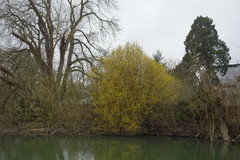
    Cornus mas doesn’t particularly require acid soil. It’s main attraction, in the unvariegated form, is the fact that it flowers extremely early. It makes a cloud of bright yellow in the gloom of February (in my climate) followed by a crop of edible fruit, Cornelian cherries. It isn’t comparable visually with kousa, Pagoda or other large flowered dogwoods, nor with the creeping, spreading ones grown for their coloured stems. The effect at a distance is similar to Forsythia, Corylopsis or Hamamelis. I’m wondering, in z4, if it would flower at all or whether the bloom would just freeze off?

    Cornus mas in flower beside the Thames in February. You can see that it's more of a huge shrub than a tree when left in its natural state.

  • 8 years ago

    I mentioned the acidic soil as Woody plants are more susceptible to winter damage if you say put a plant that prefers 7.0 or lower and its growing in 7.5. I was thinking Cornus kousa though as Cornus mas generally does well in alkaline soils to your point.

  • 8 years ago

    The one I'm looking at has been trained to tree form and is considerably larger than what I'd normally buy. I've tried two C. kousa's, including one from Lake County's biblical series (Galzam?). Neither lasted more than two years before winter got the best of them. I'm thinking C. mas might be a bit more hardy than C. kousa, and it is often listed as z4. This remains to be seen.

    A few weeks ago I was in Ottawa, Illinois, and came across a very nice specimen of C. mas that was loaded with fruit. It was love at first site. The foliage was perfect, even though this part of Illinois was going through a very dry period. It was in tree form and I thought it made for a splendid specimen.

    Capiello and Shadow write in their book on Dogwoods: "In the culture world, Cornus mas moves to the head of the class as one of the easiest of the large dogwoods to grow. It transplants readily and will take just about any soil from dry to wet. At Bernhiem Arboretum, Clermont, Kentucky, a thriving if slow-growing specimen of 'Variegata' can be found on a very dry shady hillside. Just 100 yards (91 m) away is a fabulous mass of the species in a low, waterlogged meadow planting. The species and its cultivars adapt to a wide range of pH and soil textures."

    Floral, I too question its ability to effectively flower. It spent last winter in Minnesota and supposedly flowered. It is loaded with flower buds, and the prospect of experiencing it in flower and fruit is probably going to be too much for me to resist.

  • 8 years ago

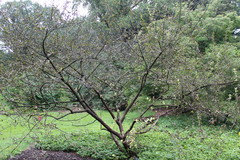
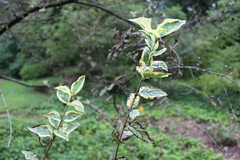
    Here is C. mas 'Variegata' All of the foliage from earlier in the year has deteriorated. I have seen this shrub over the years and thought it was graceful and attractive. What's going on with it now I can't say. There is another, smaller one in the same collection in much better shape. Location is dogwood collection, Nat'l Arboretum.

    Secondary growth on same plant only recently leafed out.
    It is worth noting that foliage on other plants of C. mas are without blemish.