Software
Houzz Logo Print
harmonyperformancehorses

Do grafted roses get "tired"?

Ok - super novice question for someone with so many roses. But that's one of the (many) things I love about this forum - all the information that can be gleaned here.


Most of my now over 130 roses are grafted on Dr. Huey - just because that's pretty much the status quo for California. I keep forgetting whether I started 8 or 9 years ago, but regardless - I have quite a few roses of this age.


I have noticed that I have many roses that just don't put out the quantity or quality of blooms that they did in their first few years, as I look back at pictures I took of them then. Now, I'm sure the soil gets depleted, and I amend it with composted manure every year, but perhaps that may be the issue, and my efforts may not be enough. My soil is mostly sand. But the other thing I did wonder, is if grafted (or even some own root?) may just age and not be as prolific in later years as they were in their youth.


I'd be interested in input on this topic, and any suggestions.


Comments (8)

  • 8 years ago

    This is a question I have had also. I just yesterday found old pictures of my garden and roses from the 1990s-2000. I was blown away by how many blooms and buds were on each plant and how big they were. Not like the scrawny plants and stingy blooms I have now. I too use composted manure and garden compost every year (plus fish/kelp and Rosetone) but I have to admit that when I first planted the roses they went into my old vegetable garden which had had the compost turned in deeply every year. I also was mixing my own fertilizer - blood meal, bone meal, wood ash and sometimes rock phosphate, cottonseed meal and Epsom salts. These generally take a long time to break down so there may have been reserves built up in the soil. Now of course its just top dressing unless I take something out before replanting. However our summer temps have gone into the continual mid to high 90s which was unheard of when I planted these gardens. We endured 4 1/2 years of drought and my beds were so hard I couldn't dig them and I bought pallets of bagged amendments to try and restore them. Disease ran rampant despite my continual spraying, rotating products. Finally I had to take most of the old roses out because they were down to little 10" canes. But none of the new plantings since have had much vigor. I've blamed it on our wildly fluctuating winters with die back every year but that doesn't explain the problem coming from your zone. I have run across numerous references in old articles and books saying the lifespan of modern and/or grafted roses to be only 20 years! Maybe we are expecting too much?

    Karen R. (9B SF Bay Area) thanked lkayetwvz5
  • 8 years ago

    If your use synthetic strong chemical sprays, maybe your yield is less because you are now trying to grow your roses in soil that resembles a chemical dump. Do you see evidence that your soil is alive - earthworms and mycorrhizal fungi.

    Karen R. (9B SF Bay Area) thanked henry_kuska
  • 8 years ago

    Henry I'm assuming your comment was directed towards me? I haven't sprayed now for 18 years, and yes there are earthworms. The old plants were sprayed back then, none of the new ones have been sprayed. Don't know what mycorrhizal looks like in the soil. Guess I will have to search that. I have some fine white gauzy stuff that I thought was from after milky spore was spread.....

    Karen R. (9B SF Bay Area) thanked lkayetwvz5
  • 8 years ago
    last modified: 8 years ago

    Ikayetwvz5,

    Those white filamentous strands you see when you dig in your soil are mycorrhizae. When we disturb the soil, we disrupt their environment, and it takes time for them to recover so that they can resume performing their wonders. That is why minimal cultivation is essential for the soil's health. Of course, we have to dig holes to plant roses, but beyond that, the key to mycorrhizal health is leave the soil be. Disturb it as little as possible.

    Moses

    Karen R. (9B SF Bay Area) thanked Moses, Pitt PA, cold W & warm/humid S z6
  • Karen R. (9B SF Bay Area) thanked henry_kuska
  • 8 years ago
    last modified: 8 years ago

    Thank you for the thread pointer to "longevity of roses" Henry. This is what I was looking for / hoping for, which Moses makes innuendo to, from roseblush1, and then others in that thread:

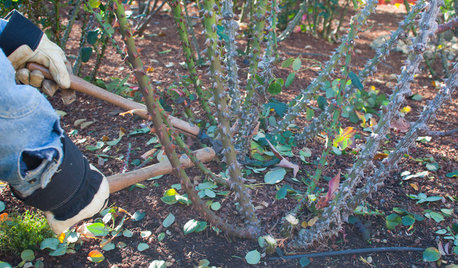
    "You can do a rejuvenation pruning on many old hybrid teas and end up with a gnarly bud union and virtually a new rose. The process takes a few years if you are rescuing a neglected rose, but if you regularly take out one or two old (of the oldest from other comments) canes when you prune, you'll get new basal breaks and, therefore, have newer and more productive canes.

    Most people don't know that rose canes just get old and cannot transfer nutrients and water up and down the cane.


    Thank you all for your input. This forum is INVALUABLE!

  • 8 years ago
    last modified: 8 years ago

    Karen,

    Don't count on a dense, woody crown on an old bush to transform into a rejuvenated bush merely by cutting out old basals. If there is no place for new basals to emerge it's a futile wait.

    Some peop!e take a stiff wire brush and vigorously scrub an old woody crown in order to scar/intentionally damage it, exposing live tissue to light and air with the hopes of stimulating new basals. I've never heard of a successful rejuvenation by doing this, but it's worth a try.

    Remember too, that a rose's root system deteriorates with age. During the lifetime of a rose: fungus, viruses, bacteria, mechanical damage, voles, gophers, mice, rats, droughts, root rot from too wet conditions, less and less available nutrients, etc., take their toll on the roots. Bad things are going on underground that we cannot see, but show up in a deteriorating rose.

    Moses

    Karen R. (9B SF Bay Area) thanked Moses, Pitt PA, cold W & warm/humid S z6