Software
Houzz Logo Print
crenda53

Wasp Invasion !

8 years ago

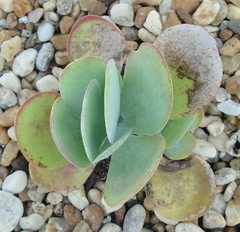
It seems the wasps, mostly red ones, have found my Kalanchoe luciae to be a nice haven. There are little nests between the flapjack leaves. They also seem to be inside a clump of Aloe rooikappie plants that I need to separate. I need to investigate further, but I think I saw some dadgum yellow jackets on the ground in the same area.


I am getting so tired of being stung when I tend my plants! I looked over the thread on Insecticide/Pesticide Insight that ewwmayo posted, but we weren't discussing wasps. In fact, we all wanted to protect bees - and our plants, of course.


Here are the active ingredients in my Spectracide Wasp Spray.

  • Prallethrin 0.025%
  • Lambda-Cyhalothrin 0.010%

Are these Pyrethroids? And will it damage my plants? They are all planted in the sun. Is there a better way to get rid of the wasps?


Thanks for any ideas and advice you may have!

Comments (12)

  • 8 years ago

    Crenda... Both of those components are synthetic pyrethroids and while they won't hurt your plants are deadly to bees and most other insects.

    Crenda 10A SW FL thanked geoforce
  • 8 years ago

    If you do use pyrethroids, use a spray bottle and spray the nests on your plants at night when wasps are inactive or nearly so. That will lessen your chances of getting stung. Use of a spray bottle should give you more control over where the pesticide hits so as to not get it on the flowers where bees are more likely to land.

    If your yellow jackets are ground nesters, you could do something similar to them. Get a largish jarn & some dry "shrubby" plant material. Put the plant material in the jar and spray it with the pyrethroids then invert it over the ground nest. (Again do this at night.) When the jackets emerge in the morning to take flight they will have to crawl over the plant material and thus come in contact with the poison.

    Crenda 10A SW FL thanked Paul MI
  • 8 years ago

    Thanks for the tips on yellow jackets! I hope I'm wrong on those. I have at least 4 different kinds of bees that I don't want to kill, and one - those green orchard bees - ground nest.

    Since the pyrethroids burnt my Kalanchoes in the past, I think I shouldn't spray them. I did a drench for scale on these plants, but I splashed the outer leaves on a few of them.


    Maybe blasting the Kalanchoes with the hose to knock off the nests will work. They're already po'd when I am out there, so I guess they'll be a little madder. But they'll likely just start over on another leaf.

    Wasps seem to be more prolific this year. They are on palm leaves, shrubs, everything! ~Sigh~ It's always something!

  • 8 years ago

    I will try to get a picture of the wasps tomorrow. I think they're red paper wasps. Charlie and I looked for yellow jackets today but didn't find any. So that's good. Must have been some stunned or lazy wasps walking around.

    Yes, the smoke seems to work. I was told that the smoke tricks them into thinking there is danger - like a forest fire - and they gorge themselves on honey to survive. Then they are full and lazy (like me after Thanksgiving dinner).

    I've had 4 hives removed from our house. I'm popular with the bees! My beekeeper said we are on a flight path, they stop to rest at our house and decide to stay. Being an ag state, and being that bees are in trouble everywhere we never kill a swarm.

  • 8 years ago

    I agree with Paul that the best time to deal with these is in the evening when they have returned to their nests. They are more calm as the temperature cools and you will be able to get rid of more in a single shot of spray.


    Pyrethroids aren't specifically listed to be harmful against Kalanchoe (like Chlorafenapyr in Pylon). You could wash down any leaves that get soaked to reduce chance of phytotoxicity but leave the nests dry so that any other returning wasps are also killed.


    At my home, we have yellow jackets and carpenter bees. The latter are the worst because they leave dime sized holes and tunnels in our wooden support beams.


    I think these aerosol cans are designed for people who are really scared of wasps/bees and worried they will get stung (or perhaps against more aggressive types of wasps/bees). It's pretty much the same stuff in a normal spray bottle of Pyrethroid pesticide except the propellant and aerosol additives may be phytotoxic as well? I really am not sure.


    If you use a spray-bottle instead of aerosol can probably you can better control the overspray and minimize potential damage to your plants by getting just the nests.


    One other method is using a vacuum to suck up the wasps. Some people and even beekeepers make a DIY bottle-mesh catcher to get the wasps without making a mess inside your vacuum or killing them, if that is desired. A few years ago my parents had a hive in their home and they used a Rainbow Vacuum (water filtration) which essentially did the same thing.

  • 8 years ago

    I deal with wasps by identifying all nests, waiting till night-time when they are all in/on the nest, spraying the nests directly and once the adult wasps are dead, removing and crushing the nests because there are often adults in there about to hatch out of the cells and they will carry on living there. Very targeted, minimal use of poison that ensures that the wasps are all gone. I am highly allergic to wasps and need to get rid of them if they set up house too close to mine

    Crenda 10A SW FL thanked niksouthafrica
  • 8 years ago

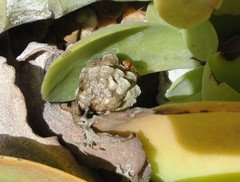
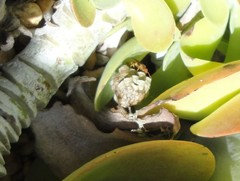
    Not the best pictures, but I grabbed them while the wasps weren't chasing me away. It looks like this little nest is on a dead leaf - which I would like to remove! And they seem to prefer that I not remove it. LOL


    I guess the common name "red paper wasp" covers several species. These guys have black wings. I'm going to nose around the yard and try to find a better picture of them. They are relatively common around here, but it seems like there are more this year.

    Aloebot - these guys are semi-social. Sometimes a large nest will only have a few wasps. And maybe I just saw one or two wasps getting started and other were collecting "supplies."

  • 8 years ago

    Any nest like that belongs to social wasps. Most of them are out foraging, you should check them at night, when they are all home. Interesting that they make them in among leaves like that. Ours have a definite preference for houses, under roof eaves and upper corners of windows being the most commonly-picked spots

    Crenda 10A SW FL thanked niksouthafrica
  • 8 years ago

    This is a first for me to find them in the leaves like that. We've found some pretty big nests under cabbage palm leaves and in our Ixora shrubs. But they mostly like the same places you mentioned - as well as under the railings of the docks.

    I don't like getting stung at all, but these guys seem to be more painful than other stings. (or I'm getting wimpier) I have a nephew that goes into anaphylactic shock from the stings, so that's another good reason to get rid of them.

  • 8 years ago
    last modified: 8 years ago

    I've also had anaphylactic shock from these buggers. I doubt you're getting wimpier, they are nasty! I wonder if they are a slightly different kind that blew in from somewhere else with the hurricane

    Crenda 10A SW FL thanked niksouthafrica
  • 8 years ago

    Up here in our area we have several species of paper wasp, ground-dwelling yellow jackets and cicada killers, mud daubers, and the ubiquitous bald-faced hornets which make those big balloon nest that appear in all the comics. Also have several species of nasty, non-honeybees and several smaller solitaries like potter wasps. My wife is deathly allergic to any of them and keeps an Epipen with her at all times in the Summer.

    Luckily, I'm not allergic to them so I remove them as fast as we find them which means I get stung about once or more per week. Yellow jackets are the hardest to remove. Sometimes takes many times to kill off a nest.

    Crenda 10A SW FL thanked geoforce