Software
Houzz Logo Print
danielinthelionsden

Reviving a dying tree line

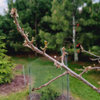
There is a line of trees on the east side of our property planted 10ft apart. I believe they are some sort of hybrid poplar and they appear to be under attack by one of the borer insects that commonly infest poplar and willows. I'm planning to replace them and am considering blackgum (Nyssa sylvatica) for the replacement. Everything about the blackgum seems perfect except for the slow growth. From the excellent fall color to the great wind and ice strength they just seem like a good fit. Plus, our springs tend to be extremely wet and the summers are sometimes very dry so a tree that can has good flood and some drought tolerance seems like a really good pick. Does anyone see any possible problems that I might be overlooking in this plan.


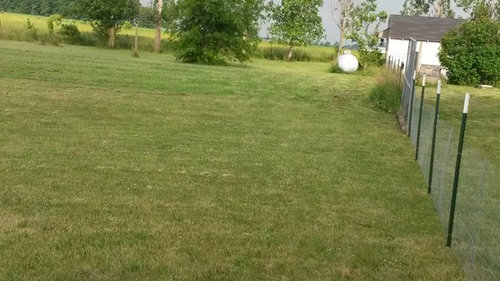
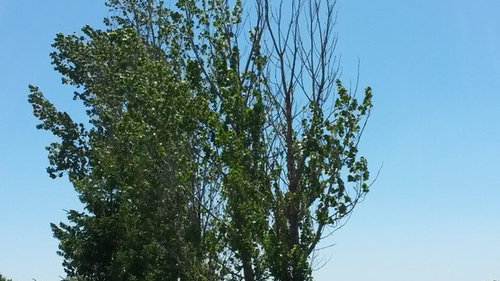
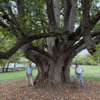
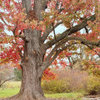
Here are some pics of the tree line. I'm planning to plant the replacements as the poplars die.


Comments (17)

  • 7 years ago

    One of the problems you are experiencing is your line is a monoculture.


    Nyssa is GREAT I agree. Just don't plant all Nyssa. Otherwise when some Nyssa killing bug from China comes over or the wrong weather cycle hits poof, there they all go. Ask the idiots who design the archgrounds about mono culture death


    So plant a few kinds of trees if your design allows this.

  • 7 years ago

    Around here, middle TN, Nyssa is a common denizen of fence lines, compliments of the local feathered population. Common companions of said Nyssa are eastern dogwood, sourwood, and eastern redcedar. The deciduous species are spectacular and reliable in fall, the dogwood is great for spring bloom, the redcedar adds a nice green background to all the screaming red, and of course adds winter color. All grow at a similar rate, although they mature at different heights. The only caveat is sourwood DEMANDS acid soil, the others aren't picky. If it were my decision, I'd remove all the poplars, and plant all the new trees at the same time. If I couldn't do all the new trees at the same time, plant the slower growers, the Nyssa and redcedar, first.

  • 7 years ago

    Yeah that's a good point about the mono-culture and that being a serious
    contribution to the death of this row. I think another factor here is
    the type of tree used. I've read that hybrid poplar has a very short life span, like 20 years. Which is right around the age I would approximate for this line of trees.

    That said the weakness of the mono-culture is evident as the decline started the year we moved in. They all looked very healthy when we moved in, but that summer we had a near drought. I'm thinking it hit these trees pretty hard, it was the following summer when all those dead branches you see in the pics start being, well, dead. I expect the dry weather weakened the trees and gave the borers a leg up.


    Regarding species to add to the mix I've considered Shagbark hickory for this line too. It has the slow to medium growth rate like the Blackgum, a similarly narrow spread, and is very common around here. I'm just not sure how well it will hand the spring wetness. I'm also not sure if we have the soil for the sourwood. Our soil is pretty near neutral or just slightly acidic. At least according to the little probe tester I have. I guess if I want to consider sourwood I need to get a more accurate soil test. I consider those probe testers to be close enough for "horse shoes and hand grenades" but not super accurate. I'm afraid red-cedar is not going to be a good option either. We have apple trees and before planting the apple I read that red cedar carries a fungus that causes apple-ceder rust disease in apples.

    I might just shorten the line of deciduous tree. As you can see in the second pic there is a white cedar and a Norway spruce at the beginning of the line. Maybe I could add a couple more of those at the beginning to reduce the mono-culture effect and just have like four Blackgum at the end. The beginning of the line forms sort of a wind break for the house so it would make more sense to have the evergreens there anyway.

  • 7 years ago

    yes ... poplars ... the kings of 'fast growing trees' ... pshaw ... fast to grow.. fast to breakage.. fast to disease and decline ... double pshaw ...


    yes on avoiding a monoculture ...


    but also ... looks like you have a good sized yard ... why limit your plantings to the property line ... one tree half way out there ... would probably negate the need for a half dozen trees.. way out there ....


    think outside your box ....


    ken

  • 7 years ago

    Ken,

    Thanks for your suggestion. From a landscaping perspective the place you suggest for placing a tree is the absolute most prime spot on the whole property. It's the south side of the house and gets ridiculous sun in the summer. The problem is that it's the leach field for the septic :( so I can't put anything there double :(

    That line of trees by the fence is about 60ft from the last finger in the field. That's one reason why I've decided to go with a smaller, slower growing species. I considered tulip tree and dawn red wood but #1 I don't think they would like being planted that close together and #2 I think they would eventually develop a root system that could reach the field.

    That's why I decided to go with the Black Gum, slower growth and a tap root based root system. So hopefully far less likely to ever preset a problem. I like the sour wood suggestion too. I've read it's a really good option for spaces near septics. I may have to get a soil test to see if the ph is within the acceptable range for sour wood.

  • 7 years ago
    last modified: 7 years ago

    I am a big fan of planting a staggered, mixed border of trees, versus one straight line of all the same species.

  • 7 years ago

    Central Indiana soil is almost certainly too high in pH for sourwood.

  • 7 years ago

    Hmm, I'll have to look into the eastern Dogwood idea. I'm not so familiar with those.

  • 7 years ago

    I am a big fan of planting a staggered, mixed border of trees, versus one straight line of all the same species.


    My neighbor across the street just did the later with pines and it looks horrible. Not to mention spacing will be a problem within 10 years. Doing to the former takes some thought to avoid a hodge podge.


    Nyssa has been an absolute struggle for me. I've tried the species and several cultivars in a neutral sandy loam to no avail.


    As a plant enthusiast Shagbark hickory is one of my favorites. They are fairly abundant in the neutral sandy loams around me.


    Musclewood and Ironwood are great understory options that will take full sun when planted then adapt to the shaded conditions of the large shade tree options.


    How much depth and width do you have to work with and how much energy and expense do you want to put forth? Is it just for shade or privacy?


    If both I could see a narrower evergreen to the back like Serbian spruce, then a mid sized oval trees like a Harvest Gold Linden and Rocky Mountain maple. Then fill the gaps with Bottlebrush buckeye, Dogwood, Viburnum dentatum and black chokeberry.


    You'll have berries, birds, butterflies, privacy, shade and fall color.

  • 7 years ago

    These are good questions and suggestions. I probably should have given more of these details in the initial post. Basically given the extreme cost of septic work in our area I don't want to move the trees any closer than they are currently. So the There's about 10 feet from the tree line to the property line fence. So that pretty much leaves us with a single line of trees. The goal here is to provide shade in that part of the property and to restore the original landscaping walkway effect created between the trees and the property line fence. It's not quite as impressive as a true alley but it's still a really nice effect.

    My original idea was to do a line of Shagbark hickory and then maybe end it with one of those hican trees. But then I decided the effect from the Nyssa would be better.

    I'll have to look at some of these other suggestions. I hadn't even considered those. Also I decided to go ahead and get the official soil test. After reading a little on pH requirements for sourwood I was looking more at pH requirements for the Blackgum and it looks like it's kind of sensitive to pH above 6.5. Since I have other acid loving plants I'd like to grow I finally decided to break down and get the test.

  • 7 years ago

    Today I received the results of my soil pH test from the lab. The results were shockingly lower than I expected. The pH from the soil sample I sent in was 5.9. Goes to show that my soil probe tester might not even be good enough for horse shows and hand grenades either.

    That said the soil should be acidic enough to support both sourwood and the blackgum. So I'm thinking maybe I'll do a row of both alternating every other one of sourwood and blackgum. Does everyone think that will be a good combination that will look good?

  • 7 years ago

    As a general rule of design, alternating patterns look very very weird, as nature doesn't do that. As to whether it pleases you or not, we don't know.

  • 7 years ago

    Well, that doesn't make me very excited to do an alternating pattern then. Any ideas for how to do the mix and make it actually look good?

  • 7 years ago
    last modified: 7 years ago

    Again, a general rule of landscaping, plant in clusters of odd numbers (1, 3 or 5) for instance. Don't be predictable though, vary things, as if nature had done it. The goal of the art, is imitate Nature.

    Depending on tastes and maint needs, you could also plant an understory layer like cornus (dogwoods), viburnums, hollies, and other such smaller fodder.

  • 7 years ago

    Ok, that's a good point. Threes do tend to look more appealing. Maybe I could put a sourwood on each end with the blackgum between, or something like that.

  • 7 years ago

    Persimmons, Chinese chestnuts and various oaks might also be good choices for that property line.