Software
Houzz Logo Print
dave_in_nova

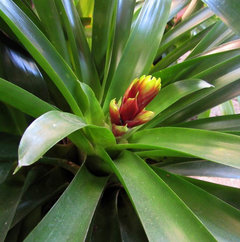
Finally got my Vriesea to rebloom.

7 years ago
last modified: 7 years ago
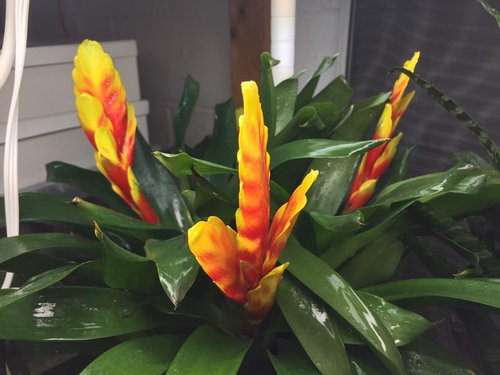
Four pups came up and they are finally blooming. Have no idea the variety. Might be a hybrid like Vriesea x 'Davine'.

It spends the warm season hanging in an oak tree getting dappled sun. Probably took a year and half to flower from pups.


Comments (6)

  • 7 years ago
    last modified: 7 years ago

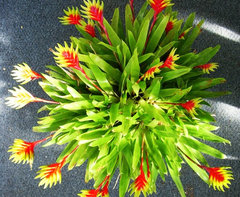
    Here's one of mine that may be the same hybrid. I have several that are similar, and they are very good at multiplying and blooming. They are much easier for me to get to bloom than the Guzmania that I have.

    Here's another that is just now starting to bloom:

    The color on this flower is normally a very dark red, almost maroon, with the yellow tips. I think it might be called Cathy.

    Dave in NoVA • N. Virginia • zone 7A thanked Lars
  • 7 years ago

    Hi everyone


    Dave - You seem to be able to grow your Vrieseas much better than I can here in Australia, do you have special secret you'd like to reveal?


    It seems that Vriesea 'Cathy' is another plant that originated in Belgium and is a crossing between Vriesea ‘Viminalis-Rex’ (See http://registry.bsi.org/?genus=VRIESEA&id=9239#9239has) and the species Vriesea carinata. (See http://fcbs.org/pictures.htm)


    It has been tissue cultured for many years; however during the tissue culturing process, apparently strange and interesting things have happened and It is now possible that it may appear under two different names. You can read all about this at:

    http://registry.bsi.org/?genus=VRIESEA&id=8453#8453


    The other name it may appear as, is Vriesea ‘Christiane' . At the WBC San Francisco 2000 it was shown by DeRoose as a dwarf plant with a simple spike so is this another case of a variation with tissue cultured plants? You can read all about at:

    http://registry.bsi.org/?genus=VRIESEA&id=8469#8469


    Vriesea carinata which is the pollen parent of Vriesea 'Cathy' is a small growing species which is common in many collections. Although it's a nice little plant which grows and flowers easily it isn't anything I would call special when just grown as a single plant.


    Like many other non-spectacular plants, it can become a real centre piece if allowed to clump up and grow into a specimen plant producing many inflorescences. I have one which I have allowed to do just this and last time it flowered it had twenty two inflorescences and made quite a statement. It's a small plant which is well worth growing and should be in all collections.


    My Vriesea carinata showing what's possible when allowed to grow into large plant.


    Although reading about the history of these plants on the BCR may be seem boring to some, I find it very interesting and a great way to learn more about the plants we grow.


    All the best, Nev.


  • 7 years ago

    Hi Nev.

    I really only grow a few broms. No big secrets. Our summers are warm and humid, sometimes quite rainy, although sometimes periods of drought. I spray plants with water from hose during dry periods. Sometimes I spray with fish emulsion every couple of weeks or when I think of it. Summer outdoors is key I think.


    In winter they reside under fluorescent and LED lights on a timer in my basement. Around 72 degrees F with no nighttime cool down. Not the best conditions -- probably too low humidity, and maybe too warm, but they survive to be set outdoors for another season.


    Thanks for all your information.

  • 7 years ago

    Hi Everyone.


    Dave - It sounds like your summers are similar to ours except when we are getting excessive heat. This summer has been hotter than previous ones with temperatures generally in the high 20 degrees C. up to the occasional high 30 (Some areas even high 40's). The humidity has been very high here near the coast with some days in the 90%.


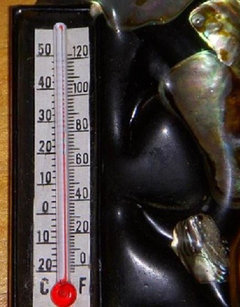
    Fortunately it's not as hot as it was on January 18th 2013 when it reached 45.8 and in my shade house the thermometer went right off the scale (50 degrees C) The red liquid inside went right to the top and had nowhere else to go and "imploded" (See Pic).


    I did have quite bit of heat damage to my brom's in the garden, however with a couple of weekly sprays of Seasol, plants quickly picked up and after a few months were pupping madly.

    See: https://www.seasol.com.au/home-garden/products/seasol/ 


    I think you are on a good thing with the Fish Emulsion, I know when I grew orchids it was all the go and always gave good results. I think most fertiliser made from anything marine whether it's fish or seaweed seems to be very good and very safe. Although the "Seasol" I mention above is not a fertiliser but could be better described as a "tonic" and gives fantastic results; especially to any plants that are stressed such as those suffering damage from excessive heat of cold,


    I must say how much I admire people in your country who have to grow their plants inside during winter, the inconvenience and cost certainly makes it pretty onerous. Fortunately we are able to grow our plants outside all year around.


    As you say, "Summer outdoors is key I think" - I think you've hit it on the head as anything closest to the natural environment has to be the best.


    Anyway, keep up the good work and keep sharing your pic's, there's not many of us posting on this site anymore so lets try and keep it going.


    My imploding thermometer.


    All the best, Nev.


  • 7 years ago
    last modified: 7 years ago

    Hi Nev.

    Yes, if I could grow these outdoors year-round, i'm sure it would be yet another ridiculous obsession, although I'd probably be obsessing more on growing sub/tropical fruit trees (citrus, lychee, longan, mango, avocado, etc), as that is my passion. But who knows?

    We rarely get over 100ºF here (38ºC), maybe only a couple times every couple years. Mid- to high 90s are fairly common in late July and early August, but usually those temps are accompanied with fairly high humidity and hazy skies -- which goes a LONG way keeping plants alive.

    But bringing a few plants inside is really no biggie. I'm sure they would probably survive wherever I placed them -- just to get them through the winter -- even in my heated (55ºF) garage with low light, where I have successfully wintered over pineapples. Of course there are bugs to contend with. Prior to bringing in, I usually invert the plants and spray the cups/crowns with a forceful stream of water, and treat the soil for ants.


    Time to buy a new thermometer?

Sponsored