Software
Houzz Logo Print
hzdeleted_43136206

Skylight Condensation?

7 years ago
last modified: 7 years ago

I swear I posted this question but I cannot find the topic when I searched. So, here it is again: Our old upstairs hallway skylight never had condensation, but it did have a disintegrating exterior seal that the roofer detected when he was replacing the roof. He recommended repair wasn't possible (because the skylight itself began to rust at its edges I think is what he said) so we should replace it.

We replaced it and thought all was well. Until the first night the winter temperature dropped and created sufficient difference in temps between outside and inside that condensation formed, and drip, drip, dripped onto the hallway wood floor.

When I discussed the condensation with the roofer he suggested our shower in the bathroom outside the hallway created steam and the rising steam collected on the skylight and we should run the fan to prevent the moisture build up. Except we don't shower in the middle of the night and we do run the fan and the condensation only builds up during winter nights when the temps drop. Even when we do shower, of course we run the fan until the bathroom is no longer steamy.

This was the owner I spoke to. Disgusted with his response, I was unsatisfied, and baffled as to what to do. I supposed I should have pushed the owner to DO something but I didn't. Why did the old one not do this and the new one does? What can I do to prevent condensation build up?

Comments (9)

  • 7 years ago

    Disclaimer: I've never owned a home with a skylight, though one of my relatives has. Nor have I ever installed a skylight. So take the following as general musing, not expert advice.

    First, ensure that the circumstances are similar to what you had with the previous window -- similar indoor humidity, similar temperature differential. It's very possible that your indoor humidity is higher now, or it's colder outside. Don't forget that warmer indoor air can have the same relative humidity reading, but hold more moisture.

    If you're 100% sure that conditions are about the same, then my guess would be that the new window's inside surface is at a lower temperature than the old one's was. That would suggest a lower insulating value for the new window, or maybe improper installation.

    That in turn would mean that in addition to the condensation, you're losing more of your expensive heat through that window.

    User thanked DavidR
  • 7 years ago

    DavidR, what a disappointment to think the new skylight has an inferior thermal value than an old skylight. Nothing about the home has changed except the skylight condensation. No condensation on the old skylight. Dripping condensation on the new - in the middle of the night. How we live in the home, heat it and otherwise use it has not changed. One thing I haven't done is go up on the roof and look at it. If that reveals anything obvious maybe its worth contacting the roofer again. Thanks for your thoughts and carefully reading my long post.

  • 7 years ago

    If the skylight does not have a thermal break, condensation is inevitable. Do you know what the design is of the skylight and whether the frame has this feature?

  • 7 years ago

    Thanks, kudzu. I don't know if it has a thermal break. (Just googled thermal break to see a diagram of all the skylight parts.) I'll get up on the roof and check it out. From what you describe it sure seems like it needs one and doesn't have one. Or some sort of interior condensation gutter.

  • 7 years ago
    last modified: 7 years ago

    Weathy-

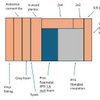
    You can't necessarily tell if a skylight has a thermal break by looking at it. The break is often hidden from view. As you may have figured out, a skylight frame with a thermal break typically consists of an inner and an outer piece, connected by a piece of plastic or nylon which greatly reduces heat traveling between the two pieces, this bridge is often hidden by trim.. Since you have a newer skylight, it's hard for me to believe that it doesn't have a break, but it's possible. It might be easiest to simply look for a name brand and model number if possible, and call the manufacturer.

  • 7 years ago

    Kudzu9, i'll do that. Thank you. It's hard to believe this great roofer would install something that would drip like this. But, maybe I'll spot something helpful. Would prob be beneficial to get up on a ladder to look at the inside where presumably a condensation gutter would be visible? And also get up on the roof, just for a look.

  • 7 years ago

    There are so many designs that inspection alone may or may not work. Not all have, or need, a condensation gutter. I had this problem years ago with a huge, expensive skylight that was architect-designed and custom-made. It had thermopane glass, but I wasn't smart enough to realize that my beautiful aluminum frame should have had a thermal break. I found out the first winter how much water could condense on a frame without a thermal break. This feature is in almost all new skylights, but I just thought I would mention the issue.

    P.S.: Yours does have double pane glass, right?

  • 7 years ago
    last modified: 7 years ago

    Kudzu9, it's been raining like crazy here, fo days and days. I'm waiting for a decent dry spell to climb through my bathroom window to get up there. (Bang, bang Maxwell's silver hammer - er, nevermind) I'll see what I can see.