Software
Houzz Logo Print
gibsonsteve1

Trying my hand at Cuttings

7 years ago
last modified: 7 years ago
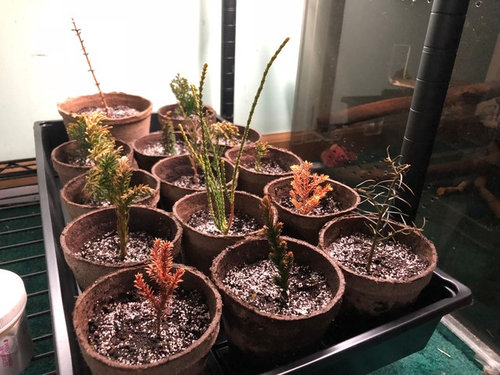
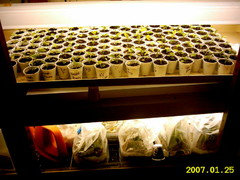
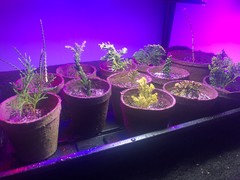
As the collection grows and my lady hinting at buying me a small hoophouse frame for my Birthday I figured I start attempting some cuttings. So here is the test batch.

Who knows if I’ll have any success, but I figure most of these are all easy to root specimens.

Cryptomeria japonica -

Golden Promise, Black Dragon, Elegans, Gyokuryu

Platycladus orientalis -

Morgan, Franky Boy

Thuja occidentalis -

Rheingold

Chamaecyparis obtusa -

Chirimen, Spiralis, Nana, Confucious, Fernspray Gold

Metasequoia glyptostroboides ‘Gold Rush’ (don’t know if this is supposed be grafted, or if it can be grown from cutting... figured it was worth a try)


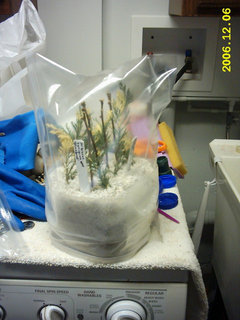
The dome has been removed for this photo, and I have since added a heat pad, and wooden board on top of the wire rack For the pad to sit upon. Looks like my pad temps are around 67 degrees (thermostat controlled). Everyone got rooting hormone, and the media is an over the counter seed starting/cutting mix by Espoma.

Light is being provided by a southern window (across the room) and bounced/diffused full spectrum LEDs on a 13 hour cycle.

Any input or advice is appreciated.

Comments (16)

  • 7 years ago

    Planted in individual pots like this these look like cuttings that have already rooted and been potted on. What's more usual with conifer cuttings - and those of most other plants - is to stick a bunch of them close together in each flat or pot. Also the most favorable routine will vary with different kinds of conifers, have you looked any of the ones you have up to see what is recommended?

  • 7 years ago

    I guess I just wanted to use what I had on hand, and fail as small as possible, as opposed to losing a flat full of cuttings.

    Seems that google searching turns up a mix of generic info (Bottom heat, plastic bag or dome for humidity, moist media, indirect light). The info seems to stay pretty similar for species chamaecyparis, cryptomeria, and platycladus cuttings. It certainly makes sense if each cultivars propagation details are slightly different, but do they differ wildly from the species propagation techniques?

    I apologize if any of this comes off as ignorant. Maybe I mistakenly assumed a set of general propagation protocols would be sufficient.


  • 7 years ago

    i used peat pots once in my life.. and everything died .... you might want to move away from those ... though i thoroughly understand using what you have around ...


    in that vein .... here's what i had around ....


    a bag of perlite the size of a medium beanbag chair was rather cheap ....


    i sterilized the heck out of everything .. put the whole get up on a heat mat.. near the basement floor under lights ... and a few months later.. a few of them had rooted ...


    and then i repotted those into something else i had laying around.. in quantity ... and planted them in mother earth at the proper planting time in fall ....


    i cant say i would brag about the %age of my success ... but at least one of each type i tried... did root .... i used to hand them out as garden gifts.. for visitors ....


    the ONLY bad question.. is the unasked question ...


    try to track down a copy of dirrs propagation manual ... start by getting a copy at the local library ... before you decide to invest in such .....it addresses each type of plant .... flip back to the web side: https://duckduckgo.com/?q=dirrs+propagation+manual&t=ffcm&iax=images&ia=images


    btw.. timing is imperative.. and this might not be the best time of year ... but i cant speak to your plants in particular ....


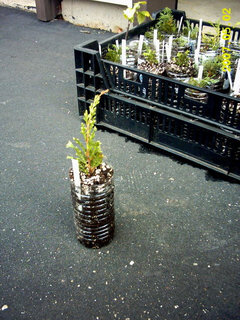
    the point of my pix... was that i was just fooling around ... winging it.. the plant stand was for hosta seedlings .. and the floor was too cold.. so why not try rooting some stuff with milk jugs and water bottles....


    welcome to the forums.. we need some new blood ....


    ken


  • 7 years ago

    Looks good Stephen.

    The peat pots will wick moisture to the outside away from the media and your cuttings do not have roots so you need to keep your humidity high so they don't dry out. Even mist regularly so media doesn't dry out.

    From the time you stick, it's a race, to get them to root before they die. So the longer you can keep them alive, the more chance there is they will have time to root. :-)

    Good luck and update us as time goes on.

  • 7 years ago

    Ken,

    Thanks for the info, and book recommendation. I will definitely look into it.

    I love seeing your mix of bottles and bags. And I’m officially out of peat pots now! Glad to have them all used up.

    Was tired of seeing them, and an old heat mat from my reptile breeding days. At worst I have 14 dead cuttings, but if I have even one little success I’ll be happy.

  • 7 years ago

    Yeah, and after that one little success you'll be hooked :)

    How far into the pots are those cuttings stuck, and how tall are the pots? You're using a pretty water retentive soil, as far as cuttings are concerned, and it's likely to have a saturated area at the bottom of each pot that won't drain. If your cuttings are stuck deeply enough that they are in that saturated area, it certainly won't help your chances of getting something to root.

  • 7 years ago

    Illsstep, all of the cuttings are between 4 & 6 inches. I eyeballed a third of their length and defoliated it. Pots are 4 inches tall. So I’d guess the deepest any of them are potted (used a pencil to make holes first) is 2+/- inches.

    I am hoping the wicking effect of the peat pots, will offset my media which definitely holds more moisture than I’d like. If I do this again, I will be making my own mix.

  • 7 years ago

    At worst I have 14 dead cuttings, but if I have even one little success I’ll be happy.


    ==>>> flip that to ... at best.. i learned a bunch of things not to do ... lol ... i have learned more thru failure.. than i ever learned through winning ...


    my last pic above ... note how wet it is.. inside the bag ... short of a pro misting system .... i always wondered how far ahead of the curve one gets... when they have to open the system to hand mist .... every day ... there is a balance.. and it can be done.. but it might be tricky .... the basic idea is that you have to keep the leaves/needles wet enough that they can suck water in thru the leaves.. until they grow roots to suck it in properly ... and you have to maintain that short of rotting them.. or disease or other problems like molds.. mildews.. algae ... etc ... [sorry for all the technical terms like suck..lol ]


    now... to your other premise ... the hoop house ... im not sure that would further this .... but.. i will yell ... I DONT KNOW HOW THEY WORK IN YOUR CAROLINA ... in my MI.. which has been below 0 for 4 days ... a hoop house is not a winter thing ... which rules out any use.. when a lot of rooting is done ... unless you are going to heat it .. etc ... and electrify it for mats/lights.. etc ... and the converse is its useless in july/august when its over 100 without a plastic tent .....


    im definitely NOT trying to talk you out of it.. as it was one of my dreams over the years .... i am just listing variables to help you make your own decision .... as to rooting conifers ... perhaps you have other uses for it ....


    the coffee buzz is hitting hard .. so i better close for know ... typing really shouldnt make one sweat .... have a great day .....


    ken


    Stephen Gibson (NC 7B) thanked ken_adrian Adrian MI cold Z5
  • 7 years ago

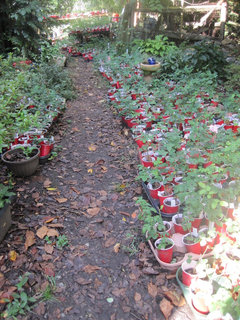
    Sand works well to root a lot of things. I put sand in gallon pots or larger and stick a bunch of cuttings close together in the pots. I insert my cuttings fairly deep. The trickiest part for me is getting enough light for them but not too much. I root them all outside with no misting system or greenhouse. I do not have good luck with some things but all the plants below were rooted by me in sand:

    I think some of my rooting failures have been due to high heat in summer. I had good luck last winter rooting some outside with no protection and I had some luck rooting cuttings in Feb. . Someone told me that he had good luck with Feb. cuttings of some hard to root roses. I'm in N. Carolina. Many of my Feb. cuttings did take last year so I'm about to do some more. I wanted to wait till after this cold snap. Also will wait another day so any frozen plants have time to rehydrate before taking cuttings. Other plants I've rooted in sand: clematis, salvias, annuals like zinnias, artemesia, candytuft, sanseveria, coleus. I want to try Japanese maple, spirea, maybe azalea.

    I can see how you might want to propagate chamaecyparis...those things are expensive.

    Stephen Gibson (NC 7B) thanked erasmus_gw
  • 7 years ago

    The trickiest part for me is getting enough light for them but not too much.


    ==>>> buts it probably the shade which allows your success .. so a real catch 22 ... heavy sun changes a lot of the variable for success .. like water.. sand heating at the pot mid day and cooking the stock or new roots .... etc .... your spot actually looks like a poly tent with 65% shade cloth or higher ... and you skipped all that expense ...


    'plant culture' are all the variables which need be defined.. and addressed .. and it usually starts with sun.. media/soil ... water ... and goes on from there ... humidity


    when the culture is correct .. and the plant is willing ... then success is not far behind ... but for most of us.. there is one variable which can not be perfected perfectly ....


    thx for the post erasmus.... you seem to make it simple ... just shove some stuff? in sand and see what happens ... how easy it could be ....


    ken

    Stephen Gibson (NC 7B) thanked ken_adrian Adrian MI cold Z5
  • 7 years ago

    I put some of my rooted plants over there in my side yard. I root them in my back yard, where they do get more sun. I try to keep them in dappled morning sun. Even that gets too hot sometimes. Last year I rooted more of them in more shade and had more failures. I think I'd like an area in strong sun but with a filtering cloth above, maybe they call that lath cloth? I also think I may need more humidity for some varieties.

    I wound the cuttings either once or twice on the base. Dip in powdered rooting hormone. Keep moist. That can be tricky too...I sometimes baby them too much.

    I read somewhere that cuttings do better when a number of them are in the same pot. Whoever wrote that thought that cuttings sense other cuttings somehow! I don't know. It is practical to root many together. Once they root and you pot them up individually they are a bit vulnerable and some of mine don't make it at that point. The roots are so fragile early on, so your method of rooting in an individual pot avoids that transplant shock. I should try that more for my fussy ones but I can believe the individual pots would dry out a lot faster.

    I am always pretty impressed with cuttings that have been in sand all winter, not watered or anything still green in spring and many going on to root. They have some toughness. Some go through solid freezes for ten to 14 days! I did water my unrooted cuttings today after several days of hard freezes.

    Stephen Gibson (NC 7B) thanked erasmus_gw
  • 7 years ago

    Erasmus thanks for the input.

  • 7 years ago
    last modified: 7 years ago

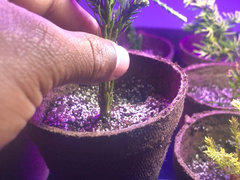
    Not even a month into things, and most of my pots can be picked up when I lightly tug on the base of my cuttings.

    Ie:

    This Cryptomeria japonica ‘Gyokuryu’ is very very firm inside the pot, and it has started producing new little buds.

    So far, only Cryptomeria japonica ‘Golden Promise’ and ‘Elegans’ have withered away.

    Both Platycladus cultivars are very firm in their pots and can be lifted like the Cryptomeria above.

    Thuja occidentalis ‘Rheingold’ is very firm in pot.

    All Chamaecyparis obtusa cultivars are firm in pot except for ‘Spiralis’. ‘Chirimen’ is the most firm surprisingly.

    Metasequoia glyptosteoboides ‘Ogon’ is firm in pot too.

    All of the cuttings have also begun producing new buds/scales/and the metasequoia buds are swelling.

    They are under a 14 hour daylight balanced LED and cheapo ‘grow’ light.

    The kicker: I have only sprayed them three times since they were stuck. This 4 dollar flat and high dome setup is so humid I have to shake excess pooling condensation out of it every few days.

    A buddy who propagates “medicinal herbs” suggested I add a very small amount of Thorvin (kelp meal) to the media. He said it was like steroids for his cuttings. I don’t want to jump the gun, but having these 12 flourish like this is making me a believer.

    The group:


  • 7 years ago
    last modified: 7 years ago

    Very nice looking array of plants you have there.

    The fact that they are staying turgid and healthy looking is a good sign.

    IME: Media with perlite/peat as components can suck down very tightly around the stems of the cuttings and can fool you into thinking that it's roots holding, and then again, it may very well be roots.

    I have no idea about the kelp meal but until cuttings have well developed roots, they really can't use much in the way of nutrients. One of the reasons you start out with a 'soil less' media, it that there isn't anything in it that can start mold or rot. But they're your plants, this is just my two cents. :^)

    You do want to keep the humidity high until roots are far enough along to 'take over', then it's best to slowly reduce humidity over a few weeks so the plants can acclimate to normal conditions.

  • 7 years ago

    Thanks for the update.

    tj