Software
Houzz Logo Print
rouge21_gw

Scarlet Gilia (Ipomopsis aggregata)

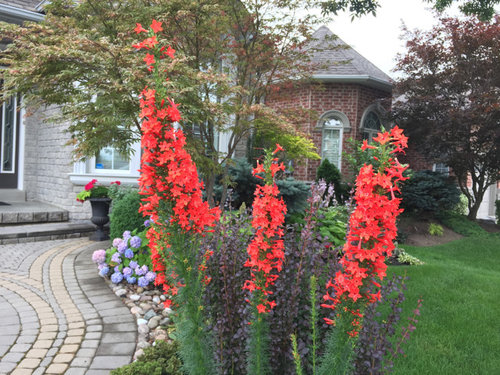
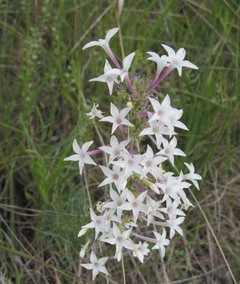
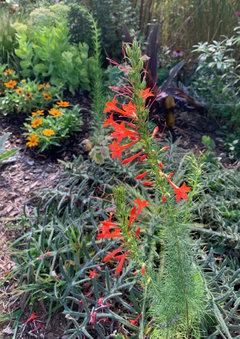
I was corresponding with a gardening friend who lives about 40 minutes north of us. We usually only discuss Japanese Maples but in her most recent email she raved about a flower that she had in her garden last season. Here is the picture, taken last year, that she sent along:


No staking she says.


Who else has experience with this plant?

Comments (40)

  • 7 years ago

    I sowed these a few years ago, with seed sent to me from Texas Ranger - standing cypress is one of my best annuals...although they behave like biennials for me. Love them. Also, they have some of the oddest seeds I have come across. Not usually sold in nurseries because they resent root disturbance (like poppies) and need to be sown in situ.

  • 7 years ago

    i didn't think they were zone 6 hardy.

  • 7 years ago

    (And she is actually a zone 5 Cdn.)

  • 7 years ago

    Davesgarden shows it as hardy to zone 4, so this plant appears to be fairly cold tolerant, but as I've learned over the years whether a plant survives the winter or not is about more than just hardiness. Because I was curious, I googled this plant and it says it prefers well drained soil. This plant is also monocarpic, which means it sets seeds and dies shortly after flowering. Depending on where this plant is grown, it can take anywhere between 1-8 years for this plant to flower. I bet the hummingbirds love this plant too with those tube shaped flowers. Unless this plant self sows freely for you, I recommend saving some of the seeds after it flowers, since it will inevitably die shortly afterwards.

    rouge21_gw (CDN Z5b/6a) thanked perennialfan275
  • 7 years ago
    last modified: 7 years ago

    Camps might be talking about Ipomopsis rubra (Standing Cypress) and the original poster is talking Ipomopsis aggregata. They look a lot alike but have different hardiness limits.I think that they differ structurally too. Ipomopsis rubra likes to grow in a single stalk unless it gets nibbled by a deer or bug. I think the I agregatta can grow a couple of stalks off of its stem branching near the ground. I could be wrong.I. rubra is native to Texas and I aggregate is native to points west . I. rubra comes in a purple variant also. Very hard to find now that my seed source went out of business before I ordered it from them.

  • 7 years ago

    I googled this plant and it says it prefers well drained soil.


    So just yesterday I visited my garden friend with the SGilia.


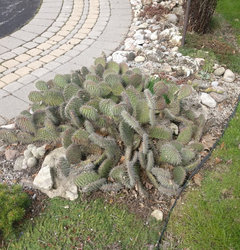
    Definitely it is part of very well drained soil as was planted in a perennial cactus bed!


    (Keep in mind that her property is in a Zone 5b CDN)


    Unless this plant self sows freely for you.


    It has for her. Take a look:


    And although she gifted me a baby I have no part of my garden with such perfect well drained soil :(.


    (Hmm,,,I wonder if it could grow in a pot...albeit a larger one ;))


  • 7 years ago

    Sure....as long as you don't disturb the roots (sssssh). After all it will flower this year and be gone..so no worries about overwintering (that's my take on the stalk growing upward vs rosettte).

  • 7 years ago

    Indeed so, Mara. My mistake. However, re seeds for opomopsis aggregata - the ever trusty PlantWorld seeds offers it...including carriage to the US. I have ordered some.

  • 7 years ago

    Alplains carries some other varieties of Ipomopsis. Camp, It was I who sent the ipomopsis to you. maybe Tx sent you some also, I sent them to her several years before I sent them to you. LOL.

  • 7 years ago

    Yep Mara - you sent enough seeds for a corner of eastern England to be forever Texas...most especially the little red sage (roemeria?). I even rushed out and bought a book on Texas natives by a couple with an unspellable name (without checking). Who knew there were so many different regions? Blacklands, piney woods etc...

  • 7 years ago

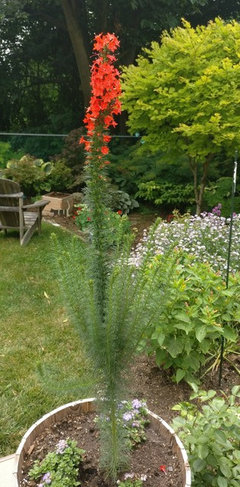
    UPDATE (July 1 2019):


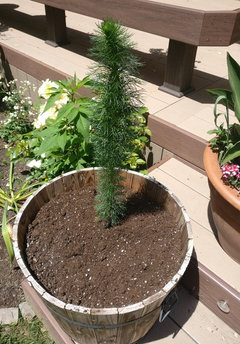
    It has been about 6 weeks in this container and it is now about 2 feet tall.


  • 7 years ago

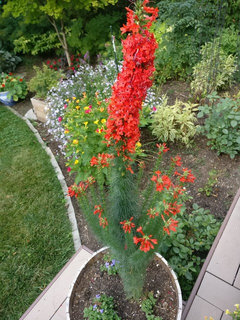
    First flowers:


  • 7 years ago

    Nice stalk. You will get lots of seeds.

    rouge21_gw (CDN Z5b/6a) thanked wantonamara Z8 CenTex
  • 7 years ago
    last modified: 7 years ago

    wantonamara, I have no experience with this plant, this being its first year.


    It peaked in early August:


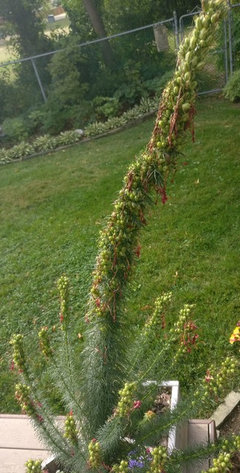
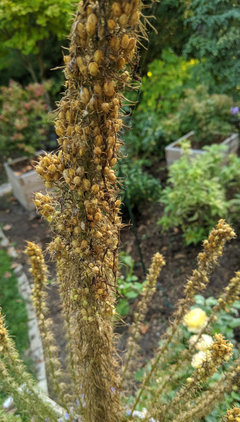
    But right now the flowers have long gone and of course the seeds are visible. Can you tell me if you think the seeds are developed enough by now so that I could harvest what I want for future sowing and then get rid of the plant which is not looking good anymore.


  • 7 years ago
    last modified: 7 years ago

    I let the pods go till they are dry and straw colored. They do not look viable yet. Sorry to tell you what you don't want to hear. It should not be long now. Is it still in its pot? move it so it is not so visible behind another plant.

    rouge21_gw (CDN Z5b/6a) thanked wantonamara Z8 CenTex
  • 7 years ago

    Yup, I didnt want to hear that, for as you noted exactly it is in the pot and it looks crappy. And this pot is too large for me to move. I will wait as I want those seeds.

  • 7 years ago

    It will make a lot of them.

  • 6 years ago

    I let the pods go till they are dry and straw colored.


    wantonamara, I think they are at that point now. What do you think?


  • 6 years ago

    Some still look a little green down lower. Do the pods break easily and the seed look dry?

    rouge21_gw (CDN Z5b/6a) thanked wantonamara Z8 CenTex
  • 6 years ago
    last modified: 6 years ago

    UPDATE (May 2020):

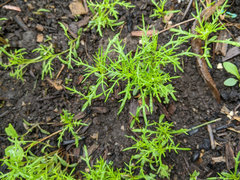
    So I was doing a stroll about and I do not deny that I have close to as many different weeds as I do perennials :( but I dont ever remember seeing these "weeds". And then I thought might they be instead 'baby' Scarlet Gilia plants?

  • 6 years ago

    I've never seen Ipomopsis aggregata get THAT big! Holy S@!&!


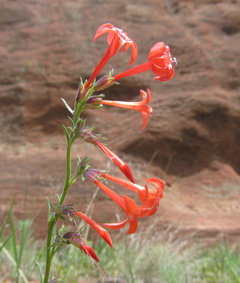
    I have never grown, nor seen it grown, "purposefully" but it's native to the foothills west of Denver. It usually looks like this:


    There is also a subspecies, I. a. candida, which is white. I have seen it get a little more "floriferous" but nothing like what is growing in your guys' gardens!


    rouge21_gw (CDN Z5b/6a) thanked ZachS. z5 Platteville, Colorado
  • 6 years ago

    Good to see that I. areggatata are making a comeback in your yard. They are so cool. so easy and the hummers love them.

    Golly the replies are so squirrelly.. They are intermixed in the old replies . I think this forum is actively out to screw us up. I could not find where to reply for awhile. They changed that too.

    rouge21_gw (CDN Z5b/6a) thanked wantonamara Z8 CenTex
  • 6 years ago

    Thank you @wantonamara for mentioning how weird the replies are. Newest replies are at the top, except if the person who starts the thread chooses it as Best Answer; then, that's the first you see. And that BA response will repeat further down. Yes, the reply area is at the top now.

    rouge21_gw (CDN Z5b/6a) thanked mindshift
  • 6 years ago

    ZachS, I really like those white flowers.

  • 4 years ago
    last modified: 4 years ago

    UPDATE (3 years after the first post)

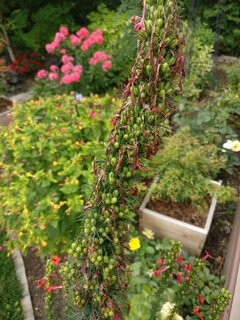
    I so love this plant.

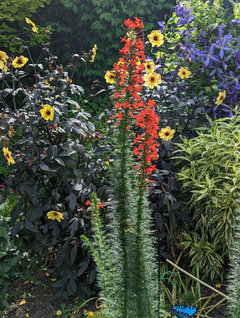
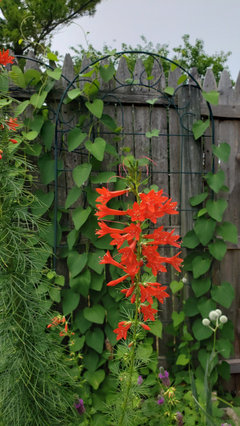
    Here it is today (51" tall)


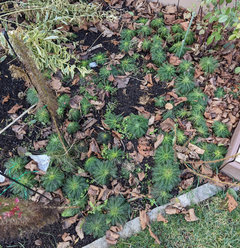
    I get many "babies" each year (self seed) but just a handful survive the winter for that second year.

    It is a numero uno attractor for Humming Birds.

  • 3 years ago

    Picture taken today of the "offspring". Fingers crossed that a handful survive the winter.


  • 3 years ago

    I still think yours look more like ipomopsis rubra than I. aggregata.

    rouge21_gw (CDN Z5b/6a) thanked wantonamara Z8 CenTex
  • 3 years ago

    @wantonamara Z8 CenTex, i have looked at both plants and you may well be correct.....it does seem to resemble RUBRA more than AGGREGATA. Thanks.

  • 3 years ago
    last modified: 3 years ago

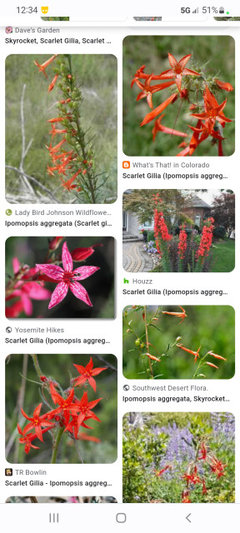
    Definately Ipomopsis rubra and not aggregata. I wasn't familiar with I. aggregata, so I never knew the difference between the 2 species. There was 1 google photo that showed aggregata looking like your plant, and it was Your photo rouge Lol. I can see why many google photos are labeled wrong. If my 1st year rosettes don't survive in the ground this winter, my only other option would be to start the seeds in pots and keep the pots in the garage over the winter. I don't think their natural range is as far north as Illinois. I hope your young plants make it through the winter! A couple plants that have similar hot, red, tubular flowers are Royal Catchfly,(Silene regia), and Cypress Vine,(Ipomoea quamoclit). The Silene is winter hardy, and the Cypress Vine is a reseeding annual.


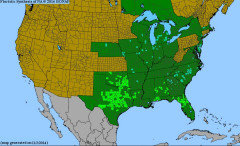
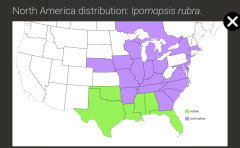
    The bonap map is misleading, and makes the range for Ipomopsis rubra seem larger and further north. I still grow it in Illinois, but winter survival isn't guaranteed.


    This map shows the actual native range.


    This is an even more accurate assessment of the native range.

    rouge21_gw (CDN Z5b/6a) thanked Jay 6a Chicago
  • 3 years ago
    last modified: 3 years ago

    Definately Ipomopsis rubra and not aggregata.

    Yup @Jay 6a Chicago I am convinced :).

    If my 1st year rosettes don't survive in the ground this winter,

    Jay, I bet our climates are probably pretty similar (In fact I bet I am probably north of you). As you can see I have tons of first year rosettes. But in the few years I have grown this plant the survival rate is probably 10% or maybe less:(. (But my friend, the one whose gorgeous specimens are shown in the very first picture of this thread has better success even though she lives further north of me as the location she has them has incredibly sharp drainage to accommodate her outdoor cacti and the like.)

    The key for me is to sow the seeds in a variety of locations in the garden. I am surprised where I unexpectedly find a surviving rosette in the spring. And if I find it early enough I move it to the location I want. (It doesn't transplant well so the earlier I can move it the better).

    (Besides hand sowing seeds about in the late Fall I actually collect some seeds and save them inside to sow outside in the next season as it gives me the opportunity to have plants where rosettes havent popped up.)

  • 3 years ago
    last modified: 3 years ago

    Yep, I was late with mine so they are currently teeny seedlings in the greenhouse. If we get a good, hot summer, they should still flower next summer but I have had them sit it out for another season, like digitalis or hesperis. Sharp drainage is definitely key - mine grow in the same beds as the tulips and agapanthus.I am hoping to add a lot more grasses this year and think the ipomopsis would make a nice contrast in colour. I love these plants (but it is impossible to get a hold of aggregata seeds so it is just rubra for me).

    I have never had a great deal of luck with silene although I had a one called Jumping Jack Flash once, but very short lived. Might try s.regia again as I am fond of the catchflys.(catchflies doesn't look right).. Mine never get taller than 1m.


    Thinking about it, I think if we treated them like biennials, with a sowing in May, we would get really good plants, Rouge and Jay. I don't have either heat or light enough for the plants to get a good root system growing, when left to sow naturally (in autumn) but a decent rosette will easily overwinter and make a sound plant for the following year. Of course, I am never organised enough to do biennials as much credit as they deserve, so overwintering indoors is another way to ensure survival.

    rouge21_gw (CDN Z5b/6a) thanked rosaprimula UK (Cambridge) Z8/9
  • 3 years ago
    last modified: 3 years ago

    Rouge and Rosa, My rubra plants are in a very sandy, well draining bed, with cacti, and they don't always make it anyway. I had 1 plant that grew to blooming in 2020. I think I just have 3 rosettes as of now, though I scattered 2 packets of seeds. I usually hear Ipomopsis called a winter annual rather than a biennial, but it is technically a biennial. Their rosettes stop growing at a certain point in the first year, and then they bolt and flower the following year. Another Texas winter annual that I tried growing was the Texas Bluebonnet. They are more cold sensative than the Ipomopsis, and Ive given up trying. Burpee sold an annual version of bluebonnets, and they were nowhere as nice as the real thing. I decided to just grow the native lupin, Lupinus perennis and they are very hard to establish. There is a larger blue lupin, Lupinus polyphyllus, but it's not native to eastern NA, and the endangered Karner Blue Butterfly only uses the native Lupinus perennis as a host plant. I really had given up on ever growing Ipomopsis rubra again, but I tried it one last time, and it did flower, so I was stoked to know it was possible. My giant waterleaf, Hydrophyllum apendiculatum is biennial, so their 1st year, they stay little, and the following year they grow big, flower, and engulf the surrounding plants. I'd like to have it so I have some in flower every year, but I missed the window for scattering their seeds last year, so I will just have small 1st year plants again next year. My Silene regia hasn't reached a meter high yet, so I don't think it's happy where it is, and I should move it. I see a few places selling Ipomopsis aggregata online.

    https://www.etsy.com/listing/1183903272/50-seeds-scarlet-gilia-ipomopsis


    Ipomopsis rubra with Rattlesnake Master, Purple Prairie Clover and Aristolochia/Isotrema tomentosum.2020

    rouge21_gw (CDN Z5b/6a) thanked Jay 6a Chicago
  • 3 years ago

    I don't have either heat or light enough for the plants to get a good root system growing, when left to sow naturally (in autumn)


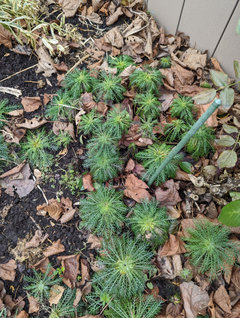
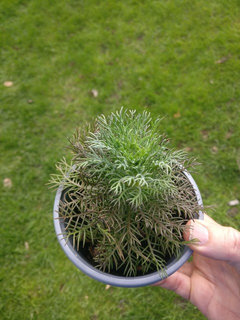
    Hey @rosaprimula UK (Cambridge) Z8/9 can you elaborate? Not enough "heat or light" in the spring and summer I assume you are referring to? I just wonder how your weather compares to mine during the growing season? For me almost all these plants start as a natural autumn sow. These first year plants, picture taken today, were from seeds that fell to the ground back in November 2021 (maybe a few that I threw down this past spring 2022) :


  • 3 years ago

    So I have never left ipomopsis to self seed..because it never really does. It seems to take a while to ripen in my cool summer so makes a teeny plant which will try to struggle into flower the following year. I was under the impression they were annuals, so I tried to impose an annual growth regime on them. I guess I assumed they would ripen and germinate and get to a good overwintering size in their native habitat. When I did try an earlier sowing, with saved seeds, I had a much better result. It makes a lot more sense to hear that they do behave like biennials,


    I am always a bit hoe-happy so don't get great numbers of volunteers...unless I am quick to recognise them or they grow thickly enough... I nearly always sow seeds under glass...or at least in pots or a dedicated nursery bed.

    rouge21_gw (CDN Z5b/6a) thanked rosaprimula UK (Cambridge) Z8/9
  • 3 years ago

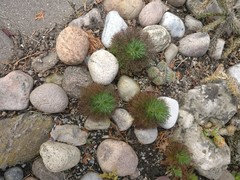
    They are native to my area and they germinate any where from September to November. Earlier more often. They get a nice rosette and then slow down when the cold dank hits.....Like now. They come back to life in the spring. I am Z8a-ish sometimes Z 8b unless a historic coldfront comes that sinks to 2ºF. We still had flowers the next year . WE had none in my fields this year due to a very bad drought over last winter and no spring or summer rains. They are sprouting now due to rain. I did let some volunteer in my watered vegetable garden.

    rouge21_gw (CDN Z5b/6a) thanked wantonamara Z8 CenTex
  • 3 years ago

    I'm always confused by how everyone else refers to these as biennials. I'm pretty sure what I have is the same plant, but only rarely do I get a non blooming rosette (maybe two or three times, and they all died over the winter). All mine come up in the spring and move straight into blooming mode. Maybe it's a selected form? I remember years ago the person saying it comes in a range yellow or red shades but the seed they gave me always came up red.

    Here's what they look like:


    rouge21_gw (CDN Z5b/6a) thanked katob Z6ish, NE Pa
  • 3 years ago

    I have seen them in seed packs that are sold as anuals. Maybe it is from a northern population where they have to be quick to survive. That said , I have some that come up in spring and bloom in fall if the summer has some well spaced moisture.

    rouge21_gw (CDN Z5b/6a) thanked wantonamara Z8 CenTex
  • 3 years ago
    last modified: 3 years ago

    Advice on various sites is also conflicting but as ever, we are all experimenting here. They are nowhere native to my area so it becomes a bit of a game, really, trying to replicate what (I think) they need. I sowed mine (in pots) from seed I collected when ripe (9th October, according to the labels), so right now, they are still absolutely minuscule cotyledons - certainly not of any sort of size for transplanting. In other years, I have sowed stored seed at the same time as hardy annuals (Late August/September, when I do get nice plants for either pricking out and potting on for a spring planting, or risking an autumn outdoor planting. Leaving them to a natural growth cycle left me with some utterly puny plants the following year, so I am sort of resolved to treat them like foxgloves...(which are also minuscule at the moment) and will not flower next year, just make a huge rosette for the following year. I am not familiar enough with them to know whether they are affected by day length - still on the learning curve.


    Are you sure yours are germinating freshly in spring and not returning from the year before, Katob? Apols if this is a laughable suggestion, I just don't know enough about them or have tried different methods of growing to have a clear idea of what is going on.

    rouge21_gw (CDN Z5b/6a) thanked rosaprimula UK (Cambridge) Z8/9
  • 3 years ago

    oooh, I like that, Katob. Lovely grouping. I have a bunch or perovskia seedlings in my now dismantled gravel garden...inspired!

    rouge21_gw (CDN Z5b/6a) thanked rosaprimula UK (Cambridge) Z8/9
0
Sponsored
AIS Renovations
Average rating: 4.5 out of 5 stars15 Reviews
Custom Craftsmanship & Construction Solutions in Franklin County, Ohio