Software
Houzz Logo Print
zenbrew

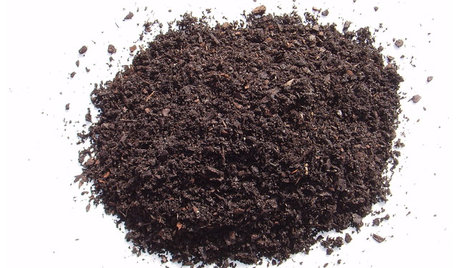
Mushroom Compost on Azaleas

7 years ago

Hi:

I am new here. I do enjoy the challenges of gardening and light landscaping and tend to be a detail oriented research the heck out of everything kinda guy. I read heavily here and on other gardening web sites. I lean heavily towards organic soils/fertilizers. I just learned of a mistake I made and want to get some advice on how bad a mistake it was.

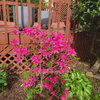
I picked up a couple 3 gallon Autumn Fire Encore Azaleas. I got them for the top bed of a tiered front bed we have at our home. The soil up there is older, sandy, and acidic due to a large evergreen tree next to it. I am in the Pacific Northwest.

So I decided to heavily amend the soil in the planting holes I dug. I decided on an acidic planting mix amended with compost, fertilizer, and pumice. I used G&B Acid planting mix mixed with G&B raised bed potting mix. Probably about 60% acid mix to 40% potting mix. I really only mixed due to not having enough acid mix on hand for the whole job.

The issue I have is I made a mistake on the compost. For the compost I used a blend of two composts. I used Black Gold Compost which should be fine, but for the second compost I used Greensmix Mushroom compost. It wasn't till after I mixed it all together and planted the Azaleas that I noticed the warning on the bag not recommended for acid loving plants.

Apparently Mushroom compost has a higher PH and contains higher salt concentrations Azaleas don't like. I would say the blended compost was mixed into the soil mix at about 25% of total volume, So 75% of the soil blend and 25% compost blend. For each hole which required 5-7 gallons of the mix I added about a cup of Holly Tone fertilizer and about 2 cups pumice.

Can anybody tell me if my Azaleas are in jeopardy? Do I need to dig them up and change my soil mix? I am hopeful that mixing the compost into the soil with the acidic additions may negate the damage, but I also don't want to kill or stunt a couple of beautiful Azaleas that were not cheap to purchase.

Thanx in advance for your comments.

Comments (4)

  • 7 years ago

    They certainly could be in jeopardy....but not necessarily just from the mushroom compost. The biggest issue is highly amending the planting holes. That has long been disproven as a practice that is counterproductive to good plant establishment and can impede proper drainage. And 5-7 gallons of soil amendments for a planting hole to accommodate a 3G plant is hugely excessive and tends to indicate a hole that is far too deep for very shallow rooted rhododendrons and azaleas!!

    I would also suggest that it is never recommended (or necessary) to fertilize newly planted stock and especially ericaceaous plants that need minimal fertilization in our area, ever.

    btw, conifers or other evergreens do not make the soil acidic. They only grow because they prefer the acidic soil conditions that exist naturally throughout most of th PNW but they not create it.

    If the azaleas were mine, I'd dig them up and replant in another area where the soil has not been altered so extensively. I woud only plant them in unamended, native soil and with very shallow planting holes. You could use the Black Gold compost or the acid planting mix as a top dressing to mulch with lightly, but that's as far as I would go with any amendments.

    Brian thanked gardengal48 (PNW Z8/9)
  • 7 years ago

    Gardengal


    Thank you for your considered input. Sounds like I have overdone it. Let me add a bit more info. I began playing in this bed in 2017 and had noted very slow growth of anything I put in it. The soil seemed dry and sandy so I had a soil report done which I would attach but I can't see a way to attach a PDF. Basically the report showed the following. N 3ppm P 111ppm, K 96ppm, Ca 1389ppm, Mg 114ppm, Organic matter 6.2%, PH 5.45 The big concern was the N and I immediately added some Down to Earth feather meal worked into the whole bed. I also pulled several plants and amended the soil with a similar mix as I just used and they had significantly better performance the next year. This is why I amended my planting mix so much this year for the Azaleas.

    As to the volume and size of hole. I followed recommendations from the plant producer and the web. The hole was dug a couple inches deeper than the rootball and the bottom filled with the new mix to keep the crown at ground level. The diameter was 24" as I have seen recommended. It was the diameter that caused the large volume of mix to be used.

  • 7 years ago

    Wide is good; deeper never is. The planting hole should never be deeper than the rootball or the soil level of the container but sightly less. Any loosened soil in the base of the hole will settle and the plant/rootball will sink. The top of the rootball should be just above ground level.

    Afa the soil test is concerned, I see nothing out of the ordinary. N was exactly where it should be (2-10ppm) although it is extremely mobile and can vary widely based on various factors including weather, time of day and time of year; P is a little high and K slightly low but neither are out of line. pH is also OK although significantly lower than one normally sees around these parts. In fact, I'd guess that was what was limiting previous plant growth - good for ericaceous plants......not so good for any nonericaceous plants. The feather meal - like any other organic matter - will have buffered that to some degree.

    Plant vendors/nurseries are sorely out of date when it comes to planting practices and the 'net is just as full of bad info as it is accurate info.....perhaps even more unless you know where to look or have horticultural training.

    There is seldom any need to ever amend soils for ornamentals and never a reason to amend individual planting holes. When in doubt, always plant high and backfill only with the removed soil.

    Brian thanked gardengal48 (PNW Z8/9)
  • 7 years ago

    Thank you again for your time and the good information. The soil test was done by Simply Soil Testing in Burlington, WA. Their report showed the N was very low as shown on their bar graph. Based on my soil use category of flowers they recommended N additions and K additions along with raising PH. Knowing I was planting an acid preferenced plant I decided to amend with compost to increase organic content and slightly raise PH, and the fertilizer to push the nutrients up a bit. Just goes to show you can learn enough to be dangerous on the internet.

    It looks like the best thing is to dig the azaleas up and redo the soil. They have only been in their new home a couple of days so it shouldn't be too big a deal. I sort of figured that was the answer but was hoping otherwise. At the end of the day even if it is diluted, I don't like the fact that I used compost that is not friendly with Azaleas. No sense making them deal with the basic compost with high salts. In the next week I will dig the azaleas up, remove the new soil and get as much of the old soil back in as I can. Then I will lightly amend via top dressing with acid planting mix and Black Gold compost.

    Thanx Again!

Sponsored
Schlabach Woodworks
Average rating: 5 out of 5 stars21 Reviews
Franklin County's Reclaimed Wood Professionals