Software
Houzz Logo Print
katymayphd

Tree identification S. California

7 years ago
last modified: 7 years ago
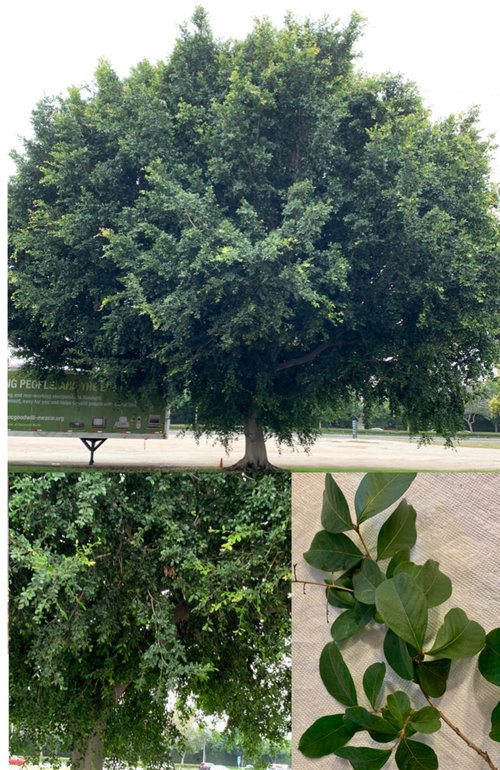
I'm so sorry to keep asking! I've tried using a bunch of different tree identification apps and websites but I can't seem to figure this out! This time, I'm attaching pictures from far away, from close up and pictures of the leaves. I'm hoping this helps!

Tree #1 below...The only guess I have is Canyon Oak:


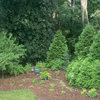
Tree #2 below...I'm thinking maybe some type of podocarpus? But what kind?


Comments (15)

  • 7 years ago

    2nd tree is a Fraxinus (Ash) of some kind.

    katymayphd thanked shaxhome (Frog Rock, Australia 9b)
  • 7 years ago
    last modified: 7 years ago
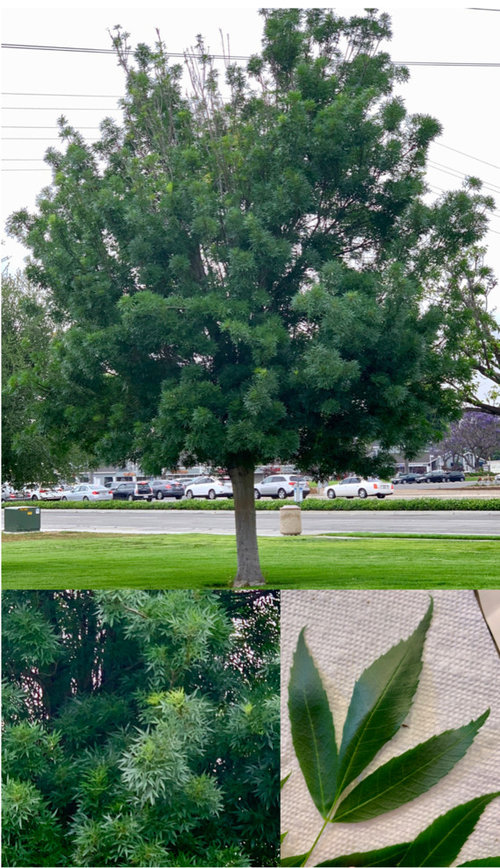
    First is not an oak and second is an ash as stated previously - for starters podocarps do not produce divided leaves.

    You might look for matches to some of these in local labelled collections such as arboreta and botanic gardens.

    katymayphd thanked Embothrium
  • 7 years ago

    Any idea what tree #1 is? And what type of ash is tree #2? We moved into a house with a big back yard with almost all dirt and only one tree planted so we are trying to figure out which trees to plant to give us some shade and privacy. We have lots of space so we need to pick several and I'm trying to figure out what I like but it is very difficult! Most of the garden nurseries have a limited stock but they will order things....if you know what you want! I've been to the local arboretum but the trees there were only native trees! Its so difficult to see real world examples of mature trees!

  • 7 years ago

    The ash tree reminds me in form very much of "claret ash", Fraxinus angustifolia Raywood, but there's no way to tell until autumn when the leaves turn...

  • 7 years ago

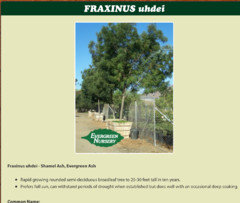
    Thank you for the feedback! I started looking at different Ash trees and I think the second tree is this "Shamel Ash":


    Its beautiful! I want it!

  • 7 years ago

    Does Lagerstroemia speciosa grow in S. California?

  • 7 years ago

    floral...I looked it up on the UFEI tree selector and it says that it does! Do you think thats one of them?

  • 7 years ago

    katymay, be aware that the evergreen ash will get much, much bigger than what is listed in your image. 25-30 feet at 10 years does not mean a maximum height, it will keep on growing, easily twice that height and more for older specimens. They are great trees but they need room. On the other hand, the Raywood ash and other deciduous ash cultivars are much smaller trees.

  • 7 years ago

    Try SelecTree for more information. Something may look pretty at one point in time and then become invasive or have other problems. This resource will give you information about roots, leaf litter, etc. https://selectree.calpoly.edu/


    katymayphd thanked lgteacher
  • 7 years ago

    I use "SelecTree" all the time..and I love it! But the trouble is that if you don't know a tree and you aren't familiar with the technical terms for various elements of the tree, then it is very hard to identify a tree! And if you just leave the various categories blank, you end up with 120 trees--which makes it very difficult to tell which one it is. I have tried to learn the technical names (figured out what "pinnately compound odd" leaves are!). But even when I look up the definition for the leaf types, I'm not sure that I've chosen the right type... like, what's the difference between elliptical and oval shaped leaves? I have no clue! Is the bark light grey or light brown? Sometimes its so hard to tell! What would be SO helpful is if SelecTree let you use a name AND search terms...for example...if I could search for all of the ash trees, but narrow it down to the ones that are evergreen...that would help! I also think that it would help if they had 3 different pictures of each tree on the search page list...one of the leaf close up, one of a mature tree, and perhaps one of a branch or a young tree? So many of the pictures on the search list are not helpful in terms of identification...pictures of bark or of tiny trees found growing in a forest among other trees. Don't get me wrong--I love it! Just wishing it were easier for us non-professionals to use.

  • 7 years ago

    If the trees are in a public park, you could contact the city. They should have a record of what they planted. SelecTree is more helpful if you are tree shopping for a tree with certain characteristics.

  • 7 years ago

    If you look at trees in arboreta and botanic gardens, some college campuses (or parts of college campuses) most of them will have signs or labels saying what these are. Sometimes public parks will also have identification signs on trees - look up what facilities are in your area and try touring them, you should find a lot of overlap between what they have and what you are finding in the general inhabited landscape, where identification is usually not present.

  • 7 years ago

    Is tree #1 possibly in the Frangula genus? Can you get better pictures of the bark and leaves both top and underside of individual leaves?
    https://calscape.org/Frangula-californica-(Coffee-Berry)?srchcr=sc5a18b6e5da1ff

  • 7 years ago

    Thank you Stephanie..I've been doing research and have discussed these trees with a couple of landscape people. I think that #1 is a Ficus Nitidia aka INDIAN LAUREL FIG/
    Ficus microcarpa. It's funny because I think that a few trees that I was previously trying to get an ID on were also the Ficus Nitidia! Its a beautiful tree--perfect in so many ways! The light colored smooth bark, the wide canopy. I love it. But many people have been steering us away from planting this because of the potential root damage.


    I'm pretty sure that the folks who identified #2 as an ash were correct. I found a tree at a local nursery that had identical dark green leaves and it was labeled as a ash.

Sponsored
Miller Woodworks
Average rating: 5 out of 5 stars23 Reviews
Franklin County's Trusted Custom Cabinetry Solutions