Software
Houzz Logo Print
annabananaflzone9b

Red Maple roots stealing from new Pawpaw

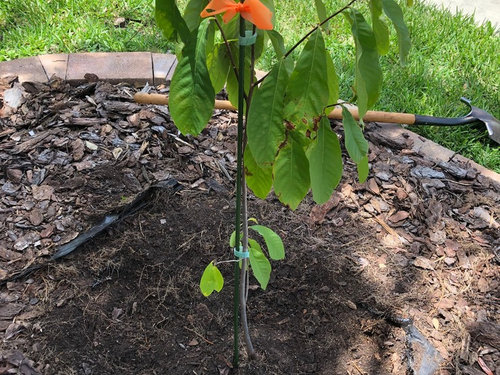
In March I planted 2 Pawpaw trees (Asimina Triloba) on the east and west side of the yard about 100' apart to host Zebra Swallowtail butterflies. Since they are understory trees, I placed one under a Nuttall Oak and one under a Red Maple. The Pawpaw under the Nuttall is growing well and looks healthy. The Pawpaw under the Red Maple had stop growing and the leaves were growing lighter in color. This plant looks bad, even my non-gardening neighbors asked about it.


When I received the trees in March they were basically 18" sticks with a few roots. Healthy in dormancy, but not much to look at. Digging the 30" diameter X 24" deep hole under the Nuttall was a breeze. Under the Red Maple not so much. I had to cut through a 6" deep mat of fine roots. The maple tree is huge so I knew this would not hurt it and that eventually the roots would grow back. I figured the Pawpaw would be well established in the couple of years it would take for the roots to grow back. I figured wrong!


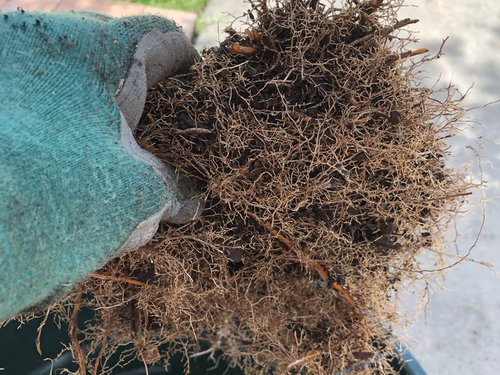
After water and fertilizer didn't do the trick, it dawned on me the plant looked like it wasn't getting any of these goodies like the other Pawpaw. I pulled back the mulch in June and to my disappointment the 30" diameter area was covered in Red Maple roots. From mid-march to mid-June the roots had completely grown back (in just 3 months!!!!) and were sucking up all the water and fertilizer.


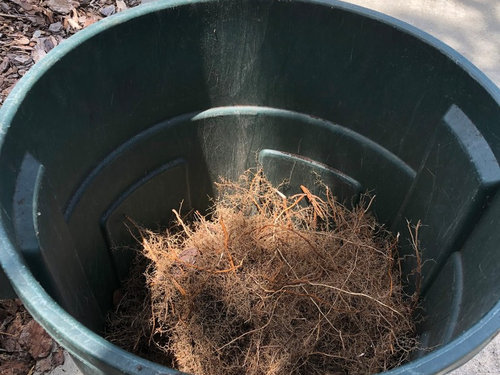
Root mat and roots removed (once again) in June.


Below the 6" mat is clear soil, no root mat. I'm wondering if I can bury a 12" deep "collar" around the 30" diameter hole and redirect the Red Maple roots around the Pawpaw's territory?


Does anyone have an experience with a similar problem? Has anyone ever put a barrier in the ground to control "surface" roots? Any other suggestions?


I don't want to move the Pawpaw tree because the yard is small and there really isn't another location and the east/west relationship to the other Pawpaw promotes better pollination (even if not absolutely necessary for fruit).


Any suggestions would be much appreciated.


Anna


Comments (18)

  • 7 years ago

    The collar sounds like a good idea to me, something to try. I wouldn't be terribly surprised if the red maple went 12" under, though, and grew up and into your pawpaws space. Red maples are very vigorous trees, so I'm not surprised that yours has regrown those roots already. Trying to grow anything close to a red maple is difficult, it dominates so, and it can grow in situations that other trees and bushes cannot. Whenever I find red maple seedlings coming up in my yard I pull them up - as far as I know, they don't host any desirable leps.


    If the pawpaw under the oak is doing well, it will grow pretty big, enough to support a good many zebra swallowtail cats - they don't eat as much as many other caterpillars.


    Good luck!


    Sherry

    annabananaflzone9b thanked MissSherry
  • 7 years ago

    Ana, can I ask where you purchased the Paw Paws? I had to purchase my trilobas online.

    Some have grown quite large, but I have never seen a Zebra Swallowtail visit them. I was told by someone (can't remember who) that the Z. Swallowtails in Central Florida only visit the native Paw Paws--which are much smaller. The native ones that I remember are Pygmea, and Parviflora, and perhaps Reticulata. I tried to grow these, but they are very slow growing and there needs to be a number of them to attract the butterflies, unless they are already in your area. I have given up trying to grow Paw Paws.

    annabananaflzone9b thanked Tom
  • 7 years ago

    From what I've read, the P. triloba will not fruit much south of the northern FL border. It's a northern plant. Here is a great interview with the king of pawpaws here in FL. There are actually 8 varieties of native pawpaw. I've tried to transplant wild ones, but they don't transplant well, and trying to snatch a fruit away from the critters to get seeds to plant is too much trouble.


    Two Part Interview With Terri Pietroburgo re: Growing Paw Paws in Florida


    annabananaflzone9b thanked dirtygardener
  • 7 years ago

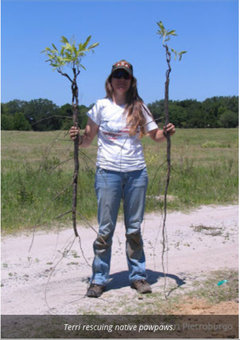
    I purchased the Asimina Trilobas from Growers Solution in Cooksville TN through Etsy.com. I tried for months to locate native pawpaws for sale. I found this place in Leesburg, FL, Pietro Pawpaws, but it is no longer in business. The closest native nursery to me is Wilcox Nursery in Largo and they told me to forget about Pawpaws as no one cultivates them and to dig them up in the wild is a waste due to their extremely long tap root. I later found this photo on the web. This is the owner of Pietro Pawpaws.


    So, I decided to give Asimina Triloba a try, even though I am located just outside their southern growing range. I estimate it cost me $80 to get the 2 trees in the ground (trees ($18 a piece), good dirt, fertilizer, my retired time is not worth anything anymore :) ) So not a lot to lose.


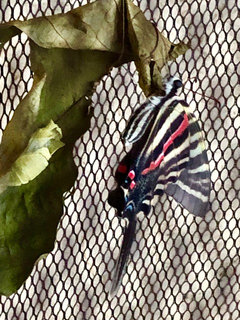
    I have already raised 1 Zebra Swallowtail from the tree that's doing well.


    There was another one on it recently but a wasp got to it before I did.


    I still wish I could find cultivated native pawpaws. They are not much to look at and now you are saying they are difficult to grow but Zebra Swallowtails are so rare, I'd be willing to do the work. AND, gopher tortoises love the fruit. We don't have gopher tortoises in our community but they do live across the street from our community.


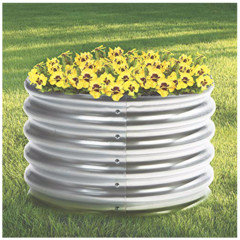
    Sherry and Tom, I thought about just buying a galvanized washtub and finding someone to cut the bottom out to create the collar. I shopped online and found this galvanized raised bed planter 2' diameter X 12" deep. It is spendy but no more than a wash tub and then paying someone to acetylene cut out the bottom. It is corrugated which is more difficult to slide in the ground. What do you think?


    Any other ideas? I really want to save this pawpaw.


    Advocate of lost causes,

    Anna


  • 7 years ago

    I don't know whether the galvanized raised bed would help or not, Anna.

    You could find a Florida native pawpaw growing wild and stalk it trying to get the fruit (for seeds) before the critters do.

    I think zebra swallowtails are rare for a reason!


    Sherry

    annabananaflzone9b thanked MissSherry
  • 7 years ago

    It's admirable of you to try to increase the zebra swallowtail population, because with our wild lands disappearing more and more every day, soon most of the native pawpaws will be gone. If that's all you want the tree for, just give it time. It will probably perk up eventually. You'll likely never have fruit, but it looks like your butterflies have found it, so good luck!

    annabananaflzone9b thanked dirtygardener
  • 7 years ago
    last modified: 7 years ago

    Tap roots are for anchorage and make up a very small percentage of the root systems of trees that produce them - the majority of the roots of tap rooting trees are shallow, same as with kinds of trees that do not produce tap roots.

    The pawpaw is going to need to be able to root into an area well beyond the diameter of a collar.

    As you have discovered large-growing species of maples do not lend themselves to underplanting - the solution is to plant the pawpaw elsewhere, where it is not underneath the crown of a red (or Norway, sugar etc.) maple.

    annabananaflzone9b thanked Embothrium
  • 7 years ago

    I have seen Zebra Swallowtails in my yard for several years now but the poor swampy land in a 5 mile radius of my community is now worth developing. I'm afraid that the local native pawpaws are being replaced with roads and retention ponds and the Zebra Swallowtails visiting my yard will be no more. Hence, the planting of any type of pawpaw. Tilting at windmills....probably :)


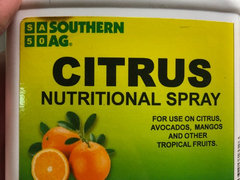
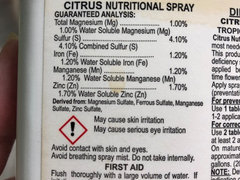
    I did decide to use a nutritional spray on the sickly tree to see if it would help it recover. It's a solution for citrus and tropical fruit but I think it might help.


    Let me know if you have any reservations.


    Skip 1909, your advice is definitely something to consider. I could just continue to cut out the root mat every 3 months for the year and see how it's growing then. I really have no clue how fast the pawpaw root system will grow.


    Anna


  • 7 years ago

    I'm sure there are other trees that have tap roots as long as the paw paws, but I've never seen them. Once they are in the ground they need a pretty long time to send the tap root down before they show growth. The Trilobas might be somewhat different than the native ones around here.


    Most of the native ones in this area grow in sunny, sandy areas.


    Anna, if you want seeds send me an email. I know how to find them. If you are seeing Zebra Swallowtails around your house there are probably some paw paws nearby. Critters will eat the fruit, but not the seeds and you will generally find some nearby the plants.

    annabananaflzone9b thanked Tom
  • 7 years ago

    Thanks Tom. If I lose it, I may want to give the seeds a try.


    Anna

  • 7 years ago

    I have special pots--very deep and narrow--that I used for paw paw seeds. They allow the tap root to grow. A normal pot doesn't work well. I no longer use them, so if you want them, Anna, they are yours.

    annabananaflzone9b thanked Tom
  • 7 years ago
    last modified: 7 years ago

    Those maple roots are unsurprising to me. And I agree that a 2' diam. collar

    will be too constricting. A straight or curved deep barrier could help

    IF in combination with the repeated maple root pruning.

    You must cut medium and large roots also;

    feeder roots grow from the mediums which grow from the large.

    A strong maple is not damaged by that.

    annabananaflzone9b thanked four (9B near 9A)
  • 7 years ago

    Thanks Tom, I may take you up on that. I'm considering all the options.


    I will say the tree looks a little better after digging out the maple roots, watering, putting in more good soil, watering, fertilizing, watering, spraying with that nutrient spray and watering. This I think at least supports that it was being starved and is not suffering from a disease or something.


    Anna


  • 7 years ago

    Boy, you sure do put in the work, Ana.

    annabananaflzone9b thanked Tom
  • 7 years ago

    putting in more good soil

    Planting in pockets of different soil or amending planting hole back-fill tends to produce difficulties for newly planted specimens rather than assisting their establishment. The dominant issue is how movement of water into and out of modified planting holes is affected. Due to a difference in textures between the altered or replaced soil within the hole and the unchanged existing soil around the hole.

    annabananaflzone9b thanked Embothrium
  • 7 years ago

    Just a guess, but spraying the top with water might be the best thing for now. I was told that the native paw paws in Florida didn't like fertilizers. The Triloba may be different. i have several Trilobas that are about ten feet high. No customers.

    annabananaflzone9b thanked Tom
  • 7 years ago

    Tom, I have always enjoyed manual labor and getting dirty. :)


    Very good point Embothrium. My whole yard is made from "fill sand". It is straight sand with no soil or organics. Looking at the local topography it's probably at least 15-20' deep. Under that may be some clay and organics as the Anclote River is near by. The sand most likely was over burden from phosphate mining here FL but could have just as easily come from sand mining.


    So I assume the sand is going to easily drain. The soil I use to replace the sand is also fast draining but of course contains organic material and probably packs looser than the sand. You are absolutely right that I am forcing some larger plants to deal with different types of soil as their root systems grow. My experience is most plants don't do well starting out in sand, so I let them start in better soil and make the move to sand after they are larger. Obviously not the best solution but a compromise that works most of the time.


    If you have any suggestions of a better way, I would appreciate hearing them.


    Cause digging out wet heavy sand is hard work. :)


    Anna