Software
Houzz Logo Print
joe_williams27

Shade trees for alkaline soil

7 years ago

I started a thread back in the spring looking for ideas for dependable shade trees for a zone 6b, central Indiana location. I've already seen a couple nurseries advertising the arrival of fall stock, so although I won't plant until late September, I may look to purchase soon. Since I just bought this property last year, I spent the summer following the advice I've always read on this forum when I was a lurker....learn about my soil, my drainage, and what grows well in my local area, both in the suburbs and in the wild.

Using at home test kits, my soil ph runs about 7.5. And using the old fashioned method of digging a cup of soil and pouring a cup of vinegar over it...it definitely fizzes up. 20 year old yard, was probably farm land before that. So I'm on the alkaline side of things. Very flat ground with no natural slope for drainage. So March, April, and May it's squishy ground although not standing water. Then in the summer it tends to be dry.

Focusing on newer suburban neighborhoods and public areas, there are lots of very pale, yellowish chlorotic oaks and red maples. Occasionally I'll see a nice green oak or red maple, I figure the oaks are probably bur or chinkapin, but I'm really curious as to what cultivars of the red maple are keeping their green. Maybe a freeman maple actually? River birch grows well (although I don't want one) and keeps their green, and honeylocust grows well. Quite a few linden trees, but they are ate up by July with Japanese beetles.

I'm only looking for large growing, deciduous shade trees. 4 or 5 is my plan, it's almost an acre lot and they will be far away from any structures. Redpointe maple is pushed hard by all the nurseries here, I read great things about their tolerance to slightly alkaline soil, I don't know if I've seen one growing though. Also on my list is chinkapin oak, bur oak, ginkgo, miyabe maple (State street), and european hornbeam...although it's form is not really appealing to me. I generated this list just based on researching large trees tolerant to alkaline soil. I'd love to hear of any new ideas, or some first hand experience with Redpointe maple. Thanks everyone.

Comments (35)

  • 7 years ago
    last modified: 7 years ago

    The tough part of this request is that you have wet but then dry - how dry are you talking? My soil is never wet but gets extremely dry - so at least it’s consistently well drained and dry.

    With yours you need to find something that tolerants wet and dry. if your soI’ll doesn’t get rock solid or dusty in summer you really don’t have dry conditions.

    I‘d skip RedpoInte as I don’t trust any red maple cultivar. I tried multiple cultivars in 7.2 and they where all yellow. Even Brandywine which was touted to be slightly alkaline tolerant.

    If you have consistent moisture...

    Add Katsura

    If it’s wet then dry...

    Add the Burr x Swamp Oak hybrid

    Add Hackberry

    Add Bald Cypress (high end of ph tolerance)

    Add London Plane Tree

    Add Corktree (male)

    Add Frontier Elm

    Add Kentucky Coffeetree


    what else do the nurseries have?

  • 7 years ago
    last modified: 7 years ago

    I have an accolade elm and northern red oak that are doing great in my soil that's at least as alkaline as yours. Sienna Glen maple was a giant dud for me if that helps. There is a nice yellow buckeye that is growing in my town, I understand they would get pretty big in your area. I have noticed that linden (little leaf and American) do really well in alkaline soil, too. I second KCT. They all do great here, but don't leaf out til almost July in my climate, but would be great for you. Catalpa supposedly doe alkaline too. Hope this gives you some more ideas

  • 7 years ago

    Also on 7.5 pH clay...Red Maple & Pin Oak are the only two commonly available shade trees I would stay away from. River Birch, Sour Gum, and Bald Cypress seem to be *ok* in 7.5 pH here. The wet, then dry soil is the other consideration...

    Shumard Oak

    Chinquapin Oak

    Bur Oak

    Bur x Swamp White Oak

    Swamp Chestnut Oak

    Overcup Oak

    Freeman Maple

    Kentucky Coffee Tree

    Honeylocust

    Sycamore and Plane Tree

    Hackberry

    Catalpa

    DED resistant American Elm

    Tulip Tree & Cucumber Magnolia (if the wet soil during the growing season isn't prolonged)


    @L Clark - My experience with Tilia is mixed. Basswood will tolerate flooding while the Little Leaf Linden DOES NOT.


  • 7 years ago
    last modified: 7 years ago

    Buckeyes, Bur oak, Freeman maples.

  • 7 years ago

    Black maple would be a good option, too. Even standard sugar maple is a little more tolerant of alkaline soil that red Maple is, But the black maple is more tolerant of both the wet and dry extremes.

  • 7 years ago

    I'll add Heritage oak - a quercus robur X macrocarpa cross and Tilia tormentosa - silver linden to the mix for alkaline tolerance. Sounds like the japanese beetle issue takes linden off the list for you.

    There is Catalpa speciosa - the northern or western catalpa and catalpa bignonoides - the southern catalpa. The bignonioides is said to flower later, a benefit if you have late freezes. I have both types but the southern hasn't flowered yet, 3 years after planting so I can't confirm that opinion.


  • 7 years ago
    last modified: 7 years ago

    Some good suggestions above. Of those mentioned I would put Chinkapin Oak, Heritage Oak, Coffeetree (one of the male cultivars), and Black Maple near the top of the list. Bur Oak would be up there, but they are somewhat variable so I'd suggest Urban Pinnacle so you know what you're getting. Shumard Oak performance is variable depending on provenance.

    "and european hornbeam...although it's form is not really appealing to me." Is it the "formal" looking columnar varieties you don't care for? The straight species can make a nice tree and grows pretty well in our region IME (if you can find it).

    Silver Linden is pretty tolerant, and is somewhat less susceptible to JB (although I have seen a fair amount of damage in nursery rows where JB numbers are high).

    Redpointe handles the higher pH as well as the freemanii's, in fact it should be considered a freemanii IMO. I haven't come across ANY straight red maple cultivars that don't become chlorotic in the higher pH soils in our region.

  • 7 years ago

    Great suggestions...a few I hadn't thought of...and unfortunately haven't seen. Don't believe I have every seen a black maple at any nurseries. In regards to hornbeams, yes I only find the European and it's the columar structure that just doesn't fit my house and the location they are going to be planted. Lindens are out due to beetles...there's been a high concentration in my area the past few years and any linden, crabapple, serviceberry, etc. get obliterated every summer.

    Glad to get one vote for the Redpointe. I know there's a few maple haters here, but I do like the dark green rounded maples I see around here. Maybe they are black or freemanii. But whatever I go with, I'm thinking 2 different pairs. 1 pair in the back yard and 1 pair in the side yard.

  • 7 years ago

    About the only place I’ve seen Black Maple is Forestfarm. Not sure if they still have them.

  • 7 years ago

    Well, I just finished hitting up every major nursery within 60 miles of me. As expected, most of the above suggestions are not carried. They all carry about the same thing...and they are all catered to suburb builders pretty much. When it comes to large trees...this is basically what's available:

    Oak-red, white, and pin...no bur or chinkapin

    maple-Autumn Blaze, October glory, red sunset, Redpointe, Sienna Glen, and miyabe (state street)

    Tulip poplar

    Ginkgo

    Various birch clumps

    Black gum

    Sweet gum

    Honeylocust

    Bald cypress

    European hornbeam

    I still got a little while to look and around and think. Currently I'm thinking out of that list I'll take a flyer on a couple Redpointe or Miyabe maples and a couple ginkgos. Although they are slow to get started, I have planted them on other properties before and know they can handle about anything.


  • 7 years ago

    Bald Cypress is the most desirable in that list IMO

  • 7 years ago

    No experience with them, but Woody Warehouse (NW side of Indy) may have Chinkapin Oak.

  • 7 years ago

    Can bald cypress handle the alkaline soil?


    Nice tip on Woody's Warehouse...interesting growing system they have going there. It appears to be wholesale only, however one can order over the phone and pick up late September or October. I always like seeing a tree before purchase...but they do have Chinkapins.

  • 7 years ago

    "Can bald cypress handle the alkaline soil? "


    I find them similar to Northern Red Oak for pH adaptability. 7.5 pH is at the upper end of tolerance without going chlorotic.

  • 7 years ago

    Persistence finally paid off...I found a local nursery that can source Chinkapin oaks in 15 gallon containers. I don't know why they are not carried regularly, or why some nurseries looked at me like they had never heard of it. From what I read in some Indiana arborist guides, Chinkapin is one of the most well suited oaks for central Indiana, due to the slightly alkaline soil and a big variance from very wet springs to hot dry summers. Also, he agreed to order them and let me inspect them before paying.

    So I'm thinking for my 4 shade trees I'll go 2 chinkapins and 2 ginkgos. Both sites are flat and similar soil. However the side yard is a little higher elevation than the back...meaning during the spring monsoons we seem to get every year, the back yard doesn't drain away as fast. I plant high of course, however would one of the 2 handle the slower draining in the spring more than the other.

    I know ginkgos are slow to get started growing, and chinkapins moderate at best? I got room for a 5th larger growing tree....I might throw in a Redpointe maple closer to the patio (but still 15-20 feet away), for something a little faster growing.

  • 7 years ago

    Once established, the young Chinquapins I know will do 18”-24” in a park setting over two flushes. Another in a more naturalized spot has grown 42” this year.

  • 7 years ago

    Since you like Chinkapin oak I'll infer that you prefer native trees and don't mind some litter, so what about a couple hickories? They would be better adapted to seasonally wet soil than the ginkgos, and they often have decent fall color. Maybe the nursery with access to the Chinkapins can find a couple for you.

  • 7 years ago

    chinkapin Oak is awesome! If anything my soil here in MD is too acidic for them to be truly content.

  • 7 years ago

    Re: maples...my understanding of large maples ranked by high pH tolerance, best to worst:


    saccharinum

    nigrum

    x freemanii

    platanoides

    saccharum

    rubrum

  • 7 years ago

    hairmetal4ever - yeah thats pretty much the way I would rank them based on research and reading these forums. Obviously I don't want a saccharinum and nigrum is very difficult to find. For my maple tree...I'm thinking freemanni "Sienna Glen", I have read some positive things on it here. Or Redpointe, even though it's called rubrum, every nursery owner I've talked to says it has enough freemanii in it to give it the ph tolerance needed around here. Unfortunately, no one can point me to a specimen in the ground of a Sienna Glen or Redpointe to check out, so I will be rolling the dice I guess.

  • 7 years ago

    My guess is that Redpointe is 1/4 saccharinum 3/4 rubrum, but that’s a guess.

  • 7 years ago
    last modified: 7 years ago

    Does chinquapin oak take forever to leaf out like bur oak?

    Also, I swear acer platanoides has excellent ph tolerance. Here the few platanoides look great and the few saccharanium look terribly chloratic. I can think of a spot where one of each grow only one block apart, one's about to give up the ghost and the other is a fine specimen. Maybe it's some other environmental factor?

  • 7 years ago
    last modified: 7 years ago

    chinkapin Oak is awesome! If anything my soil here in MD is too acidic for them to be truly content.

    Finally a sexy tree for dry alkaline sites we can brag about!

    ph tolerance combined with very well drained loams/sandy soil

    nigrum

    saccharum

    saccharinum

    platanoides

    x freemanii

    .....

    .....

    .....

    and way at the bottom

    rubrum


    By the way Sienna Glen (much like Celebration) is a dud for fall color. I'd put Firefall and Autumn Fantasy ahead of this cutlviar. Both have good lateral branching with strong central leader.

  • 7 years ago
    last modified: 7 years ago

    We planted several Sienna Glens (over 10 years ago) and all have become chlorotic to varying degrees, plus the fall color hasn't been very good. I'm guessing they may perform better in more acidic soils.

    Haven't observed chlorosis on any of our Redpointes. but they are susceptible to tar spot (prevalence varies from year to year) and I have seen frost cracks on a few.

    Agree with L Clark that Chinkapin oaks are pretty late leafing out.

  • 7 years ago

    Thanks for the comment abordave...good info. I assume Redpointe is just as susceptible to tar spot as any other maple? I have occasionally seen it in rural areas, usually on large silver maples. None in my neighborhood, at least not bad enough I can see it from the road. Most maples in my neighborhood are norways, autumn blaze, or some pure rubrum.

  • 7 years ago

    Lane, I notice the same with Silver Maple - but they never scorch like I occasionally see on Norway.

  • 7 years ago
    last modified: 7 years ago

    From what I've seen, the years when tar spot is prevalent on silver and freemanii maples it is also noticeable on Redpointe. The rubrum cultivars don't seem to be affected very much. As I understand it, the tar spot that affects Norway maples is a different species, and it can be very bad some years on Norways in this area.

  • 7 years ago
    last modified: 7 years ago

    Arbordave - sorry, that was a question, not an observation, ha ha, but you answered it for me. So chinkapin oak do leaf out late. I've got absolutely zero experience with chinkapin oak. I've never even seen one in real life. My q. ruba does not leaf out late and I definitely appreciate that here

  • 7 years ago

    dave, what is general soil ph range you planting those redpointe? Also loam, clay, sand?

  • 7 years ago
    last modified: 7 years ago

    We have a variety of (mostly) glacial soils from gravelly sand to heavy clay, but more often clay than sand, and most are on the alkaline side of the pH scale. A very high percentage of the pin oaks and red maples (street trees as well as residential trees) are chlorotic. We don't plant either as street trees anymore.

  • 7 years ago
    last modified: 7 years ago

    Here's typical Red Sunset and Sienna Glen foliage in the area (photos taken today):


  • 7 years ago
    last modified: 7 years ago

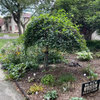
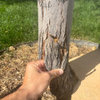
    Here's the Redpointe in my back yard. Note the frost crack from a couple years ago.

  • 7 years ago

    Thanks for the pics arbordave, that's awesome and a big help. The redpointe foliage looks great. Your first pics of the chlorotic leaves is what I see everywhere in my area.

    Is white tree wrap recommended for the first few years?

  • 7 years ago

    Dave you should share more pics of your yard yard!


    I use white tree wrap on maples for up to 5 years sometimes longer if they have southern exposure.