Software
Houzz Logo Print
mbohio

Excess Humidity in Home

7 years ago

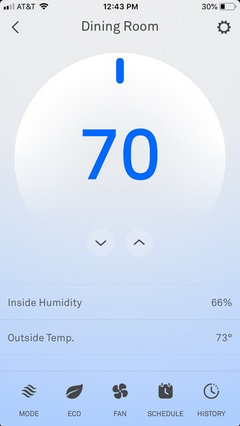
I’m trying to understand the best approach for addressing excess humidity in our home. Currently, my Nest thermostat tells me the humidity in my house is 65%. It rained this morning and has been rainy recently, but I think the humidity in our house is always on the high side.

Background: Home is half over a basement (built in 1969) and half on a cement slab (addition in 1999). We are on a really wooded lot with trees that shade the house. Our yard itself has some drainage issues that we are working to address because we sometimes get standing water after a lot of rain, but we’ve never had any actual water in the house. No basement flooding or other signs of water in the home. It’s just humid inside and you can feel it. We have central AC that we just replaced 6 months ago (new furnace and AC unit).

Where’s the best place to start with addressing the humidity? We’re open to whatever we need to do, including a while home dehumidifier and because of the cost of that, wanted to get advice on what else might be an option before we go straight to that option. Should we just get a dehumidifier unit for the basement ($200 at Home Depot) and see if that helps first? Any other easy fixes worth trying?

Comments (36)

  • 7 years ago

    Here’s what my Nest says...

  • 7 years ago

    How big is your home (excluding basement) and what size AC did you get installed?

  • 7 years ago

    Sktn77a - Our house is 4000 sq ft but we actually have 2 AC units (when the addition was put on, they added a second unit to support). So one AC system is about 7 years old and one is brand new, but I’m confident the sizes are sufficient to support the house.

  • 7 years ago

    Too large capacity cools too quickly, doesn't run enough to properly dehumidify ... that's why skt77a is asking.

  • 7 years ago

    Dadoes- Thanks for clarifying. I would have to go look at my units, but I remember discussing capacity with the company that installed our new AC and felt good about what they were putting in. I’m certainly no HVAC expert though.

    Any other thoughts on how to remedy?

  • 7 years ago

    Do you open the windows at night when the temperature drops?

  • 7 years ago

    mike_home - we do not. It’s still pretty warm in he evenings here right now. We’re in Ohio so it’s pretty humid and just ok the cusp of cooling off as we head into Fall. All summer, we’ve kept windows closed and AC on.

  • 7 years ago

    Ya gotta love deciduous trees. In winter, they let sunshine in to warm your house. In summer, they shade it and cool the incoming breezes. In more areas than you might think, you can be quite comfortable in summer without air conditioning, as long as you have lots of shade. A brick or stone house makes this even better because its thermal mass helps to even out the daily high and low temperatures.

    The main problem with trees around the house is that they boost the humidity. I've lived in houses with lots of trees and with almost none, and always had high humidity when I had trees. Not that that makes me want to cut down the trees!

    That's the way Mother Nature works, and that's the way people lived in summer for generations, somehow surviving the heat and humidity, until about the last 40 years.

    But this is 2019, and now we've all gone soft. We're used to 50% humidity and 70 degrees no matter what it's like outside,. (I like it too, though not 70 year round.) We've filled our houses with furnishings and decor that can't stand the normal humidity where we live. So now we've made humidity a problem.

    Dadoes is on the money here. Most likely the problem is your HVAC design. It sounds like your installer dropped the ball.

    This isn't uncommon. In my experience, many installers just propose replacing like for like, which is pretty ignorant (at least on the heating side) when you're replacing old <65% efficient heating gear with 96% efficient equipment. Or at most they look at square footage only, with no regard to insulation, window area, and total heat loss and gain. And then they oversize the system anyway, probably because most people want instant response when they change the thermostat.

    I'm guessing here, but that oversizing might be why you "felt good about what they were putting in," but now don't feel quite as good in the conditioned space that resulted.

    Oversize air conditioners short-cycle, and they fail to dehumidify because they don't run long enough. There's your likely problem. The band-aid fix is dehumidifiers. The proper fix is a properly sized HVAC system.

  • 7 years ago

    DavidR - Haha, well count us in the soft category. We like 70 degrees and 50% humidity! With it getting close to 70% humidity, you can definitely feel it in the air and I think the house feels stuffy and warmer. I’d like to get the humidity down a little. You’re correct that we went from an 80% system to 96% so it’s definitely a far more efficient system. I’ll check the size of the system and circle back. Unfortunately, I’m not sure what we can do if we learn it’s oversized. We just had it installed 6 months ago and I’m not going to replace it again, ugh. Regarding a dehumidifier, would I need a whole home system or could a smaller one work?

  • 7 years ago
    last modified: 7 years ago

    At times when the weather is cool and damp, an AC won't run long enough to remove indoor humidity.

    Maybe the cause of the problem is that your AC units are too large. Your comment " I remember discussing capacity with the company that installed our new AC and felt good about what they were putting in " is non-descript. They felt good about it in what way? Normally sizing is determined by rather detailed load calculations, the results of which are a size like any other, not something to "feel good" about. If that wasn't done, or if it was done with the calcs jiggered (which is common), it suggests you sizing may be off.

    You're likely not going to change the equipment out so while you should get to the bottom of what's causing the problem ( in case it's an equipment problem), a built in dehumidifier is the likely solution. Try using a different HVAC company and make sure that gets sized properly. It may be only one is needed.

    PS, I'm sure you know but your discussion of 80 or 96% efficiency equipment refers to heating and has nothing at all to do with your air conditioning.

  • 7 years ago

    Are either of your A/C units two-speed?

  • 7 years ago

    I'm sure you know but your discussion of 80 or 96% efficiency equipment refers to heating and has nothing at all to do with your air conditioning.

    Correct. Sorry, I didn't mean to confuse matters there. I wrote that to illustrate that a lot of HVAC installers don't do their homework, not to suggest that that's what caused the humidity problem in this case.

    The thing about a dehumidifier is that it does exactly what your air conditioner does -- it cools the air, so that it can't hold as much moisture. The water from the air condenses on the cooling coils and runs down the drain..

    But then, since you don't really want the air in your house cooled further, the dehumidifier actually reheats the air that it's just cooled!

    So, when you already have an air conditioner, a dehumidifier is a waste of energy, and it runs up your power bill.

    In your place, since you've only had that new HVAC system 6 months, I might call the company that installed it and have a chat with them about your humidity problem. IMO, it's most likely their fault, and I think they should help you with it.

  • 7 years ago

    Hi all - Yes, I realize that I totally misspoke when I referenced the 96 vs 80% above. That was in reply to David’s comment but yes, I totally mixed up the furnace and AC. The AC unit that we recently bought was 16 SEER - the previous one was 28 years old, so of course much less efficient. I haven’t had the chance to check the unit sizes yet, but will provide that info tomorrow. When I said I felt good about the sizing, it was intended as vague because I’m certainly no HVAC expert and I personally have no idea of the proper size. The reason I felt good was that I received 4 quotes from 4 different companies and they all said the same thing, so I felt like I was getting consistent and therefore, reliable information. Of course, that could be a wrong assumption and if sizing is a common error, then maybe our AC unit is incorrectly sized. Hopefully we can clear that up tomorrow when I provide info on our units!

  • 7 years ago

    North Texan - Yes, the unit we just installed is 2-speed and I’m almost positive that our other unit is also 2-speed.

    DavidR - I’m going to call the company that I staled and see what they can tell me. They actually reached out to do a follow up check, so the timing is perfect.

  • 7 years ago
    last modified: 7 years ago

    " when you already have an air conditioner, a dehumidifier is a waste of energy, and it runs up your power bill. "

    This isn't good advice. A house that's got humidity problems needs a solution just the same as a house that's cold would need a heater.

    PS to OP - I forgot to mention in the first post - you need to get your drainage problem solved too. Don't look for or expect a quick fix. Damp ground and humid houses lead to mold, mildew, and untold problems of various kinds, including structural and health problems for the people there. Do it right.

  • 7 years ago

    I would expect better humidity control if both of your AC condensers are 2-stage. Are you able to tell when the AC is running in the low stage.

    Post the model numbers of all your equipment and thermostats.

  • 7 years ago

    Mike, exactly what I’m thinking...a Nest with two-stage equipment is a ripe ground for incorrect set-up.

  • 7 years ago

    My suspicion is the current thermostat wiring does not have enough wires to support 2-stage heating and cooling and a C wire for the Nest. So that could mean the staging is being done by the furnace control board. That typically means 5-10 minutes of operation in the low stage. Combine that with an over sized condenser and you don't get good humidity control.

  • 7 years ago
    last modified: 7 years ago

    " How big is your home (excluding basement) and what size AC did you get installed? "

    So you have a 4000 sq ft home (excluding basement?) and two 2 stage AC units. What size are the AC units??

  • 7 years ago

    Sktn77a - Yes, 4000 sq ft excluding basement and two AC units. I’m going to check this evening the unit sizes (and will provide model #s, per above request) and will post more information.

  • 7 years ago

    Potential sources of humidity in the house:

    - long showers without running an exhaust fan

    - aquariums (we used to have 3 large ones!)

    - lots of cooking without running an exhaust fan

    - dryer vent leaking into the house

  • 7 years ago

    Some people don't seem to shut the doors on refrigerators, freezers, and houses very fast. Don't stand there with the door open.


    Avoid running exhaust fans TOO long. When you get out of the shower, just run it a few minutes to pull out the steamy air. With the door almost shut. If you open it wide, a big slug of cooler air will come in the bottom half, displacing the warm steamy air which blows out the top of the doorway into the room. Any fan action at that point is wasted. The air exchange action also happens when you open outside doors if the temp is different inside and out.


    Warm humid air drawn in from outside the house, when cooled, immediately has higher %RH just from being cooled down. So if it's 50% inside the house and 70% outside, and you let air in, which then cools off say 10 degrees, it's now maybe 80% RH air you've let into the house.


    Also, use ceiling fans, or any kind of fan, in occupied rooms to make it feel cooler.

  • 7 years ago

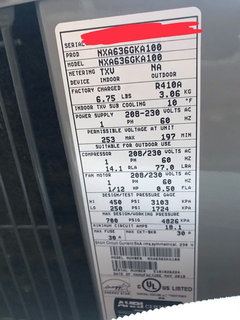
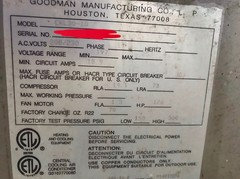
    I’m not exactly sure what info is needed about our AC units, so I’m going to post pictures of both so that you can pull the info you need - thanks in advance for everyone’s help!! As a reminder, our house is 4000 sq feet, half over a basement (built 1969) and half on a concrete slab (addition in 1999) and we live on 3 wooded acres - lots of deciduous trees! We have 2 AC units that split the house. As far as lifestyle, nothing mentioned above applies - no long showers, not lots of cooking, etc.

    First is the brand new unit that we just has installed. Second is the older unit.

  • 7 years ago

    toxcrusadr- Thanks for sharing your perspective. We get some musty smells here and there too, which is one of the things I’m hoping will be fixed by bringing the humidity down. I’m not opposed to getting a dehumidifier and would be fine investing in a nicer one, but I just want to see if there another way to address the humidity at the root cause (need to identify it first!) because just bringing in another piece of equipment that will take more electricity. Does your dehumidifier get rid of the musty smell? And 5 gallons?!?! How frequently do you have to empty it?

  • 7 years ago

    I think these are both single stage units.


    The second one is a single stage 2.5ton 10SEER that uses R22.

  • 7 years ago

    The second one is the old one. Here’s a link to specs about the new one we just had installed:

    https://www.gemaire.com/tempstar-nxa636gka-3-ton-16-seer-r410a-air-conditioner-coil-guard-grille-208-230-1-60-nxa636gka#tab-description

  • 7 years ago

    So it looks like my two units are:

    New unit = 3 ton
    Old unit 2.5 ton

    Based on my very rough online research, this please about right for a 4000 sq foot house. For the experts here, and those that suspected that I might have oversized units, what are your thoughts? Are those units sized correctly to my house?

  • 7 years ago

    OK, lets get another detail, what are the first two numbers of the Goodman CKL30-1D? That's the year of manufacture, and as a 10 SEER, R-22 unit, 7 years old seems unlikely..especially as it was illegal to produce new wet units using R-22 after Jan 1, 2010. I guess a dry unit could be on a shelf for a while, but I'm not buying it.


    Now, as for your house. The new 3 ton unit (single speed) is cooling how many square feet of 1999 construction, and have any efficency upgrades been made to that portion?


    The old 2.5 ton unit (single speed) is cooling how many square feet, and how much is basement, of 1969 construction, with what kind of efficency updates?


    Your online research is likely wrong, simply because it's based upon "rules of thumb". The good news/bad news, is that the Nest isn't causing a problem with a two stage unit...because you don't have one. The bad news only side of that is it's very likely you are oversized and short-cycling...which often results in poor humidity control.

  • 7 years ago

    So a question would be, when the unit runs, how long does it run and how long does it stay off?

  • 7 years ago

    North Texan - I’ll answer all of your questions here:

    • When you ask for the first two numbers, what are you referring to? The first two numbers of what, the serial number? They are 02, so that would mean it was made in 2002, which means it’s 17 years old - I must have forgotten a digit there, haha. So 17 years, not 7 years, my mistake.
    • The new 3 ton unit is cooling about 2000 sq feet, which was built in 1969, over a basement that is about 800 sq feet (unfinished). Not sure what kind of efficiency upgrades have been made, but I would say, not that many. The windows are in decent shape, but probably
      15-20 years old. Other than that, I can’t think of any efficiency measures. Is there something specific that I should be thinking of?
    • The older 2.5 ton unit cools about 2000 sq feet, built in 1999, on a concrete slab. Again, decent windows that I would guess are from 1999, but I can’t think of any other efficiency measures.
      We’ve only lived here 2 years, but my guess is that our home is not very energy efficient - it’s one of the things that we would like to improve over time.

    weedmeister - Not sure how long the units run and how long they’re off. What’s the best way to measure that? Sit and literally listen to them? If so, I can check that out tomorrow.

  • 7 years ago

    Yep listening to them is the way to find out the cycle time. Have a watch or timer handy.


    I generally empty my dehumidifier morning and evening, and could probably do more as it gets full and shuts off. It is shocking how much moisture the air can hold! Of course you can set up the hose outlet to go to a drain, but I like to reuse the super soft water for my plants. It does get rid of the musty odors. My basemeht varies between 50% (set point) and 70% (where it eventually returns to when the unit shuts off long enough or gets full).


  • 7 years ago

    MiniSplit Heat - Thanks for sharing - the ranges you have for humidity is what I had read as well, which is why the 66% level was concerned to me. What are your opinions on the cause of the humidity in my house? Should the new AC system that I installed have addressed this issue? Was it an improper system?

  • 7 years ago

    MiniSplitHeat is a troll account, offering a veneer of data to advertise mini-split systems.

    Facts: A 17 year-old, 10-SEER unit services the new area on a slab (2000 sqft). A newer 3 ton unit services the older area and basement (2800 sqft total, 800 is unfinished basement). Located in central Ohio.


    So, how damp is the basement, do you have a sump pump that has to run often? I know you said no water problems, but...


    How large was the unit you just replaced, was it also a 3 ton unit?


    I suspect you are short cycling the A/C and thus getting little, if any, humidity reduction. We'll look for your A/C cycle time report. This would be easily caused by an oversized A/C system.


    Is the home shaded or protected from direct sun? Was a Manual J calculation done before you replaced the A/C six months ago?

  • 6 years ago

    to the op, try two things.

    1. run only one ac system, the smaller one and see if your humidity drops. if it does you know you have too much conditioning.

    turn off your ac when you leave in the morning. turn it back on when you get home and see if it does the humidity. if it does then you simply have too much ac.

  • 6 years ago

    Going back to the easy fix, dehumidifiers really do work! I live in Oregon where there's constant wetness most of the year and have one in my basement. Just pop a few around the house and basement and you should be fine.