

Very Narrow Options for Potential Laundry in Old Tiny City Apartment
Hey Houzz Community!
Looking for some advice about potentially adding a laundry unit to my rental apartment. When I signed my lease about a year ago my landlord mentioned she wanted to try and find a way to add a washer/dryer to my 2nd floor 1 bedroom apartment. I was obviously thrilled at the idea, but didn't know anything about plumbing/electrical things to even begin to determine where would make the most sense.
Option 1: Kitchen
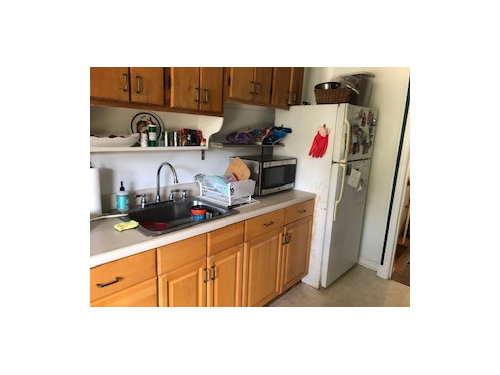
My kitchen is long and somewhat narrow. All the appliances and counter space lines one wall of the room (aka stove, counter, sink, then fridge). My landlord suggested trying to fit a refrigerator and a washing machine in a space that is 31" wide (essentially where the current fridge is and the space left before you hit the wall), which I have a really hard time picturing. I would be willing to give up having a standard sized fridge in order to get laundry in the apartment, but I don't know if you can even stack a fridge on top of a front loading combo (washer and drying-in one) machine? Not sure how else you could make that work.
I have also seen people put combo machines under kitchen counters, but I don't know how much of a hassle removing the cabinets I have and if the counter can even stand alone without them?
Option 2: Linen Closet
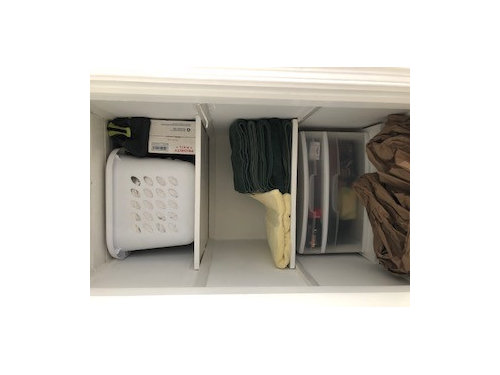
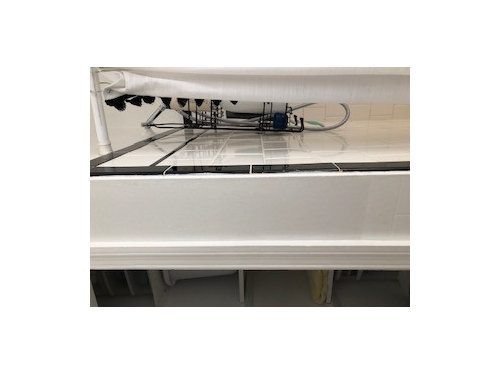
My bathroom has a deep, narrow linen closet that exists right beside the shower (tub style). When I say narrow, it is 24 1/4" wide and that's probably generous. It is about 35" deep and over 80" tall. I've done a bit of research and seen people saying that you need to have room for the machines to move and for the hook ups for water/gas as well as room for the machines to vent.
I've found stacked machines that are 23" wide, would that fit? Is it possible?

Thanks for your advice in advance!
Comments (33)
 6 years ago
I am not qualified in any way to comment on your questions but want to say that the best place, if it is feasible, is to put a washer/dryer as close to where most laundry is generated, that is, the bedroom and bathroom. That way, you don't have far to go to put heavy laundry (sheets, towels, blankets) in and then put it away when done.
Related Professionals
Belleville Kitchen & Bathroom Designers · Davenport Kitchen & Bathroom Designers · Toms River Bathroom Remodelers · Alexandria Bathroom Remodelers · Longview Cabinets & Cabinetry · Kalamazoo Cabinets & Cabinetry · California Bathroom Remodelers · Springfield Kitchen Remodelers · Madison Kitchen Remodelers · Longview Kitchen Remodelers · Florence Interior Designers & Decorators · Chambersburg Interior Designers & Decorators · Marinette Interior Designers & Decorators · Santa Fe Interior Designers & Decorators · New York City Architects & Building Designers 6 years ago
Is the linen closet near a hallway? Perhaps your landlord could close off the linen closet in the bathroom and have the opening on the hallway side. Otherwise, the linen closet in the bathroom, close to where the tub plumbing is, would be less expensive to do. The only other issue is venting the dryer. It needs to vent outside, either through a wall or through the roof.
Katelyn Newell
Original Author6 years agoThank you for you comment Aphaea! Luckily my apartment is less than 500 sq ft, so everything is close haha
Katelyn Newell
Original Author6 years agolast modified: 6 years ago@HALLETT & Co. updated with photos! And I was gonna suggest just ripping out the doorframe and wall around the linen closet and maybe just hanging a curtain, to utilize and give as much space as possible.
Katelyn Newell
Original Author6 years ago@katinparadise the linen closet is in the bathroom and technically near a hallway, but my "hallway" is very small and lines up with the bathroom door. So the linen closet goes deeper than the hallway. If that makes sense.
- 6 years ago
I see by your pictures what you mean. Definitely no room in the kitchen. The linen closet seems the best bet. I pulled out a bathtub in a bathroom off my kitchen and made it a half bath and laundry. My contractor was able to utilize the existing drain and tub plumbing for the washer so perhaps yours could tie in to the existing tub plumbing. As I said, the only other issue is venting for the dryer. Mine had to go into the ceiling, turn a right angle, then go under a drop ceiling about 10 feet out to the side of my house! It was quite disconcerting watching them drill a hole out the side of my brick house to mount the vent!
 6 years ago
How thick is the wall between the closet and the bathtub, not including the tile or wood trim? It looks quite wide in photo #3.
 6 years ago
I like the linen closet idea. If removing the trim and door you may just fit width-wise but what do you need for depth Including hookups? To keep the machines from moving around on the floor you can use a piece of a stall mat (for horses) - might hbe to go out of the city to get one but they’re only $30 ish for a 4x6 piece (cut with sawzall). Also make sure there’s a tub underneath and an easy to reach shut off in case of emergency!
- 6 years agolast modified: 6 years ago
Where ever you decide to place the washer & dryer unit, the best choice requiring the least amount of electrical/plumbing modifications will be the new 24" Miele W1 washer and T1 (anywhere) dryer.
W1 washer requires only 120 volts and can run on cold water only (if a hot water line is not available). The washer will heat water to whatever temp you select. There are 4 models to choose from.
T1 heat pump dryer requires 120 volts and can be placed "anywhere" you want. There are 3 models to choose from.
If you select any other 24" brand washer or dryer you will be faced with:
Installing a hot water line (if not available). The Whirlpool has 1 line and will heat from cold.
220 volt line will be neeeded to supply power for dryer and possibly the washer depending on the brand. Some brands require 220 volts for both washer and dryer or just the dryer only.
IMOP the Miele would be a better choice since this is also a rental and should hold up well. I have owned my Miele washer and dryer since 1993.
Hope this helps..
Washer can be used with cold water only if hot water is not available.
Page 90 (Miele owners manual)
Water intake
You can program 3 options for the water inlet. The water inlet is controlled by the two inlet hoses.
Options:
Cold water
The washing machine will be operated with cold water only. (must be changed in settings)Hot water (default setting)
Hot water is used in the main wash to save energy.
You can heat up your water with cheaper, primary energy sources, e.g., gas, solar power, oil. The temperature must be below 140°F (60°C.) For technical reasons, the washing machine must always be connected to cold water.
- 6 years ago
Compact appliances, typically 24" wide, are not going to fit in that linen closet. They require space on each side. For example, the 24" wide LG WM1388HW requires 1" on each side. The Samsung WW22K6800AW requires the same.
Those Miele appliances mentioned above require 2" on each side when stacked in a closet. They also cost a minimum of $3000; you'd have to have a very generous landlord to pay for those!
 6 years ago
Totally agree with @minimalist183 ! Not sure about it not requiring a hot water line, but the fact that you don't have to vent the Miele is a huge plus, and the dryer actually works, unlike condenser dryers. You'd mentioned running a gas line, which would also be unnecessary with the Miele. It looks more expensive on the sticker, but between installation and energy use, you'll come out way ahead. I did something similar, placing the machines in a space that used to be a linen closet. The only tricky thing with your situation will be locating the hookups where they can be accessed if needed.
I have no idea why you would want a horse mat under the machines--just put them on a sturdy, level surface and they will not move. No need for a pan either, as there is a built-in sump to protect from flooding. I've been quite pleased with my W1 and T1 for nearly a year now.
Good luck!
- 6 years ago
Landlords say all kinds of things that they don’t mean when trying to convince a tenant. And they never put it in writing for the lease document. This goes in that category. They just aren’t going to spend the 3-7K needed to do this correctly. The drainpipes would need redoing larger as adding a washer to either a bath or kitchen exceeds the DFU rating for either pipe size. Then there’s the electrical needed. Plus the machines. Nope. Not happening.
- 6 years ago
Miele Classic W1 Series
WWB020WCS
24 Inch Front Load Washer with HoneyComb Drum, Automatic Load Control, CapDosing, Outerwear Wash Cycle, Sanitize Wash Cycle, Double WaterProof System, Water Protection System, DirectSensor Interface, 12 Wash Cycles, Delayed Start and Countdown Indicator, Child Lock, 2.26 Cu. Ft. Capacity and ENERGY STAR®
Rebates Available Free DeliveryNo reviews yetVideo available
List PriceSavingsAfter Savings
WWB020WCS
Lotus White$1,399.00$200.00$1,199.00
Miele Classic T1 Series
TWB120WP
24 Inch Heat Pump Dryer with PerfectDry, FragranceDos, Honeycomb Drum, EcoDry, Wrinkle-Free, Express Cycle, Intelligent Drum Reversal, Drum Light, DirectSensor, Delayed Start and Countdown Indicator, 12 Dry Cycles, Child Lock, 4.03 cu. ft. Capacity and ENERGY STAR®
Free DeliveryNo reviews yetVideo available
List PriceSavingsAfter Savings
TWB120WP
Lotus White$1,399.00$200.00$1,199.00
Total $2400.00 (Miele's least expensive option) This is their Classic Series  6 years ago
I doubt this W/D install will ever happen. Give her your notice within the required time-frame, saying that the lack of W/D is the reason and see if she re-promises and moves forward. If not you'll know it was never in the cards, bu she might force you out. Be ready to play any games she has in mind.
- 6 years ago
“you don't need a vent for an electric dryer, even if it's not Miele... :)”
Vented dryers are the standard in the US. Unless you want hot, humid air and lint inside your house, you either vent it, or buy a condenser dryer or a heat pump dryer. The vast majority are vented.
 6 years ago
Ask the landlord what her current plans are. You can invite her up for some coffee and a walk through. In many city areas, an apartment with even a small washer and dryer will rent for more than one without.
- 6 years ago
The best place long term for the washer and dryer is the linen closet. W/D’S in kitchens are, IMO, poorly placed. Especially in a small kitchen such as yours.
It looks like it may take some finagling to make one work in your space and real commitment on the part of the landlord. Offer him more rent once it is installed. (After all, you won’t be paying for the laundromat anymore.) And perhaps a lease renewal. It looks like it will be an expensive proposition. Bosch makes a smaller set, and I think the dryer might be condensing one. So no need to vent.
My guess is the landlord wasn’t really committed, though.
- 6 years ago
I lived in a place with a small kitchen, There was a 24" W/D at the end of the cabinet run.
This is a rental. No renter is going to rip down a wall. - 6 years ago
Best bet is for the OP to get a portable washer that hooks up to the sink.
Stashable (sideways) in the linen closet.
I agree w/ the comments above that a w/d install isn't gonna' happen in this apt. The linen closet isn't wide enough. Because of the tub plumbing in the right side wall, very little space can be borrowed from there. Washers require a 2" drain, larger than a bathtub. Then there is the problem w/ venting a dryer & the required electrical service. As well as required side clearance for the appliances. - 6 years ago
I have lived in NYC my whole life, in small apartments. Currently I have a real laundry closet that houses a stacked 24 inch compact set. Yes they have almost zero side clearance and work just fine However, this closet was built when the apartment was created. Otherwise I have used a portable machine similar to the one Ci_lantro linked. It was great.
I am shocked your landlord would allow a machine. Maybe you are paying for the water. Also make sure you have renters insurance for if and probably when the sink drain gets clogged with something or the hose slips out of the sink and you flood the downstair apartment. A flood may never happen but be prepared in case it does.
Katelyn Newell
Original Author6 years ago@mainenell I agree, I think having a W/D in the kitchen isn't the best look long term. I also agree that the chances of this happening is unlikely, but my landlord has come to be on two separate occasions asking about it. I think she is aware how much value it will add to the apartment, but maybe not the money/effort it would take to make it a reality.
Katelyn Newell
Original Author6 years ago@ci_lantro thanks for the recommendation! I've looked at a few websites for best portable machines and never saw this one? I have seen several on Amazon for half the price like the one below:
Is there a significant difference? I would assume the answer is yes, but just curious.
Also, I've heard these machines can't handle a very high load? I also have work clothes that get pretty gross, not sure if these could handle that? Or towels?Katelyn Newell
Original Author6 years ago@hcbm can you tell me more about your experience with a portable washing machine? What do you feel like it could actually handle? I'm worried I'm gonna spend a good chunk of my own cash and then never end up using it.
I am paying for my own gas and electricity, but landlord pays for water.- 6 years ago
I would hook it up to the sink and add my clothes. I could wash everything except, blankets, pillows and mattress pads. I could wash my queen size sheets one sheet and two pillow cases at a time. It easily handled my daily needs of one person. I hung everything up to dry on over the closet door racks and turned on the ceiling fan. Everything but towels and jeans died within 2 hours. Mine was very quiet, but you must stay near by as it empties into the sink and you don't want any accidents.
Honestly, I would get a compact 24" machine (which is what I have now) and install it at the end of the cabinet run of your kitchen if it wide enough. If the landlord really wants to add a washer/dryer she should hire a contractor and just do it. Asking you to figure it out is silly. In NYC you can't just add a washer/dryer anywhere you want. You need permits for plumbing and if you are putting wet over dry you need to meet special codes.
- 6 years agolast modified: 6 years ago
Katelyn Newell --- I’ll add my 2 cents worth on considering your choices as being between a portable washer unit and putting an all-in-one washer-dryer front-load combo (or a compact washer alone) in the linen closet. For you and your landlord to figure out if a compact or combo unit is feasible in your space, you all will need to understand the four issues to be faced when retrofitting laundry into a small space in an old building like the one you live in. These four are: space, water supply, drainage, and power.
The advantage of a portable washer is that you and your landlord don't have to address any of those issues. However, you mostly have to put up with more tradeoffs and limitations than with combo, although the Magic Chef suggested by Ci-lantro seems to have fewer of them and has goodcustomer reviews. Of course, combos have their own (different) tradeoffs and drawbacks. . If you haven’t yet explored washer dryer combos and portables, you might find it helpful to start research with the Wirecutter article “The Best Washer-Dryer Combo (But We Don’t Recommend It)” and also look at their March 2019 discussion of portables which you can find at the end of their article, "The best compact washers and dryers." Also, Consumer Reports has an article about combos with the basic conclusions being that they do a good to very good job in their rather demanding tests of washing functions but are extremely slow and score only fair to poor in CR's tests of drying functions. ETA: on portable washers and dryers, there is a company called Laundry Alternative which makes and sells portable washers and dryers of various sizes and capacities for tiny houses, small apartments, boats, and RVs. An owner of the company frequently participates in the discussions of all kinds of washers over at automaticwasher.org and had a thread last month on some new models. If that sounds interesting here is a link to that automaticwasher thread.
To me, a combo unit, even with its own tradeoffs and drawbacks, would be preferable to a portable unit, especially when dealing with "pretty gross" work clothes as you mentioned. The question with a combo (or a solo compact washer with no dryer like the set-up hcbm has) will be whether you can address all four of the old-building-retrofit issues of space, water, drainage and power.
Based on what I’ve seen done over the years by friends and neighbors with spaces similar to yours, I think you may be able to solve the first three issues for a compact combo without large expense other than the cost of a machine. It's the electrical that might be the intractable issue for a compact washer or combo, as I will explain below.
1. The problem of space: IOW, what you can fit in where. The linen closet looks like the more convenient location for reasons that katinparadise, Aphaea and others have already pointed out. The question is what you can put in there -- you specifically asked if you could fit a 23½” wide compact stack (as opposed to an all-in-one). The answer is you can but there are a couple of considerations to address.
The first consideration with putting a washer-dryer stack in that linen closet is that the back wall would be the only place in your linen closet where there would be room for power and hose connections for a stack. That's what Scottie Mom and Ci-lantro were talking about when they mentioned access to the connections being a problem. Putting them on the back wall is undesirable because you could not reach the connections without the onerous work of pulling the whole stack completely out of the closet.
No such problem with an all-in-one front-load combo unit. Those are the size of a compact washing machine, alone. Easy to mount the connections on the right-hand (bathtub side) wall and they could be placed above the washer where the connections would be easy to reach when you need to do so. FWIW, somebody here in this Forum recently discussed this aspect as a reason she chose a LG all-in-one (model WM3488, IIRC) for her similarly confined laundry space. I remember this being in rococogurl’s long thread about the Bosch 500 compact series washers and dryers, but I haven’t been able to find the thread to provide a link, yet.
The other space consideration may be more apparent than real. This is the concern raised by several posters, including wdccruise, about installation instructions that prescribe an inch or two of clearance on each side for closet installations. Obviously, you don't have that space with a closet that you measured at 24½" wide. However, most compact laundry is designed to be able to go under a counter in the same 24” wide spaces as for a dishwasher, i.e., where there would be next to no side clearance. It turns out that the side clearance usually is not for ventilation but, rather, is prescribed to assure sufficient wiggle room when pushing a heavy and awkward washer-dryer stack into a narrow closet. I recently confirmed this when I called Miele tech support while helping a friend with one of the Miele washers recommended above, and Miele confirmed that one could put their 23½" washer in a 24" wide closet as long as one could mange to insert the stack without damaging the walls or the machines while doing so. Also, it may be worth noting that Electrolux’s instructions for its compact washer, EFLS210, specifically say it is designed for zero side and rear clearance.
(As an aside, If you can live without a dryer and can solve the other installation requirements, the Electrolux compact might be a good choice for a "washer only" option. If interested, you can find some long and favorable discussions of the Electrolux compacts both here and at the automaticwasher.org site. IIRC the lead poster used the screenname of Practigal if you want to search for those posts. Also, IIRC, hcbm has posted --- or maybe somebody else posted in an hcbm thread? --- about ways to successfully run indoor drying when you have a small apartment and only a washing machine . Would be worth looking for hcbm's posts if you decided to go with a "washer only" set up.)
2. Water Connections: Not a problem in that linen closet. Relatively easy and therefore not very expensive to cut a hole in the closet's right-side wall (plaster?), tap into the existing hot and cold supply lines for the tub, mount a recessed box with hook-up fixtures on the closet side of the wall, and then patch and paint to cover the rest of the hole. It can be a basic handyman job unless your city’s codes require the plumbing connections to be done by a licensed plumber. With a combo unit or a washer-only set-up, it would be easy to put the hookups on that right wall slightly above the top of the combo or washer. They would be readily accessible there whenever you needed to get at them.
3. Drainage: The issue here is that old buildings usually have old plumbing and old plumbing does not drain as quickly as current washing machines require. A standard solution for this problem is to drain the washer into a large laundry sink. Basically, a laundry sink acts as a reservoir to hold wash water while it is draining through the small (and therefore slower) old drain pipes. You don't have room to add a laundry sink, but your bathtub can double as one. Indeed, you can drain a portable washer into one (and people do) so why not a compact washer or combo?
BTW, portable washers don't have the same drain problem because they use smaller volumes of water and drain more slowly; the inflow and outflow are low enough that they can be run from and into kitchen sinks and sometimes even bathroom sinks.
For a piped-in drain, washers now drain so quickly that “code” requires 2” as the minimum diameter for standpipe drains, as ci-lantro pointed out. Code also require a plumbing vent stack (a/k/a DWV) within 5 horizontal feet of where the drain pipe from the washer connects to the house drain pipes. . Older plumbing won’t likely have the requisite stack and will be smaller diameter pipe, 1¼” or maybe 1½” diameter. Although some compact washers' and combos' instructions do say that they can drain to 1¼" or 1½"pipes, the actual diameter of very old pipes will likely be even less because of the calcification and scale that builds up in old pipes over the decades. Basically, it probably will not be permissible to cut a laundry drain into the drain-pipe below the bathtub.
But, doubling up the use of bathtub for also serving laundry duties will solve that problem and also will be much less expensive to do. A side benefit could be that the wash and rinse water flows would clean your bathtub without your having to scrub it. ;>)
This is something you will want to check with a local expert as I've read a few posts reporting that there are a few cities whose code enforcers will not permit this. FWIW, I’ve seen the "double-up the use of the bathtub" solution used a couple of times in my town where we have lots of very old, very small houses. The Code enforcement folks signed off on it both times. In their view, they said they saw no direct connection to the sewer lines (there being a gap between the end of the drain hose and the water in the tub so there would be no chance of siphoning wastewater back into the tub or washer). They said no code provision otherwise prohibits doing laundry in bathtubs. (A reprise of the idea that doing this with a regular washing machine is no different than doing it with a portable washer.)
Of course, you won’t want to be running a wash load while bathing, but that seems like a minor inconvenience in a one person apartment. One thing you may want is a lint trap on the end of the drain line or in the bathtub drain hole. You don’t want laundry lint snagging on and plugging up in the rough & scalely old drain pipes. You will want to frequently check and clear the lint trap. If you improvise one with pantyhose over the end of the drain hose (as you might do if you run across the many internet recommendations for doing so), you may need to clean it out with every load. May want to bear that in mind when considering portable washers, as well.
4. Power This might be the intractable issue for your getting a compact washer or compact all-in-one combo in your apartment. You need electric outlets to run your laundry machines. Your photos do not show any outlets in the linen closet. Most compact washers and most all-in-one front load combos run on standard 120v power. Practically speaking, you might be able to run an extension cord to a nearby existing outlet. Do note, however, that many appliance manuals warn against using extension cords with their washers and some cities' codes also forbid it. The big obstacle here is that codes generally require major appliance outlets to be on dedicated circuits. A "dedicated circuit" has one outlet and does not serve other lights, outlets, etc. The electrical in old buildings usually offers only a few circuits in each apartment so additional wiring would have to be run for permanently installed appliances like fridges, washing machines, dishwashsers, and etc. Your old building may or may not have the electrical capacity to add additional 120v circuits and, if it does, it may not be easy to run additional wiring to and inside your apartment with some major renovation work.
Also, with regard to some of the above suggestions for stacking compact washers and their dryers in the linen closet, be aware that most ventless dryers – other than Miele’s --- need a 240v outlet. (There are numbers of "portable" 110v dryers but the y all seem to require venting, as far as I could tell from the last time I researched this). Formost ventless dryers, the obstacle to getting one is that many old urban buildings do not not have the capacity to provide a 240v circuit and, if they do, running the circuits may require tearing into walls to run a 240v circuit to a second floor apartment. A big problem in an occupied building, eh?. Something to be checked out with your building. Maybe the electrical was upgraded in the last decade or so? (Heck, maybe the plumbing was updated, too, so most of the issues might already have been solved. Something else to check out when your landlord considers looking into what might be installed and where.)
As a side note, most compact all-in-one combos run from a single standard 120v outlet. The Miele compact washers and dryers (recommended above) both run on 120v power,. The Mieles, however, have their own complication because the washer and dryer have to be on separate circuits. IIRC, the manuals (and warranties) and the company's published q&a responses are pretty clear that the combined loads for for the washer and dryer will exceed the capacity of single 120v circuits. For your apartment, the difficulty of providing two circuits to the linen closet could put a Miele stack out of consideration even apart from their being so expensive and even apart from the inability to provide accessible hookups for a "stack" in that closet. Of course, the dryer does not have to be stacked, but is there anyplace else to put one in that apartment?
 6 years ago
I don't agree with most of what has been said. The space, IMO, requires a "European" solution. That is, removal of some kitchen cabinets to push washer near sink and a ventless (convection) dryer in another spot. Those would be compact models and they are made to work like that. It usually looks awful but Europeans do it all the time as they don't have space either.
- 6 years agolast modified: 6 years ago
roco -- I do agree that better laundry facilities could be added but with how much renovation and at what cost? Anyway, in Katelyn's elderly building, washer location issue is more a dependent on how one can address the issues of electrical connections and how to drain the washer. Will the electrical and drain issues be any easier to resolve in the kitchen than with the linen closet?
Might well be easier if one could just pop a compact washing machine under the kitchen counter --- or pop in that other "European solution," an all-in- one washer-dryer combo that Katelyn mentioned in the OP --- the way one might be able to do with a dishwasher. Apparently they allow that in European countries.
Not so here, at least IME. There are different rules for connecting washing machines than for dishwashers. Among other things, when a washing machine drain hose is "tee-d" into a sink's drain pipe, the tee has to be at least 24" above the sink's p-trap. Same thing with the p-traps in standpipe drains, too, AFAIK. Plus, there's the issue that washing machine drain lines are usually required to be at least 2" in diameter unless there is some exception. (Might there be an exception for compact washers?) Just the "t" hieght alone seems pretty difficult if not impossible to manage in the space available under old kitchen sinks in old cabinets in old buildings. If there is a way around that in a kitchen, then a kitchen solution might be a good option depending on whether or not one has to provide a dedicated electrical circuit down there.
Otherwise, isn't just going to be a matter of personal preferences about the choice of inconveniences choosing between the kitchen and linen closet for washer or combo location, or the place to run a portable? Might it not be the case that a portable like the 3 cu. ft, Magic Chef would be the most acceptable compromise --- as opposed to optimal solution --- for both Katelyn and her landlord in terms of required work, cost, and function?
- 6 years ago
Katelyn, I have never used a portable washer so no experience. However, the washer that I linked to is a fully automatic one with a 3.0 cu. ft capacity. (My full size Speed Queen top load washer has a 3.2 cu ft. capacity.)
The Best Choice washer that you linked to is not fully automatic. There are two tubs, a wash tub and a tub for spin dry. The wet clothes have to be transferred form one tub to the other to be spun. (I presume that you wash, transfer, spin, transfer back to wash tub to rinse & then transfer again to spin.) Also, it's a tiny washer; the Magic Chef will take a lot larger load. I think it would handle a queen size sheet set & pillow cases w/o any problem but, again, I don't have first hand experience w/ any of the portables.
I also have work clothes that get pretty gross, not sure if these could handle that?
I always soak the super grubbies. W/ my (totally old school & all mechanical) Speed Queen top loader, I let it fill & agitate a couple of minutes to distribute the detergent & stop the machine. Not sure that would be possible w/ the Magic Chef. If not, you could always soak them for a few hours ahead of hooking up the machine. I've read that the enzymes in detergent are active for around 6 hours so it never hurts to give them some time to do their job.








HALLETT & Co.