Software
Houzz Logo Print
lpimen3394

Flooring Help!!

7 years ago
last modified: 7 years ago
Hello Houzz Community!

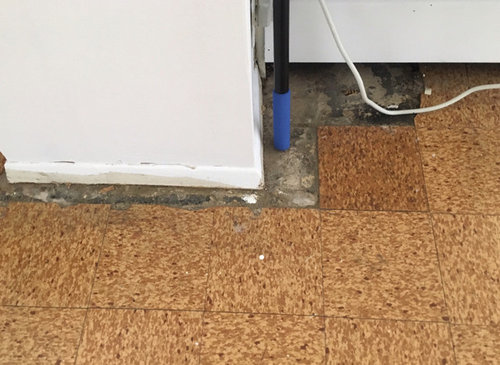
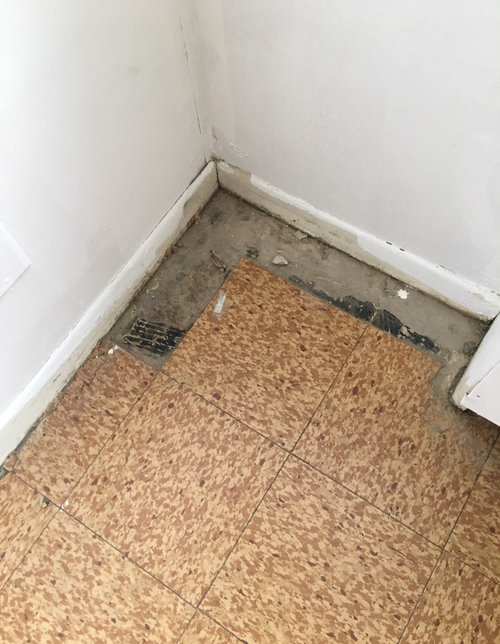
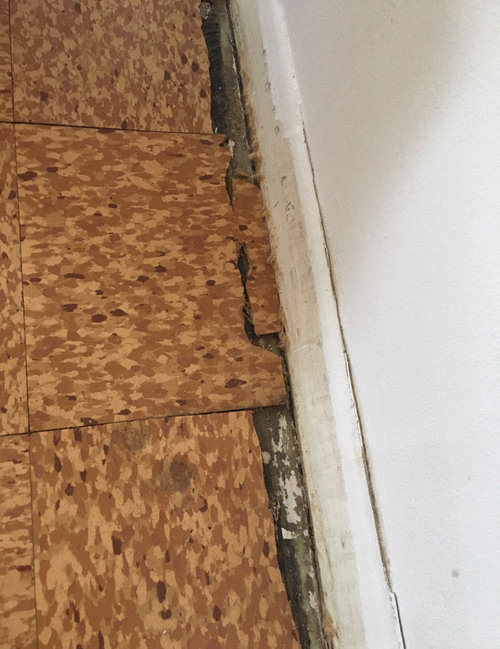
We just bought and apartment and need help with the floors. The previous owners has carpets, and when the superintendent removed them it lifted chunks or whole tiles from the floor. We would like to put down peel and stick vinyl planks, but are not sure what would be the best way to fill these missing sections. Below are some pictures to give you a better idea of the problem. Thank you in advance!


Comments (25)

  • PRO
    7 years ago

    Probably a thin screed of floor leveler or tile mastic. Fussy job. Are the rest of the tiles secure on the floor?

    Lou Pimentel thanked HALLETT & Co.
  • 7 years ago

    Agree with suzyq53. Those look like vintage tiles from the era when tiles routinely contained asbestos fibers. They won't pose a risk if you don't try to remove them. Floor leveling compound will take care of filling in the low spots.

    Lou Pimentel thanked kudzu9
  • 7 years ago

    I would buy a few cheap peel & stick tiles and fill in where the tile is missing. You might want to lift the partial tiles (warm with a cloth between the tile and a clothing iron) so you will have straight edges to work with.


    Or get some all purpose Bondo and level it up with that.

    Lou Pimentel thanked ci_lantro
  • 7 years ago

    What ci_lantro said. That's a better solution than floor leveler, which has no resistance to flexing or pressure and can crack. Those areas as too big for leveler. Tile will be sturdier.


    Lou Pimentel thanked tatts
  • 7 years ago

    Floor leveler will work just fine. I've used it in applications like this with no problems.

  • PRO
    7 years ago

    Floor leveler is just fine in those spots and the best solution you might want to do it in a couple of layers instaed of all at once . I agree do not disturb those tiles at all. I think though I would look at floating floor material if possible

    Lou Pimentel thanked Patricia Colwell Consulting
  • 7 years ago

    HALLETTE, the tiles are fine everywhere else. All the damage is along the parameter of the rooms. Thanks for the leveler suggestion.


    Suzyq53, I do believe the tiles have asbestos, so we are trying to do our best to not disturb anything. Do you think it would be safe to vacuum the crumbly bits? We are not fans of the baseboards, but where thinking of just leaving them. However, I do think it would look better, and also secure the new tiles for shifting if we put new baseboards on top of the new tiles.


    Kudzu9, Thanks for the suggestion. We are trying to not mess with the asbestos, so we will no remove them. There are a few spots that the mastic has weakened and when you step on the tile and light your foot it makes like a clock sound. Sounds like the adhesive sticks and then unsticks. Any suggestions on how to put down some adhesive without stirring up asbestos?

  • 7 years ago

    The baseboards look pretty rough. I would replace them. Installing replacement base after the new floor is laid will eliminate the need for shoe mould IF you get someone capable of scribing the baseboard to the floor. (Will need base that is thick enough to cover the required gap between the new flooring and the wall. Or trim the sheet rock at the base of the wall to provide space for expansion.)

    Lou Pimentel thanked ci_lantro
  • 7 years ago

    Ci_lantro, that was my 1st thought but then I was worried about trying to match the height of the old tiles. Thanks for the suggestions. I do like the idea of working with straight edges. Do you think the iron trick will cause any issues with the asbestos?


    Tatts, thank you!


    Patricia, I’ll make sure to apply it in a few coats. Thank you for that suggestions. I’ll also check out floating floor materials.


  • 7 years ago

    So if those are 9"x9" tiles installed before the '80s (your's look more like the 1950s) the tiles do contain asbestos and but so does the adhesive. The crumbly bits, if they are adhesive remnants, are more likely to go airborne than dust from the tiles especially if you scrape it. Likely the majority of adhesive particles went airborne when the carpet was removed. You could carefully vaccuum up the bits with a vaccuum that has a bag and hepa filter (not a bagless or shop vac) so that the particles are trapped. That vacuum bag and probably the filter would then be considered hazardous waste which is supposed to be disposed of at a special facility.


    One way to fill the places with no tile is to buy some new vinyl tiles that are the same thickness as the old ones and cut them to fit the gaps and glue them down before you do the peel and stick. A floating floor that clicks together is probably going to be the best solution overall but there will be an issue with either undercutting the existing baseboard, replacing all the baseboard or adding a quarter round. Either way you need to be sure that the the added floor thickness will not affect any door bottom clearances.

    Lou Pimentel thanked suzyq53
  • 7 years ago

    Lou-

    Asbestos is well-bound in such tiles, and any fibers from breakage would likely have floated away by now. If you want to clean up loose little bits, use wet paper towels. Use leveling compound and a straight-edge trowel to even the floor where needed; that's not much height difference and can be done in one go.


    The tiles that are popping is a trickier issue. Sometimes heat from an iron on top of the tile can soften the glue a bit and you can put a weight on it, like a gallon can of paint, to hold it down while it hardens. I doubt you can get this to work on all of them, though. However, if you install a floating floor, those tiles shouldn't be a problem.


    Lastly, remove and toss the baseboard. Your new floor needs an expansion gap all around the perimeter and the new molding will hide that.

    Lou Pimentel thanked kudzu9
  • 7 years ago

    You guys think I need an expansion gap even though I’m just doing peel and stick vinyl plank tiles? Thank you all for making so many helpful suggestions. My wife and I greatly appreciate it.

  • 7 years ago

    Lou-

    Sorry...I had it in my head that you would be putting in a different kind of plank floor that might need expansion room. I doubt that an expansion gap is necessary with vinyl plank. However, the reality is that it's difficult to just lay such tiles down and have it come out perfectly around the edges if you don't remove the molding first, tile close to the wall, and then replace the molding. It will leave you with a nice, crisp edge that will look much better.

    Lou Pimentel thanked kudzu9
  • 7 years ago

    Do you think the iron trick will cause any issues with the asbestos?


    If it works, the tile and mastic should be soft and peel up more or less intact. Minuscule risk, IMO. And sure won't be releasing as many fibers as the broken tile did when the carpet strips got pulled up.


    You could try covering the tile with masking tape before applying the cloth & iron if it makes you feel any better. But the danger is mainly from friable material & it isn't like you are going to be pulverizing the tile to dust. Nor are you removing hundreds of square feet of the stuff, either.


    Lou Pimentel thanked ci_lantro
  • 7 years ago

    ci-lantro is right about using an iron on the tile. Even though it likely has asbestos in it, you're only going to release fibers if the tile is broken, or abraded, or sanded. However, you don't want to be using the iron directly on the adhesive underneath as that often had asbestos in it too, and when you apply high heat to it, you can vaporize the mastic and possibly release fibers.

    Lou Pimentel thanked kudzu9
  • 7 years ago

    Go to your local big box store and find Jif-Set or similar cheap floor leveling compound. Don't buy it!

    Look for the more expensive product that is Portland cement based compound. You won't need a lot and the product is (relatively) easy to use. Check the instructions to make sure you can use it for shallow spots as you don't want something that needs a quarter inch of thickness.

    I used a quick drying product from Uzin and they weren't kidding! You will have to work fast or the batch will set up and you will have to toss it out. I mixed small batches by weight as there wasn't a chance I could work fast enough myself. Be sure to stir the powder well before adding the water. When my floor guy was doing the major work, he was able to work a large area in just a couple minutes, probably at least 10 times faster than I could ever hope to manage.

    Lou Pimentel thanked Lyndee Lee
  • 7 years ago

    Thanks gang! I think I will leave the couple of tiles hat click alone. I rather not take any risks with asbestos. Do you guys think resin would work since it’s self leveling?


    Lyndee, I will check out the Uzin product line. Thanks.

  • 7 years ago

    Not all old tiles contain asbestos. It was used more in the higher-end tiles, so they could advertise them as fireproof. Yours may be fine. Only a test will tell you for sure.

    The remaining black cutback (mastic adhesive) is probably more likely to contain asbestos fibers.

    Think hard about doing that test, because once you know that your house contains asbestos, you may have to disclose that fact when you sell it. You can no longer legitimately and honestly sign the statement that says "I don't know."

    Honestly, it's easier and quite safe to just leave what you have there alone, no tests no worries, and cover it up.

    I personally hate floor leveler and would probably use filler tiles of similar thickness stuck down with fresh mastic. I'm not a pro, though, so take my words with the proverbial grain of salt.

  • 7 years ago

    It's true that you can only tell if vinyl tiles have asbestos if you test them (about $100 at a certified test lab). But it's not true that they were only found in expensive tiles. During the several decades when the manufacturers were mixing in asbestos, it was incredibly common and found in almost any vinyl tiles. It was done because the fibers reinforced the vinyl and made them wear better.


    I agree about the fact that you have to disclose if you test them and they come back positive, and that they can be covered over with no worries.


    I'm not sure why several people are concerned about floor leveler, because it's easy to apply and is intended for precisely such purposes.

    Lou Pimentel thanked kudzu9
  • 7 years ago

    Sorry i didnt read all your comments but just in case nobody advised you... You can take a small sample of your floor to your local recycle station and they can test your floor for asbetos.. There is a good chance they dont- i have some im my house and they dont and they are from the 50s. l

  • 7 years ago

    jannnnn-

    Glad you didn't have asbestos in your flooring. However, your statement that there's a good chance that somebody's else's old tiles don't have it is questionable. And the prevalence of asbestos content in old vinyl tiles is higher than you believe. I say this as someone who worked if asbestos abatement and regulation for over 15 years.

  • 7 years ago

    Kudzu9, is there a brand that you’ve had good experience with?

  • 7 years ago

    Lou-

    Sorry, I don't. My background is in dealing with old, hazardous materials, rather than new replacements.

    Lou Pimentel thanked kudzu9
  • 7 years ago

    Ah, no problem. I’ll do some research. Thanks again, for all of your advice, and time.

Sponsored
Urban Upkeep LLC
Average rating: 5 out of 5 stars6 Reviews
Columbus High Quality Painting Expert