Software
Houzz Logo Print
webuser_442936632

Is it cheaper to dig out a foundation or use pylons?

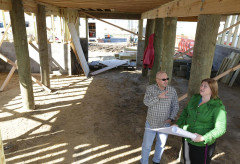
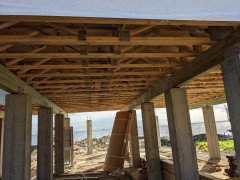
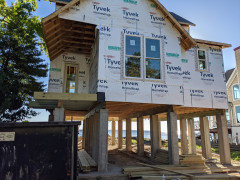
Hello everyone, I am building a house on a very steep lot on top of a mountain. It is at least a 40% grade (there are houses in the area and a good county road). I am trying to figure out what type of foundation to use... as I understand it/have been ballpark quoted excavating would cost upwards of $50k then a concrete basement/foundation would cost another $50k. Would building the house using pylons as in the attached photo be much cheaper? Just imagine the house in the house in the picture is twice as wide and two stories. I don't need a basement for any reason. Thank you very much!


Comments (21)

  • 6 years ago
    last modified: 6 years ago

    I am not a pro, but I'd like to think that a pier-and-beam foundation (pylons, I guess? lol) would be better. I don't care for the look of a huge gray concrete block under a house, especially on a mountain; piers are more attractive.

    Unfortunately, in my experience, if it's "attractive" to me, it's also "more expensive," lol. Hope that isn't the case here! There are a few architects and builders here on the forums; hopefully they'll chime in. :-)

    [I mostly wanted to subscribe to your thread, lol. Sorry I wasn't helpful!]

    Kendrick Matthews thanked One Devoted Dame
  • 6 years ago

    Is this going to be year-round use? What climate? You'll save money on foundation but you'll have to insulate, keep pipes from freezing, etc. If you plan it right, keep plumbing over an area with conventional foundation.

    Kendrick Matthews thanked Seabornman
  • 6 years ago

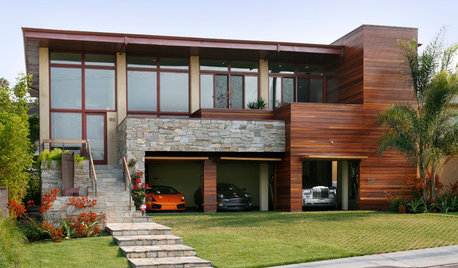
    Thanks for all the feedback everyone. That CA property looks about the same as what I am going for. It will be for year-round use, residential build in Park City, UT so it will see a lot of snow as well.

  • 6 years ago
    last modified: 6 years ago

    I used piers and the beavers kept eating the plywood. I would use square steel tube posts which might be what is shown in the photo. The concrete piers don't need to be that large.

    Is there really a Harry Bosch house?

    Kendrick Matthews thanked User
  • 6 years ago
    last modified: 6 years ago

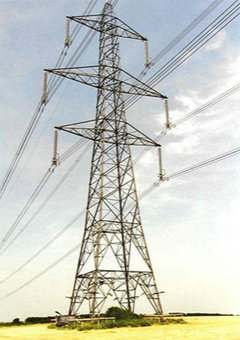
    Incidentally, a "pylon" is an above ground obelisk-like tapered tower originating from the Greek word for a monumental gateway. It is also used to describe bridge towers, power transmission towers or parking cones.

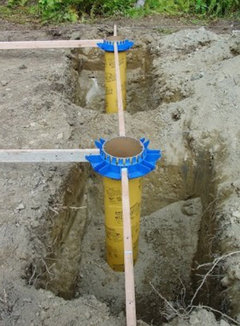
    What you are talking about are usually below ground and commonly called "concrete piers" which are often poured in cylindrical paper forms (Sonotube, Sakrete FormTube, Plumbatube, etc) on a separate or integral footing.

    Plyons


    Concrete Piers


    Kendrick Matthews thanked User
  • 6 years ago

    We call them pilings which can support piers, or houses...


    Kendrick Matthews thanked ksc36
  • 6 years ago

    I'm getting all sidetracked by the Harry Bosch house as well!

  • PRO
    6 years ago
    last modified: 6 years ago

    There are many local or site specific or related cost factors that will influence the cost you will realize. Ask your builder for the most reliable answer to your question.

    Kendrick Matthews thanked Mark Bischak, Architect
  • 6 years ago
    last modified: 6 years ago

    Is there really a Harry Bosch house?

    Yes, indeed!

    That's the house in the series--1860 Blue Heights Drive, Hollywood Hills West-- as close as possible to Harry's imagined house in the novels.

    When I lived in TO proper, I'd often spot the houses used in TV/films. One was really easy: a line of dialogue mentioned the address. No wonder the kitchen looked vaguely familiar: it was in a five-plex we owned!

  • 6 years ago

    Pilings are driven into unstable or poor bearing capacity soil by a very large machine so they are not a good option for this property.

    Kendrick Matthews thanked User
  • 6 years ago

    We have helical piles under our home. It was our cottage and chose to retire there. Had an addition built and the helical pilings were installed for our whole home. They are engineered for each one to ensure the correct weight load. The problems with previous concrete piles was the frost heaving creating issues. The helical piles haven’t produced any problems with the snow and frost. We live in northern Ontario. We have heat tracing and insulation on our pipes. However, now thinking that heat tracing inside the drainage pipes might be better. We also have Viessman boiler system so have bundled some of the flooring hot water lines with the drainage pipes.

    Kendrick Matthews thanked april
  • 6 years ago

    Our cottages were anchored directly to the Canadian Shield, so no boring was necessary. But nearby, one cottager insisted on a basement, which required explosives.


    As MB notes above, the real answer is always situation specific

  • 6 years ago

    Neither is all that cheap.

  • 6 years ago

    Wow, thanks everyone. I am going to meet with an architect and an engineer to review the property. Unfortunately, it is covered in about 8 feet of snow at the moment. I definitely learned a lot from you all.

  • 6 years ago

    If the community has a HOA, there will likely be rules about what style you can and cannot build, and the County certainly does too - Park City is affected by the Wasatch Fault. I think you can certainly discuss this with an architect and engineer without them physically walking the property at this time. It's going to be a while before we see the ground again :)

    Kendrick Matthews thanked skivista
  • 5 years ago

    Did you ever get a price difference, I am looking at building a house on a steep slope in Morgan Utah and am curious is the price savings is significant

  • 5 years ago

    We're building a house in the mountains. This was our experience in the pier v. concrete footing debate. My sense is that depth to bedrock matters a lot. The deeper the soil before you get to bedrock, the more expensive piers will be.

  • 5 years ago

    We went with concrete columns/piers with steel reinforcement on our beach build. We had to elevate, our options were limited to concrete (square or round), wood piles, or CMU columns filled with concrete. We're happy with our choice, but this wasn't cheap. We had to get a soil engineer sample the lot and he had us drive twenty-eight 30 foot long steel helical piles into the ground for our footers to sit on. Hopefully you won't have that issue!


  • PRO
    4 years ago
    last modified: 4 years ago

    The problem with the sinking foundation seems pretty serious. Before making a decision, make sure you discuss this matter with a construction engineer. Firstly, analyze the plan of the house with him, the actual size, depth, and according to these data to choose if caissons or helical piers would be more suitable. From my own experience, I can tell you that this is the best solution. This year we turned to some professional builders for home foundation structural repair who chose all the materials according to the parameters of our house.

  • 4 years ago

    "The problem with the sinking foundation seems pretty serious. Before making a decision, make sure you discuss this matter with a construction engineer."


    Being the post is a year old probably moot at this point.................