Software
Houzz Logo Print
amaniago

Small green bugs

6 years ago

I found one of these small bugs on my jade. The plant has some shriveled leaves, but that may be due to lack of water. I am watering less due to winter and it is time for it to be watered

Comments (17)

  • 6 years ago

    Photo may help...there are many green bugs. Some are beneficial, some not. May not be able to ID it, but without photo it is almost impossible.

  • 6 years ago

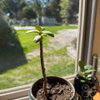
    the photos


  • 6 years ago

    Looks like an aphid!

  • 6 years ago

    Give them a blast of flyspray.

  • 6 years ago
    last modified: 6 years ago

    Just read about flyspray - I do no have personal experience with it and had to look it up. A very interesting fact (and good to know) if it is true:

    Fly spray is dangerous to pets as well as fish and should be used with caution.

    In the United States, fly sprays often contain the powerful insect toxin dichlorvos which is often targeted by environmental groups as a carcinogenic compound.

    Usually, blast of water is recommended to get rid of aphids, but that may be difficult for succulents. You could cover potting mix with plastic if worried about making it too wet. OTH, if mix is well draining, it may not be big problem.

  • 6 years ago

    . Wasn't

  • 6 years ago

    Aphids can easily be controlled on houseplants by squishing with your fingers. A spray of 1:1 isopropyl alcohol to water can be very effective for aphids and is safe for jade plants.

    As some of us know, jade is very sensitive to many control measures....soaps, horticultural oils, and most other pesticides. s g's recommendation was terrible on many levels.

  • 6 years ago

    I usually just give aphids a light massage to keep them under control...

    I once read, and it does seem to happen, that aphids happen more when plants are given more soluble fertiliser. Since plants aren't photosynthesising as much in winter due to less light, it's good to stop fertilising entirely from autumn until early spring.

  • 6 years ago
    last modified: 6 years ago

    Really Rhizo? It's what I do with my houseplants and Sedum rowleyanus. Don't knock it if you haven't tried it. Bear in mind that I don't live in the states so our spray may be different in makeup from yours. A bad infestation cannot be controlled by 'squishing' them all.

  • 6 years ago

    @rhizo_1 (North AL) zone 7 You mention using isopropyl alcohol to water 1:1, but you don't mention the percentage of alcohol to start. You can buy it as 99%, 70%, 50%, 30%, I'm not sure if it goes any lower. I have damaged jades with alcohol, but I don't remember the percentage it was. I can't imagine 15% alcohol having much impact on plant or bug.

  • 6 years ago
    last modified: 6 years ago

    Cullen

    You didn't ask me - but I mentioned that I use ru full strength. It is 99%, here is photo:


    I have lots of jades and maybe it is just luck, but I never had damage from using rubbing alcohol full strength. I had mealy bugs on few occasions on Crosby's compact, but have been lucky enough to spot them early and was able to eliminate them. I do not remember ever having them on 'common' green jade, or Tricolor, or Hummel's Sunset, or Skinny fingers or few others I have (so no wonder I can't speak for damage! - but had them n Crosby's...). I have more than 1 pot of each (too many!); growing them for quite a few years.

    ETA:

    sg

    I have no idea what country you live in, but toxin dichlorvos has been banned in EU (info from wikipedia)

  • 6 years ago

    Rina I am in Australasia. The flyspray I use currently does not have the dichlorvos as an ingredient. I am sure you can purchase a variety without a nasty ingredient ito human or animal health.

  • 6 years ago

    I should have said "rubbing alcohol", which is 70% isopropyl.

    s g, harsher pesticides are not necessary for the control of aphids on jade plants or any other houseplant. Even outdoor in the garden areas, a strong spray of plain water controls this pest.

    You don't mention what the active ingredient is in your fly spray. Please do. Is it something we want inside our home?

    Jade plants are highly susceptible to tissue damage when most products are used, including benign soaps, hort. oils, and others. Many succulents are like that as well as most terrestrial cacti. The leaves and stems will actually burn.

    Routine sprays of the rubbing alcohol:water will control spider mites, aphids, mealy bugs, scale crawlers, thrips and probably more. The solution is safe for plant tissues except for delicate flowers (of course), yet harsh on soft bodied insects.


  • 6 years ago
    last modified: 6 years ago

    rhizo - flyspray was simply a suggestion which may be used especially if it is available in the house already which rubbing alcohol most certainly isn't in most households. I have used a variety of contact and systemic insecticides over the years and have not found them to damage any of the plants (and I do have jades). I do try them on a few plants initially to confirm they are not going to damage the plants before continuing to use them on the rest of my collection.

    And why do you assume that flyspray contains 'harsh' insecticides when you don't know the ingredients. Some of them contain pyrethrums which are natural plant extracts.

  • 6 years ago
    last modified: 6 years ago

    From this site:

    Pyrethrum is highly toxic to most insects. This means that it’s effective against the pests, but it’s also deadly to the beneficial insects that pollinate your vegetables and help out by eating those pests. Like any powerful compound, pyrethrum should be used only for spot-spraying heavily infested plants. You shouldn’t be dousing the entire garden with it.

    Pyrethrum is touted as being “non-toxic.” Truth is, pyrethrum isn’t harmless, but it is one of the least toxic pesticides out there. It’s toxic to fish and amphibians, though, so it should be kept out of storm drains and waterways.

    Pure pyrethrum is hard to find. In fact, I couldn’t find it at any of my local garden centers. Pyrethrum is very effective at “knock-down,” which means flying insects will hit the dirt when sprayed with it. However, if the dosage isn’t high enough, they can revive. For this reason, pyrethrum may be mixed with other ingredients to increase its effectiveness, and some of those ingredients might be neither organic nor nontoxic. Pyrethrins are often mixed with piperonyl butoxide (PBO), a toxic, non-organic chemical to make it more potent. It’s also often mixed with other organic ingredients such as neem oil or insecticidal soap. Read labels to make sure you’re getting 100% organic ingredients.

    Benefits: Pyrethrins are biodegradable and break down quickly in sunlight (within a few days). They don’t persist in the soil or on your veggies, which is one of the reasons they’re considered relatively safe to use around food crops.

  • 6 years ago

    I'd bet that most households have a bottle of rubbing alcohol in the bathroom. It's an extremely useful disinfectant.

    Pyrethrins, unfortunately should never be used in households where there are young children, elderly or infirm adults, anyone with a compromised immune system, anyone taking medications that may affect liver function, even temporarily, or cats, birds, or fish. Pregnant or nursing females should never be exposed, either.

  • 6 years ago
    last modified: 6 years ago

    If you had a can of flyspray in the house already, then you are using it without the issues of young, old, ill people, pets or fish. No big deal to use a small spray on aphids. If you use it in the house with your plants, then they have already been in contact with it and not been harmed.If you don't know about flyspray, then it is silly to look up some of the nastier chemicals used and use that info against trying it.

    In my area, flyspray is commonly used in households without mass killing or injuring of people or pets. Rubbing alcohol is not. We use commercial disinfectants if we need that action. Most people would have no knowledge of what rubbing alcohol is or what it is used for. Thus my suggestion of using flyspray if that is what you already have. Not spraying it around the garden on flowering plants. Just a little spray on a plant which is probably not flowering.

    Here is what I found about rubbing alcohol...

    It sounds like lethal stuff! Many flysprays are just as harmless but the safety info you can dig up very quickly make them seem a lot worse than they are when used in small amounts and sensibly. Let's keep things in perspective. (and I see the bad info on flyspray was also taken from Wikipedia so it must be true!)

    Safety

    Isopropyl alcohol vapor is denser than air and is flammable, with a flammability range of between 2 and 12.7% in air. It should be kept away from heat and open flame.[25] Distillation of isopropyl alcohol over magnesium has been reported to form peroxides, which may explode upon concentration.[26][27] Isopropyl alcohol is a skin irritant.[25][28][29] Wearing protective gloves is recommended.

    Toxicology

    Isopropyl alcohol and its metabolite, acetone, act as central nervous system (CNS) depressants.[30] Poisoning can occur from ingestion, inhalation, or skin absorption. Symptoms of isopropyl alcohol poisoning include flushing, headache, dizziness, CNS depression, nausea, vomiting, anesthesia, hypothermia, low blood pressure, shock, respiratory depression, and coma.[30] Overdoses may cause a fruity odor on the breath as a result of its metabolism to acetone.[31] Isopropyl alcohol does not cause an anion gap acidosis but it produces an osmolal gap between the calculated and measured osmolalities of serum, as do the other alcohols.[30]

    Isopropyl alcohol is oxidized to form acetone by alcohol dehydrogenase in the liver,[30] and has a biological half-life in humans between 2.5 and 8.0 hours.[30] Unlike methanol or ethylene glycol poisoning, the metabolites of isopropyl alcohol are considerably less toxic, and treatment is largely supportive. Furthermore, there is no indication for the use of fomepizole, an alcohol dehydrogenase inhibitor, unless co-ingestion with methanol or ethylene glycol is suspected.