Software
Houzz Logo Print
tairong_chang

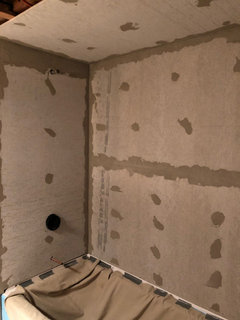
Mesh tape showing after thinset was applied?

6 years ago
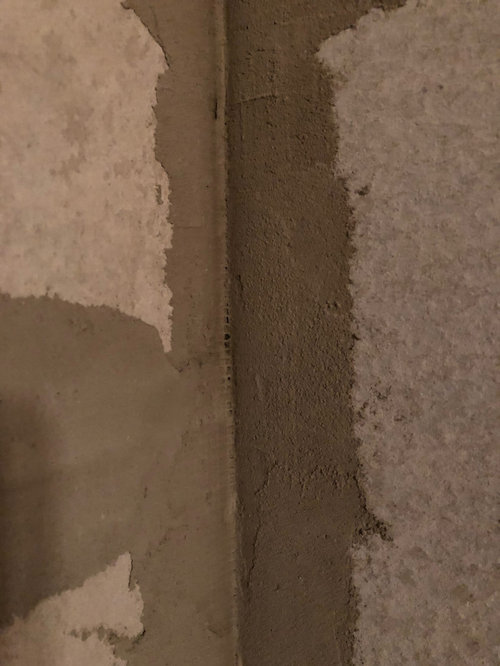
Is it okay that you can see the mesh tape after the thinset was applied? I’m planning on doing a light sanding everywhere I applied thinset, and then I’m going to waterproof with AquaDefense. (Also I’m not sure how smooth and flat everything needs to be for tiling? 4x12 tiles.)

Comments (31)

  • 6 years ago

    Modified thinset mortar is what I applied.

  • 6 years ago

    It’s cement board for a bathroom shower area

  • PRO
    6 years ago

    if it's in a shower, I'm assuming you are going to use something similar to red guard?

  • PRO
    6 years ago

    totally didn't finish reading.. sorry lol, It should be fine just be sure the membrane covers and fills in

  • PRO
    6 years ago

    as for flat and level, I usually make sure my substrate is flat and level as possible with any tile or you will have "lippage"

  • 6 years ago

    In your opinion is Red Gard type product really necessary? Just wondering how much water can actually make it through grout... the tiles are glazed - so no water is going through that...

  • 6 years ago

    Grout is NOT waterproof. You seem to have some very incorrect ideas about waterproofing, tiles and tiling.

  • 6 years ago

    Grout and tile are not waterproof and yes water can get through it. I hope you read up on how to properly waterproof a shower if you're DIY.

  • 6 years ago

    "In your opinion is Red Gard type product really necessary?"

    Absolutely!

  • 6 years ago

    If you don't think it's necessary, then why are you using it? (AquaDefense is a RedGard type product) It's necessary UNLESS there is a proper barrier behind the cement board. If there is, then you do not want to use a topical membrane. One or the other.

  • PRO
    6 years ago

    Yes red guard is a great product.
    sorry for the late reply.

    I however use Wedi or Schluter but have used red guard. Be sure to apply it by the directions and you will be ok.

    oh and yes grout and tile is not waterproof but that's not what you are asking for those who mentioned that.

  • PRO
    6 years ago

    you definitely want to waterproof before tile and no putting something behind the cement board is not accurate. A LONG time ago you could get by with that but no longer. If water gets behind the grout and tile which it will, it will also go behind the cement board.. at that point you are saying a plastic barrier will keep the water in... once you screw the board to the stud, your plastic is shot.

  • 6 years ago

    Ok thank you for your thoughts and direction. I appreciate it. It’s a tub install - so I just have walls to cover. *worried my tiler has other thoughts on the Aqua Defense since he mentioned using a mastic. I’m going to call and confirm he’s ok with installing tile on top of the waterproof membrane...

  • PRO
    6 years ago

    Is it a shower/tub?

  • 6 years ago

    Yes - alcove rub install. We are prepping - and the tiler is just coming in to tile.

  • 6 years ago

    I guess that was supposed to say “tub” lol.

  • PRO
    6 years ago

    he definitely needs to waterproof the walls due to the shower head

  • PRO
    6 years ago

    mastic is okay but if hot water gets on the mastic it has a tendency to fail. I would use redguard if that's the route you choose followed by a thinset rated for water type 1 (if it where up to me , I would actually cover that cement board in Schluter fabric 😁)

  • 6 years ago

    So Schluter fabric instead of Aqua Defense (Mapei product)? I haven’t looked that up. I will look into that install...

  • PRO
    6 years ago
    last modified: 6 years ago

    Note - The wall board should have been shimmed out so it passes in front of the tub flange. Not end on top. Fasteners 8" max. spacing. Talk of mastic and membranes has potential for disaster. Hold off on the questions until you actually know what methods and products the installer plans on using. If he/she is leaving product decisions up to you then I can confidently say you've hired the wrong person. A Tile Setter not doing their own wall board and prep raises concerns.

    323 - Yes a barrier behind cement board has been a approved method for decades and still is today. Not stating it's my choice but it is completely acceptable. Many will not use sheet membranes that have seams bonded with mortar due to capillary action. Yet it is a accepted method. A system that relies 100% on caulk / sealant. Brings new meaning to just throw more caulk on it. All approved methods when done properly.


  • PRO
    6 years ago
    last modified: 6 years ago

    absolutely NO mastic in tub area, as ctec stated , do understand the risk you are taking with the flange gap. Youll know you DONT have a real tiler when they show up to work on your prepped walls and dont mention the flange detail. :):)

  • 6 years ago

    There are a couple of install methods. My boards are shimmed out so that the board hangs “not flush” with the tub flange but slightly forward. My boards are also 1/8” above the flange (where I will apply silicon after waterproofing). This method I did get from a few sources- so please don’t assume I didn’t do my research. There is a lot of information on the internet - there is never just one way to do it.

  • PRO
    6 years ago

    TC - Not making assumptions. The internet and you-tube are a minefield of misinformation.

    The wallboard detail I quote is listed by the TCNA (Tile Council Of North America) There is no approved detail for board above flange. Sometimes there is just one way to do it properly.

  • PRO
    6 years ago
    last modified: 6 years ago

    https://www.diytileguy.com/tile-tub-flange-gap/


    Jims got a good cowboy method for dealing with this less than ideal scenario.

  • 6 years ago

    Actually I saw that link before and was going for the “caulk the gap” method... he wasn’t the only site that showed that... so I can only assume that some people do it this way.

  • PRO
    6 years ago
    last modified: 6 years ago

    TCNA Method B412-19 is the approved method for your project.

    I'll try to simplify.

    We can all agree the tub to wallboard joint is a movement joint. If agreed we can move to the next statement which is fact. All movement joints must be honored and continue through the tile assembly. You can not span and fasten to two surfaces that are independent of each other.

    Thus the reason for the wallboard in front of the flange. A bead of 100% silicone sealant between the wall board and tub DECK & tile to deck.


  • 6 years ago

    Can’t wait to see the After posts on this DIY project, wondering why there’s water getting through

  • 6 years ago
    last modified: 6 years ago

    Can’t wait to see the After posts on this DIY project, wondering why there’s water getting through

    You delight in seeing a part of someone’s home destroyed, @Linda Dornan?

  • 6 years ago

    @Sammy .. No, of course not.. I apologize if that’s how it came across. This particular poster seems reluctant to listen to expert advice and most likely will not get the best results because of it. That was my point, but I agree that I could have stated it in a nicer way.

  • PRO
    6 years ago
    last modified: 6 years ago

    Cement board for a tub wrap or shower is still a popular way to go however it is not water-proof. Topical organic, cement or fabric membrane materials providing a positive water-proof tile assembly are much better and becoming the industry norm; just a matter of time. This being said, when using a "liquid" applied water-proof, the depth of material applied, is paramount. Each manufacturer spells out how many millimeters and coats are to be applied to get the desired result. More is not better! As with all things tile install related, following the manufacturer's directions is key. RedGard or Aqua Defense are good if used properly for organics; Ardex 8+9 for cement based. Schluter Kerdi, Ardex, Wedi or Laticrete fabric membrane products are better IMO. Please be certain that your installer is providing you either a cbu (cementitious backer unit) tile assembly or a water-proof assembly. That way you have a better chance of having reasonable expectations and less of a chance of buyer's remorse. Also inquire about warranty both from your installer and available manufacturer's warranties. It can take several years for a shower failure to show itself. These days there are a lot of installers who have no formal instruction. IMHO these other pros above have provided you correct information.