

Rubio Monocoat Installation Issue - Next Steps?
Yesterday, we had our hardwood floors finished with Rubio Monocoat. The floors look ok, but they did not follow manufacturer‘s instructions. Rubio’s instructions are pretty precise about how to remove the excess oil. You are supposed to work in 50 to 100 foot sections, buff off excess oil within 10 to 15 minutes of application and change the buffing pad between each section. They went from 1,200 square feet of bare wood at 3:00 p.m. to packing everything up because the floor was finished by 5:00 p.m. It seems physically impossible to get all of that done in 2 hours. Plus, a little excess oil still comes off on a clean white cloth 20 hours after the application was finished.
I was willing to pay them to sand, hand scrape, and refinish the floors again, but they indicated that they would do it the exact same way. So that is not an awesome option. At this point, I need to decide between trying to live with it for now or trying to get another flooring vendor. How bad is it if they left a little bit of excess oil?
Please note, I did not pick the cheapest vendor, nor did I negotiate on price. They are a well-respected hardwood refinisher/installer with excellent reviews and references. With respect to Covid-19, we have rented another house while this is being done, so we are not exposed to the workers. While we are working remotely and taking Covid-19 precautions, lots of our state is not super into science, so most contractors/businesses are still open. A handful of cities have closed restaurants and gyms.
Comments (30)

smit2380
Original Author6 years agoI can get photos after work. Rubio Monocoat 2C does not fully cure for 6 days. You can walk on it in dry socks after 8 hours, but they recommend not walking on it for 24-36 hours. The house has HVAC on, and we specifically asked that the vendor set the HVAC to whatever would be optimal for the floors since we would not be able to reach the thermostats without walking on the floors.
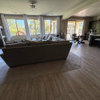
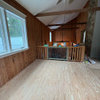
They installed, sanded, handscraped, and finished 500 square feet of flooring and plywood plus sanded, handscraped, and refinished the other 700 square feet of flooring all in about 8 hours. As you can imagine, none of it looks amazing given the rushed job. The floors are handscraped, so it is hard to see sanding swirls. These are the other flaws that I see:- There are a few small gaps,
- The finish is a little blotchy. (This does not particularly bother me from an appearance standpoint.)
- In some of the depressions from the handscraping, there is pooled oil.
- In some of the depressions, there is zero finish. It is just raw wood. I can touch up each of these spots individually; that is the benefit of the finish.
Rubio's instructions emphasize how important it is to get off the excess oil and states that it is a problem. I have not yet reached out to them yet to figure out how big a problem it is (lots of conference calls today). I plan to reach out tomorrow. From reading the internet (which is not necessarily a reliable source), excess oil can have problems with scuffing, water spots, etc.
No one locally does a whole lot of Rubio Monocoat (I asked the local distributor of monocoat). I believe that they said about 5% of their jobs are Rubio. Of the few vendors that use rubio locally, no one indicated that they used rubio on more jobs than that.
I am not looking for these guys to make it right or to discount their fee. I am willing to bite the bullet and pay someone else to do a better job. I am really trying to determine how annoying the improperly applied finish will be to live with.Related Professionals
Greenfield Flooring Contractors · Marinette Flooring Contractors · Sierra Vista Flooring Contractors · Beaumont Tile and Stone Contractors · Newport News Tile and Stone Contractors · Salem Tile and Stone Contractors · Medford Kitchen Remodelers · Sarnia Kitchen Remodelers · Norfolk Interior Designers & Decorators · Missoula Interior Designers & Decorators · Somerset Architects & Building Designers · Taunton Architects & Building Designers · Omaha Architects & Building Designers · Farmington Architects & Building Designers · Wichita Kitchen & Bathroom Designerssmit2380
Original Author6 years agoOK, I talked to Rubio. They said that the floor was completely unusable, so that was sad. But, they did have some suggestions for how to fix without a full sand and refinish, so that part was less sad.
 PRO6 years ago
Two hours to oil 1200 sq. ft. yikes! How big is the crew? It takes about 20-30 minutes to do 100 sq. ft.
Re-apply the oil and buff it dry. New oil will reactivate the previous coat. You will be able to buff and remove any excess oil. The final buffing needs to be with a towel under the buffing pads.smit2380
Original Author6 years agoThat was my reaction too. They had 9 people in the crew. (This was their excuse for how they were able to get it done so quickly. They did not have 9 buffers.) Less than awesome end results.
Thank you for knowledgeable suggestion, Rubio made a similar suggestion and recommended applying their renew product and rebuffing. Now, I have an e-mail in to try to persuade these jerks to allow me to pay them to fix an error that they do not think they made.- PRO6 years ago
Well I guess for me would be the red flag of no one with the proper experience. I am not sure it will get better since these guys don’t seem to understand the process.
smit2380
Original Author6 years agoLiterally, no one in our area had more experience with Rubio than this company. That is not saying much.
- 6 years ago
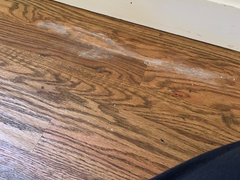
I would say there were issues with sanding. Some of the 'naked wood' looks to have occurred in areas where there are LOWER spots on the floor (deep grain) and some of the wood looks to be chewed up a bit (not as smooth as usually seen with Rubio).
The 'weird haze' screams out "paint clean up". It is right next to a baseboard (in your one photo) and it is identical in colour to the baseboard paint and the rubio underneath has been disturbed by some sort of chemical (like paint thinner).
The one thing I know about Rubio = EXTREME sanding measures MUST BE TAKEN. The sanding must be extensive and superb. The reason why Rubio costs as much or MORE than a traditional finish (even though it is only ONE COAT = less product) is the sanding. And the sanding. And some more sanding. And right after that they need to sand...just a bit more.
It can take a Rubio expert several days LONGER to sand a wood floor to the point they can apply the finish. Yes the finish goes down with one coat and on one day....but the days of sanding prior is what drives the price up. Human sweat has a price.
If you are unhappy with this finish, I highly recommend you bring the company back in and ask for the SAME LOOK in a traditional stain+poly finish. smit2380
Original Author6 years agoThe wood is handscraped (not the best job of handscraping ever), but I think it largely explains the low spots. You are probably right about the sanding being an issue too. In 1 day, they did the following:
- installed 500 square foot of flooring and plywood to add to the existing 700-ish fee;.
- sanded and handscraped all 1200 feet;
- finished all of the rubio monocoat.
I am working on correcting every low spot myself. That has been time consuming, but seems to be going ok.
The weird hazy spot is from their attempts to use Rubio Renew to remove some of the excess oil that had dried on that spot. They then did not manage to get off the extra I managed to get it off. (They probably would have screwed up painting the baseboards too, but we did not have them do that.)
We are going to try to live with the finish for now. We are not super happy with it. However, we were unable to keep a poly finish (gargantuan active dogs and a gravel driveway), so we need to be able to spot refinish. If this does not work out, we are probably just going to rip it all out and go with tile. (I kind of wanted to do this instead of the wood floors, but my husband was hesitant to do so.) PRO6 years ago
Sounds like they did something wrong, but we do 1200sf in 2-3 hours all the time with perfect results. I love that finish and if a crew does a lot of it and know there stuff it is fast and that’s ok.
- PRO6 years ago
Also, refinishing a Rubio finished floor is really quick and easy. You could have someone else do it in 1-2 days.
- 6 years ago
I really think a large amount of the issue seen above = the distressed look.
We KNOW that Rubio needs MAGNIFICENT sanding = beautifully smooth and with out defects. So imagine doing the sanding and then MESSING IT UP by hand scraping/distressing the wood.
I have a sneaking suspicion the overall coverage issues (bare wood) and the pooling of material in the low-spots (CREATED by the distressed look) are coming from the distressing.
If the sanding was done to RUBIO requirements and LEFT ALONE at that level of perfection then the finish would have been fine. I can see the installers had the ability to do a traditional Rubio application. The SPECIALIZED finish (hand scraped looks distressed not scraped) is what mucked this up.
I'm sorry but I would either live with it, or pay to have the sanding done again (to perfection as required by Rubio and the workers you have access to) and the stain applied again. I will bet my right arm the job will be acceptable once the sanding requirement is met. - PRO6 years ago
Hey smit2380 I just saw the photos. I like it. The darker areas highlight the distressing. Why do all that extra work distressing (and really physically hard to do BTW) if it is to just disappear. The sticky spots polish out with a maroon pad if still needed and a re-oil fixes any of the dry areas. Rubio is the easiest finish ever to touch-up. Your only a few hours away from a perfect floor. You want you finish guy to still be around because yearly touch-up and refresher will keep that floor looking NEW forever.
smit2380
Original Author6 years agoSJ McCarthy, they upsold the handscraping pretty hard, so if that was a bad choice maybe they should not suggest it so heavily. I contacted Rubio directly per your suggestion (which was a great and helpful idea) about the issue. They said the handscraping was fine, but that the flooring contractor needed to apply the Renew product to remove the hardened excess oil. I paid the contractor extra to do this. That lead to the large hazy patches where they did not remove the Renew well enough in the same way that they did not remove the excess oil. I did not pay them to fix this, and just fixed it myself following Rubio’s instructions. I don’t think I would pay to redo these floors again (certainly not with them). I will take it as a divine suggestion that we should be tile people. In all fairness, we probably should have just gone with tile to begin with. We really like the contractor who installed our kitchen tile.
Farner, we think they look fine, but honestly we were less concerned about what they look like. We were more concerned about the functionality which is why we went with something we could spot refinish. The bare spots and excess oil (according to Rubio) compromise the water resistance of the floor. I think that we will need to find a new floor finish person (or learn to do it ourselves). We left on good terms with them, but they are not great with Rubio.- PRO6 years ago
Trust me. We do Rubio every week. Buff it out with a maroon pad and re-oil it. Do a sample area and you will see. $160 in oil and 2 workers for two hours and you will have a floor that is not compromised.
- PRO6 years ago
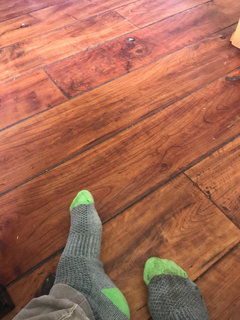
Sitting on my distressed rubio finished floor right now and with 7 kids and a pool and tricycles ans skateboards in the house I would have no other finish.
smit2380
Original Author6 years agolast modified: 6 years agoFarner, your floors are beautiful; they are such a lovely warm color.
- 5 years ago
@Farner Hardwood Flooring Inc
I have a problem with Rubio Monocoat on white oak. Colour is rubbing off when I try to clean sticky spots using hardly wet microfiber cloth and some pressure. Do you have any idea on why that happens?
- 5 years ago
@ Jelena...Rubio is an oil based finish. That means it is NOT a sealant like polyurethane. It is an oil (often a coloured oil) that sits on top of the wood and soaks in a little bit. This oil, like cooking oil (OK not quite...but you get the idea) can be rubbed off. Yep. It comes off.
Did you PURCHASE all of the cleaning products REQUIRED to maintain your Rubio Monocoat finish? Did anyone educate you about your HOMEOWNER required maintenance? Did they explain to you that you, as the homeowner will be fully responsible for keeping your floors looking happy and healthy?
Sigh...didn't think so. Here's what you need to purchase. Yes...you need ALL of them:
1. Master Colour Oil - this is the coloured oil that gives your floor the 'non-wood tone' colour. Often people like wood to look white or gray or dark brown or...whatever non-gold colour they want.2. Maintenance Oil - this is the product that is used every 4-6 months to keep the oil levels appropriate on the floors.
3. Cleaning Oil product - this is the product that is used 1/week as a 'cleaner'...it is your 'mop' product
4. Spot Cleaner for stubborn stains - used for stubborn/sticky messes like jam, bubble gum, animal stains that are left over night...etc.
These are the 4 products you will need to maintain your floors for the next 25 - 50 years. Here is what you will be required to do to keep these floors looking good and the colour looking 'continuous' for the length of time you live with your floor/colour.
Listed by order of 'most used' to the 'least used' in your cleaning schedule:
#3: Cleaning Oil product - This is your weekly cleaner. Just like some people damp mop their hardwoods with water-only every week...so too you will use either water damp ONLY or the Cleaning Oil. This can be used as much as 1/week, but is more likely to be used 1-2x per month.
#4: Spot Cleaning Oil - As stated in the title, you will use this as a quick/emergency clean on spots you find will be too difficult to deal with water-only wiping. This is the "Oh who left the blob of peanut butter on the floor?" type cleaner. Will be used any time you want to clean a little spot of mess.
#2: Maintenance Oil - This oil is used in high-traffic areas every 3-6 months or any time you feel your floors look 'thirsty' or dry. You apply it in large batches...sometimes 1 room at a time. It is allowed to 'dry' or 'cure' for 12-24 hours before the floor can be walked on again. As you can see, with a cure time of 24 hours, this is best left for times when you KNOW you will not need to be on the kitchen floor (or use the entrances...etc) for the full cure. Some people use this as they back out the door to go for holiday or leave for the weekend. It's only used a 2-3 times per year (or as the floors dry out).
#1: Master Colour Oil - This is the LEAST USED but the MOST IMPORTANT of all maintenance oils. It is used in cases such as yours - when you have rubbed off the colour when cleaning up spots. But the MAIN USE of this oil is to MAINTAIN the COLOUR on your floor. This one is really just every 2-3 years....
But....like everything you must do the first steps using the first THREE maintenance products AS REQUIRED. That's how you get away with using the Master Colour Oil only 3 times per DECADE. You MUST have used all the other products PROPERLY.
These 'colour spot repairs' really shouldn't need to be done if you have used the OTHER 3 maintenance products. The clear oils (non-coloured oils) should sit on top of the colour and protect the colour AND the wood.
If those products are missing, then you will eventually have the loss of colour as you are seeing on your floors.
Can you tell us how old your floors are? Were the factory finished? Or did your installer do the oil colouring/treatment after the raw wood was installed? To find out what Master Colour was used, you will need to refer to the product information (if it was factory finished) or you need to contact the flooring pro who added the master colour. smit2380
Original Author5 years agoJelena,
I am the OP here, so definitely not a pro. However, I have lived with Rubio floors for almost a year (and have been pretty happy with them). When I first had my floors done, they left too much oil in spaces, and I had oil rubbing off just on feet with socks. It was remedied with the method described above.
I spent a great deal of time on the phone with Rubio customer service to figure out how to care for the floor. I bought their cleaning spray and their soap (which according to Rubio customer service is just the concentrated version of the stuff in the cleaning spray so you can dilute it when you run out of spray). Their cleaning stuff works really well, and I have not noticed color transfer - everything that comes up appears just to be random filth.
With respect to the maintenance oil described above by SJ McCarthy above, you only use it for maintenance if you used it to get the higher sheen. See https://www.rubiomonocoatusa.com/products/universal-maintenance-oil and https://cdn.shopify.com/s/files/1/0260/4810/2497/t/6/assets/b16617a0f010--RMC-Care-Main.-TriFold-EN-r.-2021-01-11-Web.pdf?v=1611068309. If you are like me and did not want the sheen of maintenance oil, you use the Refresh Eco and Renew products.
It was a rocky start, but we have loved these floors.- 5 years agolast modified: 5 years ago
Have a look at this video and tell me if this is something you'd expect from an expensive floor treatment. I used sample floor board with three different colors on it. The floor itself looked as if it had typhus. It was redone at the time I made this trial.
https://www.instagram.com/tv/CKYzvUap-Yk/?utm_source=ig_web_copy_link
- 5 years ago
Can you explain 'redone at the time I made this trial'?
Do you have photos of the floor?
How old is the rubio?
Who did your floors?
- 5 years ago
SJ, the floors were preoiled by the floor seller.
This was their practice for years with no complaints like this. The wood is the same, the final sanding was factory sanding, the sample board was oiled by the Rubio distributor himself in front of me. My floors were finished a year ago, maintenance was applied a month after installation, and then pandemic happened so I couldn't finnish reno. I finally moved in in December 2020 and actually started using the floors. If I could levitate above them I would have but it was inevitable something would get to the floor and make a sticky stain so I had to apply some pressure and than the problem appeared. I had professionals who installed the floors come and see for themselves. Then we contacted the very distributor who made the sample and received the rudest, most unprofessional response. As soon as he realised there was a problem he started yelling and deflecting. No advice, no help, no taking responsibility for anything.
The guys who installed the floors and who are in no way responsible for this are the only help I have. We're trying to come up with the solution, so we reoiled the bare spots and are now thinking about the way to proceed. Today, we're making tests on spare floorboards to see if Osmo oil would stick on top of old Rubio. If not, resanding may be the only way out of this. The floor was laid in chevron pattern and the planks have beveled edges so it's going to be extremely hard to get the oil out. If sanded too deep, the look of the floors would be ruined.
I haven't taken any pictures of the ruined floor as I was hoping there would be a quick solution, but should we decide to take everything off, I'll make some damage and get the pictures taken.
To summarize, I've tested on:
1. three different colours applied by the distributor to exactly the same wood plank as the final product (without maintenance oil)
2. my floors with primary oil (bourbon) and maintenance oil applied
3. the leftover planks with just the primary oil (bourbon) applied
4. the resanded floor board (on my floor) with reapplied bourbon oil on itand the results were the same.
I've seen people rub spots in a number of videos on Youtube and nothing happens. My floor installer made a video of him rubbing his 5yr old table with a huge amount of water and coarse side of dish sponge and nothing happened. - 5 years ago
So sorry but this one is out of my depth. I'm a cork flooring expert with a very strong understanding of the flooring industry...but the 'fun' of Rubio is outside my ken.
It is my *understanding (for what it's worth) is the final sanding is CRUCIAL to the end product. I've seen factory finished oiled floors (not rubio...but other hardwax oils) come with the instructions that a full coat of maintenance oil should be applied at time of installation.
The other part of the process is the WIPING OFF of the excess oil. When Rubio is applied on site (not in a factory) the 'rub on rub off' situation is VERY important. It is common (for non-rubio pros) to leave too much oil on the floor. Their 'rub off' technique is lacking.
Rubio takes quite a bit of effort for the pros to get used to. I've not done a floor with rubio myself but I know there are SEVERAL rubio pros on here that can help.
But it probably means removing the old and adding the new.
Did you purchase all of the maintenance products?




SJ McCarthy