Software
Houzz Logo Print
brian_episcopo

15 Foot 12x16 barn

6 years ago

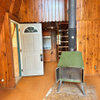
Hi, so I just had a 12x16 Tuff Shed barn built in my backyard. It is completely open inside but with a loft space on both ends of the barn that is about 5 and a half feet high. So "two stories" sort of. I plan on installing a through wall air conditioner unit and the barn was built with this with vapor barrier etc. My question is whether or not it should have a roof vent or not? I'm in Texas and we have humidity and 100 degree weather for three-four months out of the year. Given the height of the shed and heat rising, a roof vent would seem to make sense, but I don't know if it makes sense when you add in the air conditioner in the wall - would a roof vent help or hurt it??
Thanks!

Comments (7)

  • PRO
    6 years ago

    There are many variables to get this to work. I am assuming this shed is not insulated?

    No insulation in the walls of the shed, no insulation in the attic (top part) of the shed?

    If this is going to be some rarely used thing that's one thing, but if you are trying to cool this for long periods in 100 degree heat + humidity it's not likely to be much more comfortable than just having a high speed fan blow on you while you are out there.

    Remember an air conditioner doesn't produce cooling... it removes the heat from inside a structure and then places it outdoors. (cooling is the by-product of heat removed).

    If you don't limit the heat penetration of the shed -- hot air constantly trying to get into the shed then it's not really a worthwhile endeavor. If this shed is only going to be used occasionally --- your idea may provide 'some' heat relief, depending on a long list of variables.

    Comfort means different things to different people... what does it mean to you?


    I service the Katy, Texas area.

  • 6 years ago

    Thanks for your reply! Yes - I will be insulating the building - probably with standard face R-13 pink stuff fiberglass insulation.

  • 6 years ago

    How difficult would it to extend the loft area to make a complete ceiling and attic? If you did that then you could insulate the attic floor and install roof ventilation. You would then have less volume to keep cool. It comes down to how much money you want to spend and how comfortable you want it to be when you are in the shed.

  • 6 years ago

    And you say that because given the volume of air in a 12x16 x 15 foot tall space, roof vent or no roof vent, it's just always going to be difficult to control the temperature and humidity given the interior volume?


    I'm just wondering about the "physics" of it here - if we've got that big space and its walls and ceiling are insulated and there's an in-wall AC unit 4 foot above the floor and we know that heat rises, does a rooftop vent help the A/C by allowing the hot air trapped at the top to escape or does it "hurt" the A/C by constantly introducing outside air?


    Would a ceiling fan circulating the air make more sense?


  • 6 years ago
    last modified: 6 years ago

    If the wall units are 4 feet above the floor, then the air near the roof will be much warmer. You could leave the second level open and insulate the roof deck. If you did that then there would be no need for a roof vent.

    A fan will create a wind chill effect which makes it feel cooler.

  • 6 years ago

    What kind of animals will you be keeping in the barn?

  • PRO
    6 years ago
    last modified: 6 years ago

    I'm just wondering about the "physics" of it here - if we've got that big space and its walls and ceiling are insulated and there's an in-wall AC unit 4 foot above the floor and we know that heat rises, does a rooftop vent help the A/C by allowing the hot air trapped at the top to escape or does it "hurt" the A/C by constantly introducing outside air?


    It primarily depends on use, if you use it 'occasionally' for a few hours here and there is completely different from using it for 8 hours everyday.

    Then it comes down to how comfortable you intend to make it. Texas weather can vary depending on what part of Texas you live. Some areas are more dry (less humid) and are much easier to cool for comfort. My area (Katy, Texas) --- is more humid and air conditioning is needed here for upwards of 10 months most years.

    Realize air conditioning is not dehumidification, air conditioning is primarily focused toward dropping temp. You will get some dehumidification from the operation of it, but PTAC or in the wall air conditioners are mostly cheaply built glorified window units with slight design differences. If your use is more along the lines of 'occasional' then a PTAC could be a good choice.

    But that 10 months of use I mention for my climate, depends on the individual. I like it cool and crisp inside. Other: you could have cool and damp, warm & humid, warm & dry. How warm is warm? How cool is cool? How dry is dry or damp is damp? Musty?

    So if it's not done adequately: you rip it out and start over... or you live with it. There-in lies the fun.


    In terms of venting an attic, natural ventilation is the way to go. Vents at the soffits (eaves) of the structure and ridge vent at the top. Heat rises, but without proper venting that attic is going to cook in 100 degree heat. The hotter that attic, the harder it will be for 'any' air conditioner to keep up. (The size of the shed, isn't really large --- it's a good size but under 200 sq. ft at the end of the day.) --- with that said, tall ceiling has to be considered as well. The more volume of air to cool, will require more cooling capacity and cost more to cool to boot.

    So the more you want to be comfortable, the more it will cost. Do you want 70 degree cool? Considering you're going to probably be working while in there?

    Until we have a definitive plan of what you want... the sky is the limit.

    Does it hurt the AC by introducing outside air:

    Nope, not any more than anything else. But introducing outside air and running the AC is counter productive. You can't cool a structure by doing that. The AC will just run and run. The AC's life is mostly determined by run time and how well it's maintained.

    The more it runs, the sooner it will have to be replaced. PTAC's aren't really built to be repaired.