Software
Houzz Logo Print
sam_hickeymiranda

What's wrong with my camellia?

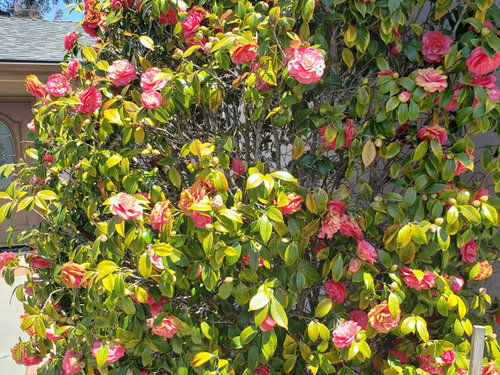
Hi, I'm having issues with my camellia bush. At least, I'm pretty sure it's a camellia. It was established long before we moved into the house. I don't know a thing about gardening and I'm afraid my attempts to fix what's wrong are making it worse.


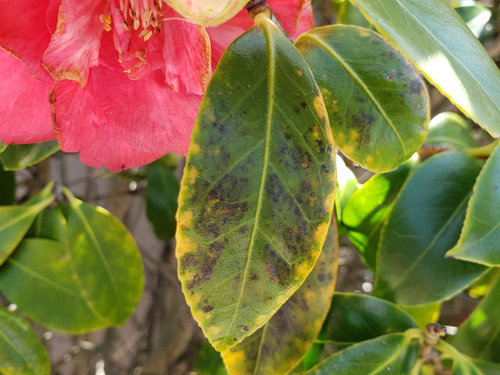
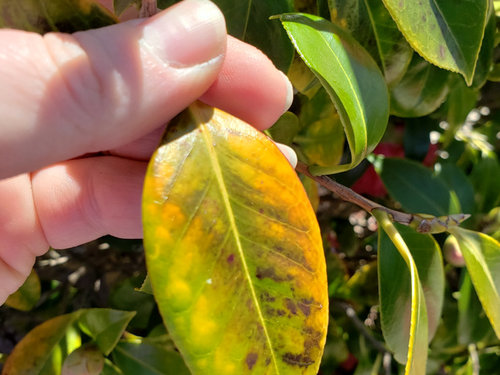
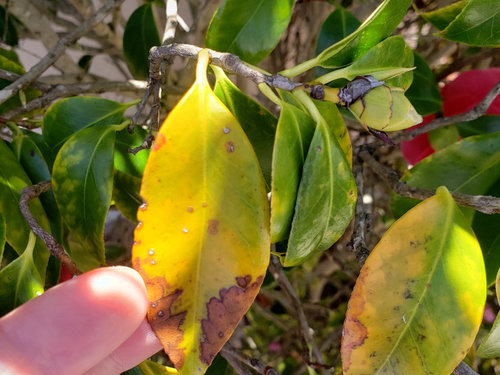
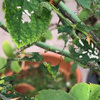
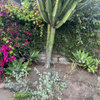
As you can see from the photos, there appears to be black spots on the leaves. Also, a lot of leaves are turning yellow, and browning and dying. The flowers just look sad and droopy, and brown and fall off quickly.


The soil we have in Central Coast California is very sandy, and has no nutrients, but also around the camellia, water doesn't drain well? It sits for a while.


I've tried camellia specific fertilizers and used coffee grounds because I heard those can increase acidity, but I have no idea if I'm doing any of this right. Please help, I fear I'm a danger to this bush if left without proper instruction! Thank you to sticking around this far.


Comments (3)

  • 6 years ago
    last modified: 6 years ago

    Camellias prepare to drop leaves in the next month or so. These leaves tend to not produce as much chlorophyll as before so areas with fungal infections that could not be seen are now visible. They also turn yellowish. As for the leaf spots, if the leaf spots are limited to a small percentage of the leaves, I would not worry but I would throw in the trash all leaves that fall and all the blooms too... to minimize spread of fungi. Also, try to never water the leaves if possible and always water the soil instead.

    Some of the leaf yellowing in the last picture suggests that the plant has mineral issues or is getting too much sun, a common problem with japonicas. For that reason, I was first wondering if you could tell us from when thru when does it get direct sunlight (specially in the hot summer months)? If the mineral issues are due to sandy soils, I would follow the
    suggestions from a soil test and I would also regularly (every Spring)
    add a 1/2" (or so) layer of organic compost up to or past the drip
    line.

    Other yellowing of the foliage pictures suggests that there may be a mineral deficiency. A formal soil test can identify exactly which mineral and how much is needed to correct the problem. It can also warn you of soil pH problems that make roots unable to absorb some minerals even if they are in the soil...

    Mineral absorption may not occur when the soil lacks the minerals (or has too little of them) or when the soil is either too acidic or too alkaline. One common example happens when the soil is low in iron and-or magnesium or the soil is alkaline (so the roots cannot absorb iron and magnesium). The leaves in the pictures do not have the usual signs of chlorosis: leaves that yellow out except for the leaf veins, which remain dark green. But I would still recommend (1) to check your soil pH to confirm that it is ok (or not) and (2) to do a formal soil test. Note: Plant nurseries sell cheapo soil pH test kits to give you an idea
    of what your soil pH is. They are not as exact as a foral soil test but, they can tell you if the
    soil is too alkaline or too acidic.

    An ideal soil pH range recommended by the American Camellia Society for camellias is from 5.5 to 6.5. If yours is not within that range, you may need to amend the soil so your soil falls closer within those ranges. Once it falls closer to range, mineral absorption can happen, unless your soil is low on some minerals or does not have some). You do not have to be exactly within that soil pH range though. For example, my soil pH is 7.6 but there is a lot of organic compost and composted manure that I amend my soil with. When I amend that way, the camellias tolerate the alkalinity and do not display leaf signs of problems. If they do, I amend with garden sulfur, greensand or iron-chelated liquids. For very acidic soils below 5.5, your soil test may suggest adding garden lime. Should your soil be deficient in a mineral like sandy soils can be or should your soil have too much of a mineral, the soil test would indicate that.

    If you use a fertilizer, make sure that youuse a fertilizer for acid loving plants like azaleas, camellias, hydrangeas or rhododendrons as opposed to a plain ole regular fertilizer.

  • 6 years ago

    Thank you so much for your reply. Our house is SW facing and with the camellia in the front, it gets a lot of afternoon sun. What can I do if it's getting too much?

  • 6 years ago
    last modified: 6 years ago

    In warm locations like mine and with a smaller plant, I can either transplant it elsewhere (so it gets morning sun only until 11am) or I can put 30% shade cloth above it. I can also plant a shade tree and let it grow and give shade to the camellia in the summer months. But your camellia is already huge -it must be decades old- so I am not sure you could easily transplant it without engaging the help of landscapers or a few members from the Southern California Camellia Society! ;o) There would be risk in moving it. If you do move it and-or if you are sentimentally "attached" to it, I would propagate it via cuttings before the move... in case the transplant does not go well. But Dr. Bradford King & company should be able to give good hints on how to move a large specimen. They may (I am guessing) need the pictures you took and a few others of the base and measurements of how close it is to the cemented areas (these can leak lime and make the soil too alkaline).

    https://www.americancamellias.com/about-american-camellia-society/clubs-societies/local-clubs-societies/california-clubs-societies

    https://www.americancamellias.com/care-culture-resources/propagation

    Maybe you can plant a shade tree to help the camellia instead of moving it. Camellias grow very slowly and the shade tree may overtake it "soon" and start giving it shade after a few years. I would check prices and pick the tallest you can afford that also has a long life expectancy and whose root system will not compete with the camellia's roots (most in the top 4" or so).