Software
Houzz Logo Print
webuser_50088257543

laundry washer drain pipe

6 years ago
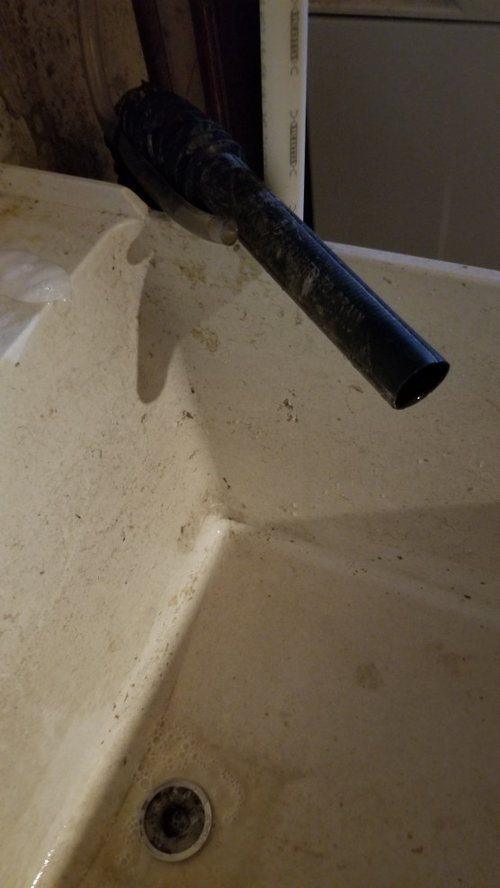
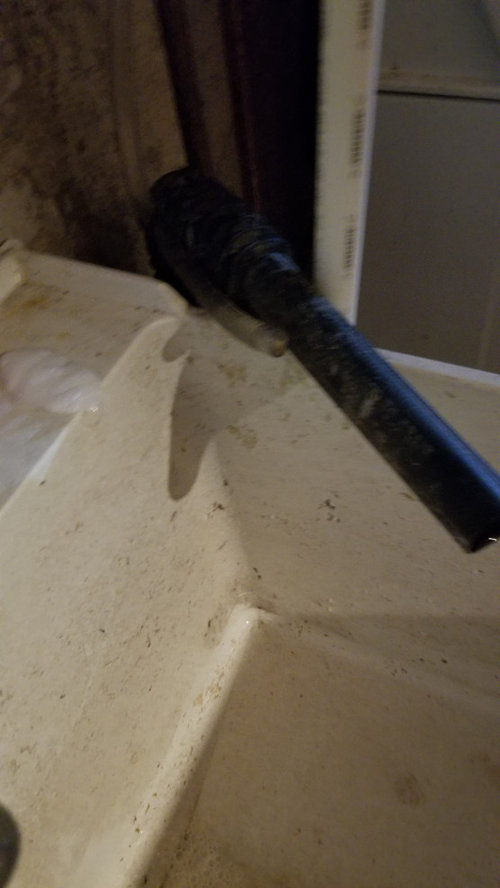
in the image you ca see the drain from the washer and the heater furnace condensation pipe tied togather to a pipe pole with a duct tape on the small basin to drain the water. This is how I see it from the previous owner. can any one suggest parts, fixtures to better hold these drain pipes

Comments (23)

  • 6 years ago
    last modified: 6 years ago

    So the heater condensate drain is tied into that washing machine hose hanging in the sink? Can you provide a picture of that connection? Regardless, that's not permitted in most municipalities - assuming the sink drains into a sewer line?

  • 6 years ago

    yes the sink drains to the sump pump

  • 6 years ago

    it is secured to a PVC pipe and ducktaped to the pipe and the sink. can you send me the bend that you are talking about?

  • 6 years ago

    image or a part number form home depot, lowes or amazon

  • 6 years ago

    it is secured to a PVC pipe and ducktaped to the pipe and the sink. can you send me the bend that you are talking about?


    If that is the case, the picture you posted doesn't show that. The picture looks like the condensate line and washer drain hose dump into the laundry sink.


    Is that black pipe with the elbow where the washing machine drains? A stand pipe with an elbow?


    My washer drain hose dumps into a laundry sink. It is secured by a zip tie loop (holes drilled into the top edge of the sink to loop the zip tie to.)


    Need a better picture showing the washer and exactly how the washer drain hose is routed.

  • 6 years ago

    Why do you guys have wash water draining into a sink? Why doesn't it/can't it drain directly into the septic or city sewage. I've lived in the country for 40 years and ours drains into the septic system. DH said if he had it to do over again, it would just drain out into the back of the pasture to put less strain on the septic. I think I have that right LOL

  • 6 years ago

    Condensate from a high efficiency furnace is quite acidic. That's why most municipalities don't want it draining into their sewer system. And that's why its against most local codes.

  • 6 years ago

    Aha. I didn't realize he had a High Efficiency Furnace. I am used to only having condensate from the Heat Pump and Furnace evaporator coil to deal with... that is not acidic and requires a sink or drain or a line to the outside.

    Sorry!

  • 6 years ago

    Dadoes...thanks for refreshing that memory of my youth! I recall my mother plugging the drain and reusing the wash water for her second load. For some reason, I still drain. My washer into my utility sink, which just goes down the drain. I never re use the water. That tells me that...I should just drain it directly to the open drain!

  • 6 years ago

    Humm, reusing wash water. That just doesn't compute but thanks for the explanation.

  • 6 years ago
    last modified: 6 years ago

    Suds-saver was a very common feature on early automatics. Whirlpool went to great lengths to design a built-in, easy-to-use system on their first automatic. It was always standard procedure for users of "conventional" washers, aka wringer washers, to reuse the wash water for successive loads on washday. Automatics were equipped with the feature to promote the familiarity and economy with which conventional users had long been accustomed for enticing them to switch to the newfangled washers that washed, rinsed, and spun/wrung the load without manual intervention.

  • 6 years ago

    Are you that old or that educated? ;) Apparently I'm neither

  • 6 years ago

    Dadoes....I have a 45+ year old Maytag washer and dryer pair that I am finally replacing. Today. Much to my dismay. They are all metal. Have worked beautifully for all these years with regular maintenance. Wish I could keep them but my dog has developed “Appliance Anxiety” and has panic attacks whenever I turn them on. Noise related. And so this woman who remembers reusing washing water in her use must now embrace 21st century technology! (Wish me luck!)

  • 6 years ago

    MonicaKM ... maybe I'm both. ;-)

  • 6 years ago

    Wash water draining into a utility sink is very common in older homes because the sink provides a buffer for the sudden rush of water when the washer drains, and it ensures nothing will overflow.

    For new homes they now require a 2" standpipe with a vented P-trap in the wall for the washer drain, and that setup can handle the full drain outflow of any modern washer. Converting to a 2" standpipe in older homes is difficult because the old utility sinks were often plumbed with only a 1 1/2" drain.

    Bruce

  • 6 years ago

    ptrekel there are people that would pay top dollar for those Maytags of yours, esp. if in good condition. Wow.


  • 6 years ago

    Majority of washers nowdays have electric drain pumps, not driven by the main motor either via belt or directly, and drain slower than older machines. Frontloaders, of course, also involve a lesser volume of water.

    I recall when WP direct-drive washers were new on the market and we (the appliance service where I worked) delivered them to customers who had an older belt-drive machine ... the direct-drives discharge at a higher flow rate and the drain standpipe would sometimes overflow during the installation test-run. A workaround during the test was to set it to spin on low speed for a slower discharge rate. We'd advise the customer their drain must be serviced or reworked.

  • 6 years ago

    "there are people that would pay top dollar for those Maytags of yours, esp. if in good condition. "

    And, I suspect, far more with no interest at all.

  • 6 years ago

    armjim and Mr. Fudd....I wish! They operate perfectly! I also have a nice, 30 year old Crowley freezer in my possession that I am donating to Habitat for Humanity. Not everything that is old is well made, but these are lovely machines. It will be difficult to part with them. Fingers crossed that my new washer and dryer last 1/4 as long!

  • 6 years ago
    last modified: 6 years ago

    A possibly better wish would for you to be still alive when your new washer and dryer reach 45 years old.

  • 6 years ago

    Thanks, Stax! I would make the Guinness Book of World Records if I did that!!!! ;>

  • 6 years ago

    In our last home the washer drained into the laundry sink, then a "pump up" sent it up to the pipe for the septic.

    The only problem I ever had was when the "pump up" didn't work, yikes!