Software
Houzz Logo Print
brent_meyers15

Insect identification and lithops diseases!

6 years ago
last modified: 6 years ago
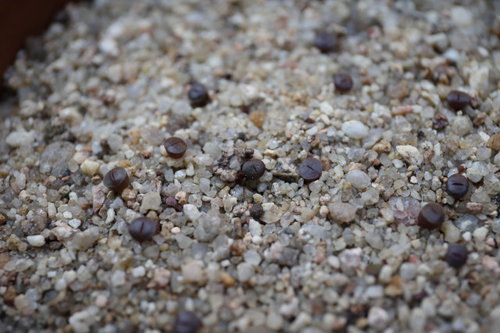
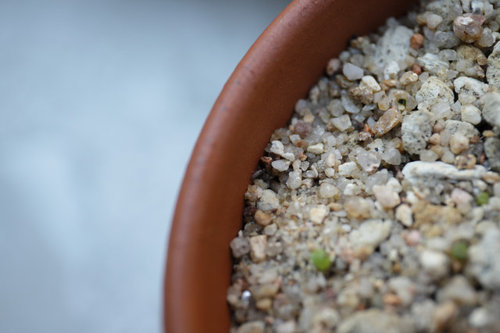
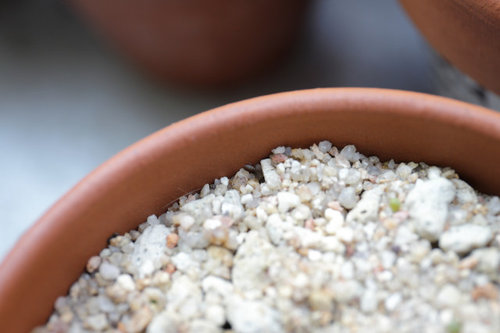
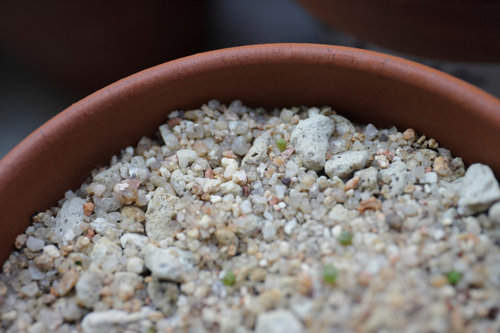
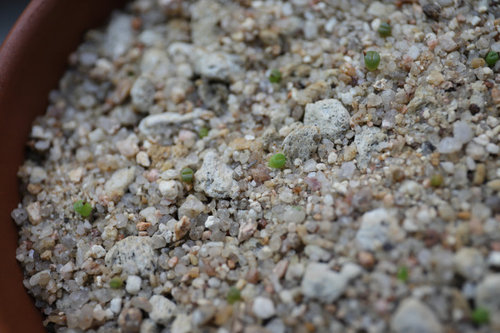
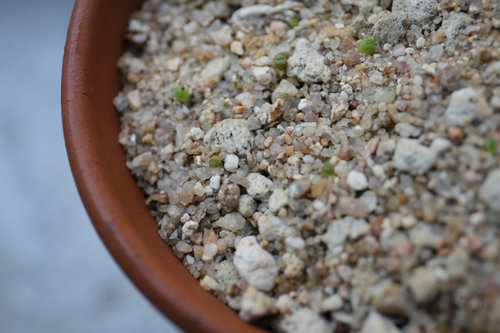
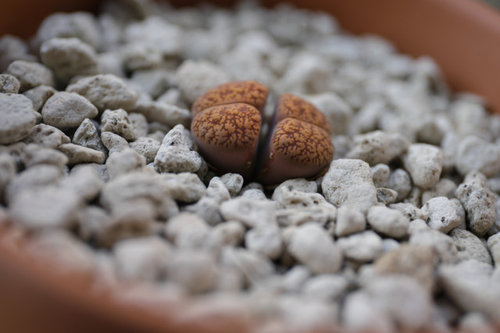
For a little bit of context, my first photo is of some lithops seedlings (lesliei rubrobrunnea), that I planted about 2 months ago. They have been doing really well in general up until about 2 days ago when i noticed a small white divot on one of the seedlings. I removed this seedling as I was afraid it was rotting or had some sort of fungal infection that would spread to the other seedlings. After removing it, I broke open the plant to observe if the damage was more extensive. It was not, just the small white divot on the top. The attached photo is of another seedling (right in the center of the photo) that was next to it that also has a small white divot, although on this one it is so small that it is barely visible. It seems to be the same size that it was yesterday.


About two or three weeks ago I also noticed some insects scurrying around my lithops seedlings (I have about 50 pots), that seem to be living down in the soil. The soil is exclusively pumice with a top layer of sand. I've looked through all of the descriptions of common pests and I've been unable to identify them. I've never caught them eating the seedlings (sometimes they scurry over them), rather they seem to live down in the pumice. They are definitely not mealy bugs, scale, or anything else I've seen pictures of online. They are very small, maybe 1-2 mm (guestimation), and they move very quickly, about the speed of a little cockroach for their size. I'm hoping that this is not a pest but rather some sort of beneficial insect that has another food source and has just taken up residence in the seedling pots.


Last but not least about one week ago I noticed some little white splotches in the new leafs of my adult lithops lesliei (the orange and red one in the photos). From what I've read online, the damage seems to resemble that commonly caused by spider mites. The trouble is, I've never seen any spider mites on this lithops, only the insects I've described above. I've sprayed the lithops twice with a solution of alcohol and water and the damage doesn't seem to be spreading for the time being.


Thanks ahead of time for any and all help!

Comments (5)

  • 6 years ago

    Update


    So after digging around I am 95% sure that these little critters attacking my seedlings are thrips. It is really unfortunate as they seem to have infested all 50 pots with little lithops seedlings to varying degrees. I really don't want to use a pesticide and I'm looking for alternate ways to control the population. Since I keep the pots outside on the balcony, perhaps I should be looking into putting other plants out there that attract beneficial predators? I've also tried spraying three or four pots with insecticidal soap - I suppose I could spray all of them and then even resort to an insecticidal soap bath, fully soaking the soil of all of the pots, if things get really out of hand. Thoughts??

  • 6 years ago

    Brent

    I see that so far yo didn't get response...I do not know much about Lithops, and never grew any from seeds.

    Here is article I found about thrips - not sure if you are interested to read, but CLICK HERE if so.

    Regarding white spots: spider mites are tiny, but move around fast. Maybe you can check with magnifying glass/loupe if there are any. I have only few Lithops, and luckily didn't have to fight any bugs so far.

  • 6 years ago
    last modified: 6 years ago
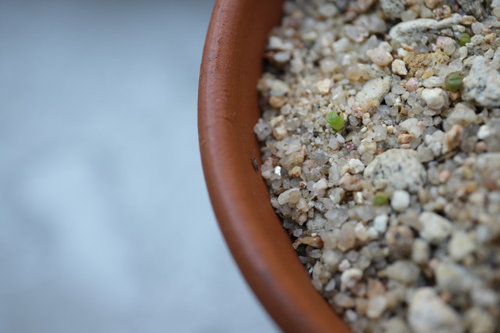
    Hey rina thank you for the reply, I read through the article and it was quite helpful. I actually purchased some minute pirate bugs, so they should be arriving today or tomorrow. I will let you know how they do in controlling the population. The thrips have killed a few of the weakest seedlings and seem to be slowing down the growth of some of the others. Lately I've noticed some natural predators like jumping spiders and I'm hoping the booming thrip population will also attract other predators. I've used some insecticidal soap on some of the pots that seemed the hardest hit, but they haven't eradicated the thrips as they can simply migrate back over from pots that I haven't treated. I'm trying to avoid spraying all 50 pots until it seems absolutely neccesary.

  • 6 years ago

    From what I read, thrips are not easy to eradicate with all kinds of spays, so hopefully beneficials help. Tiny seedlings are likely more vulnerable. There was lots in that article I didn't know, and I found it quite interesting.

    I am interested to know how much predators help, pls. post a follow-up. Wish you success.


  • 6 years ago

    Hey Riña. Quick follow-up a few months out. I ended up adding a package of around 500 or so (rough estimate) orius laevigatus out onto the planta on the balcony. I observed the orius quite closely, and never observed them stalk or attack a thrip which they would pass by or even bump into. Within a few days all of the orius flew away so they ended up being fairly useless. I still have thrips attacking the lithops seedlings and a few undoubtedly succumbed to them, but as the seedlings have grown they seem to be sustaining less damage, particularly the ones that have now developed adult lithops leaves. I’ve also observed that the population of jumping spiders has increased radically around the lithops pots and they are presumably feeding on the thrips. They haven’t eradicated the thrips by any means, but their population seems to be slightly more in check. Now that I have other flowing plants min the vicinity of the lithops there also seems to be more beneficials around in general.

Sponsored
Peabody Landscape Group
Average rating: 3.5 out of 5 stars8 Reviews
Columbus' Reliable Landscape Design & Contracting