Software
Houzz Logo Print
lisa_latham2454971

Deer resistant foundation shrubs

6 years ago
last modified: 6 years ago

I'm looking for recommendations for a foundation hedge in Zone 7 (middle Tennessee). I get about 6 hours of sun a day. We're in a very rural setting and frequently see deer in the spring, summer, and fall. I'm not a fan of boxwood, holly, or azaleas and would prefer something that keeps it's leaves during the winter (or at least has some sort of year-round interest). I'd like something that grows to around 4' x 4'. I know that's a long list of requirements, but any help is appreciated. Thanks, y'all!

Comments (19)

  • 6 years ago

    Deer will be most hungry for your evergreen foundation hedge in the winter. Other options are 'Otto Luyken' Cherry Laurel and dwarf forms of Cryptomeria and Yew. I won't vouch for their resistance to your particular deer herd. I will suggest making friends with the local deer hunters.

    Lisa Latham thanked Christopher CNC
  • 6 years ago
    last modified: 6 years ago

    I'm in eastern panhandle of WV and have occasional problems with deer, mostly August - October. Several families that have been here for generations have a deer feeding station well away from their garden. Soon as the native feed grasses starts drying out they stock the feeder with "deer corn". The idea is to decrease casual browsing close to the house.

    You say you don't want azaleas, but have you considered rhododendrons? They are evergreen and low maintenance. Deer haven't touched ours.

    Lisa Latham thanked Kathleen Marineau
  • 6 years ago

    i am confused about a 4 by 4 foot hedge planted on the foundation ...


    perhaps a pic would help us help you with better choices ...


    i dont know what you mean by foundation planting..


    and being that nothing magically stops growing at some given height.. i dont know why you want something you are going to have to shear once or twice a year .. but that might just me getting older and not wanting to schedule future work for myself ... lol


    ken

    Lisa Latham thanked ken_adrian Adrian MI cold Z5
  • 6 years ago
    last modified: 6 years ago

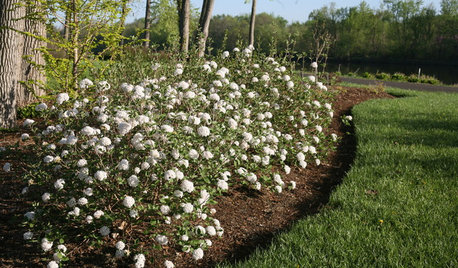
    Look into Viburnum x 'Conoy'. Mostly evergreen. In this last mild winter mine were completely evergreen. White non-fragrant flowers in spring, followed by red berries if they pollinate well. Deer are not particularly fond of mine, but... with deer all bets are off. You will eventually need to shear this one though. They need good drainage, but are otherwise trouble free.


    Harder to find and maybe a tad less hardy, Viburnum propinquum is a cool smaller Viburnum.


    There are a ton of hollies that would do OK, such as Dwarf Burford, Needlepoint, Carrissa, Dwarf Yaupon, but you say you don't like hollies. Spiny hollies tend to deter the deer.

    'Rozannie' Aucuba stays a bit smaller. Deer might eat it though.

    Osmanthus heterophyllus 'Rotundifolia' is nice. Rabbits will eat it. Haven't had deer nibble on it, but they like other of my stuff better.

    If you have good drainage and not too hot of sun, Pieris and Mt. Laurel (Kalmia) might work. Not full south exposure though.

    Lisa Latham thanked Dave in NoVA • N. Virginia • zone 7A
  • 6 years ago

    " and being that nothing magically stops growing at some given height "

    We have to be careful with Ken's hyperbole :-) It is true that while they are alive, plants will continue to grow. But that growth may not be focused just with the height. Plants come with their own genetic programming that determines how tall they are likely to grow. Once they approach that genetic marker, vertical growth slows significantly, sometimes to the point where it is almost unnoticeable. And there are many plants that offer dwarf or compact forms that will not exceed your vertical requirements ever

    Lisa Latham thanked gardengal48 (PNW Z8/9)
  • 6 years ago
    last modified: 6 years ago

    gardengal48 - Great suggestions! I found a few varieties of viburnum I want to investigate. I feel sure I can find one that works for me and gives me the naturalized look I'm going for. Also appreciate the Rutgers publication reference. Another great source of info.

  • 6 years ago

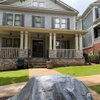
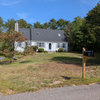
    ken_adrian Adrian MI cold Z5 - I'm looking for a hedge to go around the foundation of my house. Foundation planting.


  • 6 years ago
    last modified: 6 years ago

    Once they approach that genetic marker, vertical growth slows significantly, sometimes to the point where it is almost unnoticeable

    I'd like to see photographs of examples of this happening on a routine basis to any specimens still in good condition, other than bamboo species. In the meantime one thing I know is that the extreme top of one of the tallest coast redwood trees has this recurring cycle of growing at a comparatively normal rate for a time, then dying back down when site conditions prevent it from getting water all the way up to where this uppermost growth is. That this hydration issue is what keeps its current height averaging a certain figure over the years, and not the tree being programmed to essentially stop growing at that height.

  • 6 years ago

    Oh for heaven's sake!! This is not rocket science!! A study of basic botany will tell you the same. If plants grew at the same vertical rate throughout their entire lifespan, then we would all live in some type of bizarre temperate jungle where every tree more than 50 years old was at least 100 feet tall. Growth slows as they reach maturity, which of course can vary from plant to plant.

  • 6 years ago

    You really haven't been to the East Coast, have you?

  • 6 years ago

    What the heck does that have to do with the price of beans? Do trees on the east coast possess some mysterious qualities that make them immune to normal botanical processes?

    And to answer your question, not that it makes any difference at all, yes I have been to the east coast.

    Sheesh!

  • 6 years ago

    If plants grew at the same vertical rate throughout their entire
    lifespan, then we would all live in some type of bizarre temperate
    jungle where every tree more than 50 years old was at least 100 feet
    tall.

    Things don't grow quite that fast here, but that's our reality.

  • 6 years ago
    last modified: 6 years ago

    Really?? You have 100' Japanese maples, amelanchiers, redbuds, dogwoods (and others too numerous to mention)?? Sorry, I must have missed those when I was last in that area.

  • 6 years ago

    No those all mature out at about 25 feet. The big buggahs are the Tulip Poplars, Black Cherry, Red Maple, Walnuts, Hickories and such. So I have never quite understood the occasional raves on Tulip Poplars I see from west coast gardeners. The flowers are fab and out of reach and sight in ten years.

  • 6 years ago

    " No those all mature out at about 25 feet "

    EXACTLY my point!! There IS a limit on how tall any single species will grow so uncontrolled and indefinite upward growth does have an upper limit.

  • 6 years ago
    last modified: 6 years ago

    I got your point long ago. That is why there is a difference between trees and bushes. Even grasses have mature heights for different species.

    ETA: And that is because Genetics.

  • 6 years ago

    Being native to Bakersfield, CA I can attest to differences in the effect of climate and soil on the potential growth of trees and shrubs. I mentioned it in my post supporting Nandina domestica.

    Tulip poplars are another example. They are enormous where I now live, but are not much more than a patio tree size in my home town and very slow growing.

  • 6 years ago

    Wow! That is amazing, a patio tree sized Tulip Poplar. That would be cool. They have such an interesting leaf shape and flower.