Software
Houzz Logo Print
isabella_wilcox

How close can you build next to large white pine trees?

6 years ago
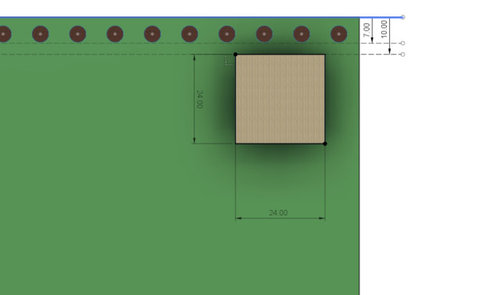
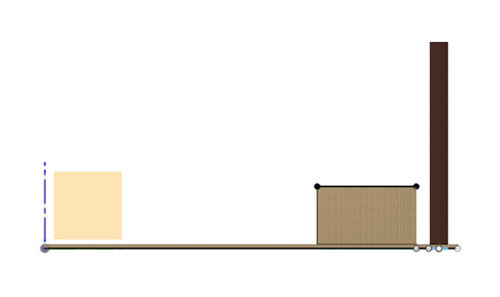
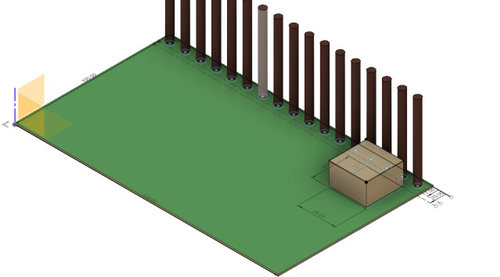
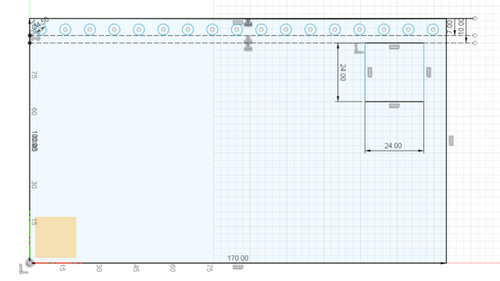
I'm looking to build a 24x24 garage next to a row of large (50ft+) white pine tree. I know some recommend a large setback from tree but my yard space is limited.


The inner side of tree trunk to property fence already takes up 7 feet. I'm thinking building 3' from tree trunk. This gives me 10' setback from property line. Removing the trees is not an option as our city has some tree preservation law in place.


Do you think it is possible and safe to do so?


I've attached some drawings.


Comments (28)

  • 6 years ago

    Before building next to large white pines, you have to have large white pines. Yours are babies.

    I have a row of white pines that are roughly 100 ft tall. About 20 years ago, we had a very destructive April snowstorm, and we had pine limbs under those trees piled up about 8 ft. We however, did not have any fall over. That spring, unquestionably the well dressed house was wearing an uprooted white pine. Currently, after a fairly normal spring snowwise, I have a couple of 20 ft branches under those trees that will stay until my DH decides to haul them to the brush pile.

    I wouldn't put a building within at least 20 ft of those trees.

    Isabella Wilcox thanked mad_gallica (z5 Eastern NY)
  • PRO
    6 years ago

    To be safe, take the tree's height at maturity, add ten feet, and there you have it.

  • 6 years ago

    White pines are a nightmare when they start dropping large limbs. I don't think they are appropriate for a property boundary. Find out what the law actually says before you rule out taking down some trees.

    Isabella Wilcox thanked houssaon
  • 6 years ago

    You cannot build a garage three feet from a tree and expect it to survive, if you can even build with the tree in the way. Construction trampling and cutting roots would be highly detrimental to the tree. Even if the tree has a large root system, damaging most of the roots on one side weakens and destabilizes the tree and could kill it. The also increases the chances of it ending up on top of your new garage or across your neighbor's property with you responsible for clean up and damages.

    We have three large white pine in our backyard ... they are around 100' tall and 40'+ wide. In the wind storm a week or so ago, we had a 35' branch break. It caught on a cherry tree and an oak tree at a 45° angle and was gently removed by the tree company, but at about 18" in diameter, had it hit pretty much anything else, it would have smashed right through. The cherry did have to come down. We have them pruned regularly to reduce breakage by maintaining health and airflow, but we do still have some breakage in some storms and heavy snow. A year or so ago, we had an upper branch break and then crash its way through the lower branches, taking them with it. You can bet that any garage at the bottom of that tree would be a pile of rubble and branches.

    Long story short: pick a different spot.

    Isabella Wilcox thanked BlueberryBundtcake - 6a/5b MA
  • 6 years ago

    Does your local building code even allow you to build so close to the property line?

    Isabella Wilcox thanked remodeling1840
  • 6 years ago

    To be safe, take the tree's height at maturity, add ten feet, and there you have it.

    Do you use this same rule of thumb for all of the homes you design?

  • PRO
    6 years ago

    That's way too close. Potential damage to the trees, potential damage to your building from falling limbs... and at some point being that close, the roots will find a way under your building and damage it from underneath.

  • 6 years ago

    as to the actual question .. it is suggested.. that the root mass of a tree is twice what you see above ground ... in a pancake form ... most roots in the first foot or two of soil ... the bigger the tree.. the bigger the footprint ...


    if you start bulldozing the soil for a garage pad.. basically on half that root mass ... you are going to cause significant damage to those roots .. and .. in tree time.. the trees may well fail ...


    in the alternative... once the structure is there.. you can plant .. and the plant will put its root where its advantageous ... with little or no problems regarding the garage ..


    but all that tree lore said .... i agree with everything they said about white pine being a weed tree in the usual suburban setting ... and something i would not have within 50 feet of anything precious to me.. like a new garage ...


    below is link .... regarding the future in regard to pinus strobus ... basically telephone poles .. btw.. are there power lines above them???


    ken

    https://duckduckgo.com/?q=pinus+strobus+forest&t=ffcm&iax=images&ia=images

  • 6 years ago

    Thanks all. I did more research and my trees seem to be spruce instead of white pine. Does this change anything? The tree branches don't look very big and heavy.

  • 6 years ago

    Still much too close to the base of the trees. You may avoid the issue of branches falling and damaging the garage with a spruce but they will still suffer what could be unrecoverable root damage.

  • 6 years ago

    "I did more research and my trees seem to be spruce instead of white pine."


    No, all of the above still stands except as gardengal points out. Any type of tree needs its root system to survive and what you are attempting would about kill any tree.

  • 6 years ago

    following

  • PRO
    6 years ago

    The rule of thumb I was taught is the roots one third the distance from the tree's drip line to the tree's trunk could be disturbed without effecting the tree's life. This is just a rule of thumb that I do not endorse and have never used in practice, only in preliminary planning discussions.

  • 6 years ago

    "The rule of thumb I was taught is the roots one third the distance from the tree's drip line to the tree's trunk could be disturbed without effecting the tree's life. "

    Not necessarily true. Tree roots can and usually do spread a considerable distance that has no relationship to the dripline/edge of canopy at all. There is a more reasonable but still tenuous relationship to tree height and root spread, estimated at 2-3 times the height of the tree. The closer one gets to the base of the tree, the greater the damage to the root system will be.

  • 6 years ago

    Why not remove the trees if you need the space? Even if you limbed up a spruce that high its no longer serving its screening purpose, the building will do so.


    Assuming these spruce are on your property?


  • PRO
    6 years ago

    It is not necessarily false either. It is a "rule of thumb" which is a general principle regarded as roughly correct but not intended to be scientifically accurate. Root systems vary among different tree species and tree roots can be destroyed to a point without harm to the tree, and that point is generally described above..

  • 6 years ago

    Not a pro.


    Would try to build beyond the top of the limbs because roots usually extend and feed out at least as far as the limbs extend out.


    .

  • 6 years ago

    My understanding of the general rule is 1 for 1.

    1' radius per 1" trunk . I confirmed with at least one source - Morton Arb.


    Success is completely dependent on species. For example White Oak is known as one to decline after distrubance even if you try to protect it. Spruce and most other conifers are known for low level surface roots but otherwise don't know how sensative they are.


    The best way to look at it is to find out what trees are sensative to soil compaction.

  • 6 years ago

    You will probably kill those 4 trees with your construction. The city will then demand that the trees be removed. Problem solved.
    Or, you can petition the city to allow the removal of the trees with the promise to plant replacements elsewhere on your property.

  • 6 years ago

    Even if the garage can be built, sorry to say that it won't be many years before the concrete slab will begin to see effects of roots trying to maintain the trees. Cutting those roots first will kill at least a portion of the trees. Think forward in time when dealing with placements of both buildings and plants you want to see in your future.

  • 6 years ago

    Do you live somewhere that is prone to wildfire? Spruce are highly flammable, so building a structure that close to them is not recommended. We live in an area prone to wildfire, so we just removed 5 spruces growing next to our house we purchased last year. Two of them were even growing over the roof of our garage! We feel much safer now that they are gone.

  • PRO
    6 years ago
    last modified: 6 years ago

    I would not assume that the tree ordinance does not allow for removal of some trees for development purposes. However, it may require you to replace removed trees with new ones somewhere. Need to check the regs.

  • PRO
    6 years ago

    Now I've seen the OP's other thread... is this garage the one you want to build as a 2 story hollow shell unit that you can use as a garage and some indoor basketball play? Has snow 4 months of the year?

  • 6 years ago

    24' square and two stories tall is a small house. I know that it's still a garage because it's being built as a garage, but it's the size of a house.

    Even if we ignore the roots and tree health issue, I'm not sure how one would build a two story building under a tree unless said tree only has a tuft on top instead of normal branches. If the building is going to be 20' tall, and construction requires space above to actually build, do the branches start two thirds of the way up the trees?

    Also, if you build this, make sure the heavy equipment and supplies aren't right up against the trees either, as that will be bad for their root system. Digging up isn't the only way to disturb a root system; compression is also damaging to the tree.

  • 6 years ago
    last modified: 6 years ago

    You only think those aren’t eyesores because you want to build a modern dormitory/penitentiary. Ugly is right up your alleyway, just to the right. How’s that plan going? Have you broke ground yet? Or sold the lot and found a better one?

  • 6 years ago

    Booty Bums

    I would call them super ugly sheds better suited to a light industrial area than residential.

  • 6 years ago

    I'm building a cottage, garage and garden shed in some woods. I have researched this situation quite a bit since I have many different types of trees from oaks, gums, maples, magnolias, pines, sassafras and more. I had to make sure the foundation of these buildings clear the root systems AND allow clearance for falling branches.

    The falling branches was the easy part since a tree generally drops branches downward unless there are substantial winds to carry them further afield. I spoke to not only my landscape architect but also an arborist and our local U.S. Forest Service. Basic rule is not to build under a canopy. If you really want to be totally safe from a tree that falls due to storm activity, the put the edge of the foundation at minimum the height of the matured tree. If the tree isn't matured, then you can look up the information. Keep in mind that it isn't an exact number. IOW, if a tree grows to average 80', that means a particular tree can top out at maturity anywhere from 50' to 120'.

    That said, you need to figure out tree root growth of any tree close by that meets the above information. Roots are the lifeline of a tree from seedling to maturity. They are extremely powerful and each part of the root system has a special job - even the small roots that many people ignore. Their job is to seek out any and all sources of nutrients and water that particular tree requires conceding the climate, soil and soil structure in layers as well as crossing paths with various roots from other trees. So all roots constantly grow and extend themselves.

    Soil that is mostly clay or better than 50% as an example compact easily. As roots push through the clay, it becomes more densely packed. If soil is loose, sandy, dirt & rocks, roots go through easily and the soil displaces. You need to know your soil because that will give you information on any damage root systems can cause any foundation. Also be aware some trees such as cypress and cherry laurels as well as some magnolias will extend part of their root system to the surface. So know the trees in your area you wish to lay a foundation of any kind.

    Another area to understand is weather conditions generally in your area various times of the year. If you get a lot of rains, expect the root system to expand as they absorb water. If drought conditions occur, they will shrink when soils, particularly clay soils dry out. In either condition, the soil changes which can affect the foundation. That probably causes a good portion of cracking concrete as well as the settling factor. Pipes can also do a lot of damage.

    If you are laying your foundation near a tree with aggressive root expansion, you can easily build a root barrier for protection. Slower growing trees also spread their roots slower than trees such as willows, elms and some maples that prefer to send their roots deep and wide. Oaks grow slower but their roots are shallow and can easily be tipped over in heavy wind conditions in storms. Pines tend to have a long tap root which anchors t hem pretty dang securely. Since they tend to drop branches, it's best to build a foundation away from the canopy. Estimate distance if it's not a mature tree.

    Roots can spread and develop two to three times its height depending conditions.

    An Eastern white pine aka Northern pine averages about 150' tall at maturity with a canopy spread from 20-40' and a 40" girth. Average life is about 200 years but can live to 450 years in good conditions. Urban pines generally get a bit over 100 years.

    A shallow foundation of a garage is more prone to damage by tree roots if it covers much of the tree roots. If you build a strong roof to withstand a branch or two dropping occasionally, you could build slightly under the canopy.

    If you plan cautiously, cutting down healthy trees should only be your last resort.